
Although crates can be a safe and secure place for your dog, not all dogs call the crate home. I have three labs and each has their own personal relationship with the crate. The two littermates, Jack and Jill, came home in their little crate as puppies, and didn’t see much of it for 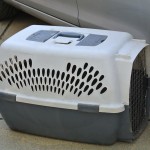 a couple of months afterwards. Occasionally, they would go inside when prompted by a treat or would find their way inside for an afternoon nap. The crate didn’t represent much more than that for them during their first couple of months.
A year and a half later, along comes JoJo the third and baby of the lab pack. His safe and secure spot was running to my lap and resting high on the sofa; clear and away from the large sister and brother who seemed to tower over him so big … so powerful! Crate? What crate?
We quickly found it was not potty training that was helped with the assistance of a crate. But with three dogs vying for the feeding bowl, someone needed a space of their own. Especially with one lab having great food grabbing abilities. How about the crate! Solved?
We devised a plan: Jill will be fed in the crate, she eats the fastest and has no chance of grabbing food from her brothers. Jack will be fed beside the crate so Jill can see him, he eats the slowest and is Jill’s best buddy. And JoJo will have a place away from the other two so he knows the meal is all his. This worked well for eating but we found another result. Amazingly the eating arrangement has converted the crate into Jill’s favorite place. Food and crates go 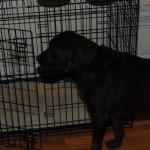 together well. The crate is now her place to sleep, eat, hang out and get away from her two brothers; a girl needs her beauty rest.
So the crate that initially sat in the corner has now been replaced with a much larger crate. And with a new respect for the crate I can see the value in making it your dog’s happy place. Plus, it serves many other roles too.
- A necessity if you travel with your pet
- It’s their den
- Limits access to the house while learning the house rules
- Great for potty training – dogs don’t like to soil their dens
- A place for feeling secure in a thunderstorm
Finding the perfect crate is easy:
You may select from a plastic crate often called flight kennels, a fabric collapsible crate or a metal collapsible crate sometimes called a pen. Each comes in various sizes and can be purchased at your local pet supply store. There are also a variety of vendors online selling a different styles.
A few guidelines for the perfect crate:
- It should be large enough for your dog to stand, turn around and lie down
- Still growing – choose a crate with an adjustable interior grate. Select a crate that will accommodate him as he grows into an adult. Block off the excess crate space while keeping the space large enough to stand, turn and lie down
- Great ventilation on opposing sides, without any obstructions that may block airflow
- Strong handles and grips attached on the exterior
- Add a soft bed or mat and a favorite toy
Two “no, no’s” for the crate:
- Not to be used for punishment. Dogs will fear it and therefore not use it
- Limit their time in the crate. Dogs want to be out and interact with their human family
Creating a likable space to call home:
- Introduce your dog slowly to the crate. Let her explore at her leisure.
- Give the crate a special name, one that you will always use to refer to the crate and your dog will identify with.
- Encourage your dog to enter by placing treats inside while using your happy voice.
- Feed your dog in the crate. Start by placing the food right inside the door. Continue to place the feeding bowl further inside as she becomes more comfortable.
- After she becomes comfortable, close the door for a few minutes. Any whining, slow down the process and let her feel comfortable before closing the door.
- As she becomes more comfortable, close the door and let her remain in the crate after eating. Some dogs take longer to bond with the crate others may find it to be their favorite spot right away.
- Once there are no signs of whining or anxiety call her over and offer a treat to go inside. Stay near by for a few minutes, then go into another room. Come back after a couple of minutes. Continue this until your dogs is comfortable, relaxes inside and is not waiting for your return. Continue crate training for short periods when you’re home so she doesn’t associate crating with being alone.
- Pretty soon, she will find her own way to the crate without being prompted or given a treat!
Jill is living happily ever after in her crate apartment. Often she shares it with her brother JoJo and the two will cuddle and sleep. Jack occasionally will choose to go inside for a few minutes. I guess that means it is his safe place too. All is well in labby land; a happy crate means a happy home!

Crates are for dogs!


0 Comments