
The Ultimate Cruise Packing Guide
Travel With annita’s Complete Guide
A practical, no-nonsense packing guide for first-timers and seasoned cruisers alike
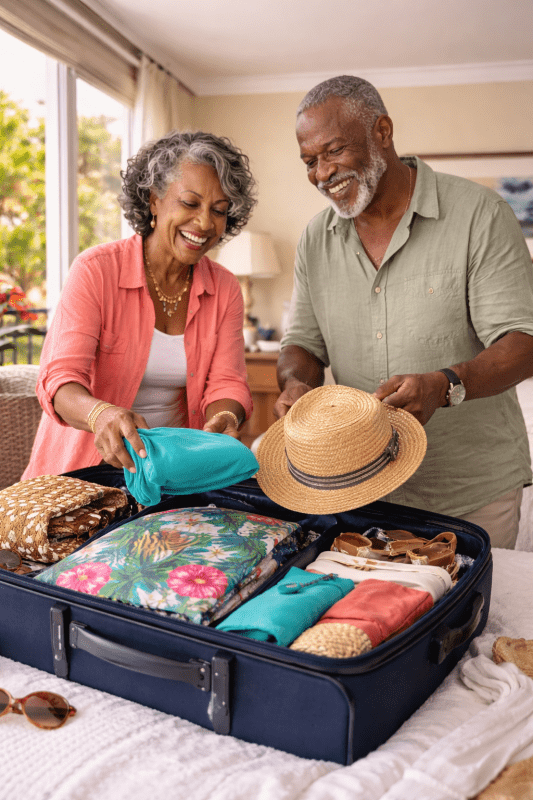
Before You Pack a Single Thing
A cruise is one of the most enjoyable ways to travel, new destinations every morning, your bed following you from port to port, and an extraordinary amount of food available at almost every hour of the day. But packing for a cruise requires a particular kind of thinking that is different from any other form of travel. You are packing for a ship, not a hotel. The cabin you will call home for the duration of your voyage is likely smaller than you imagine. The closets are compact. The outlets are limited. The hallways are long and identical. And if you forget something essential, your options for replacing it are limited to the ship’s gift shop, where prices are high and selection is narrow, or a rushed purchase in port.
 The good news is that packing for a cruise is a skill, and like all skills it gets easier with practice and better with good information. This guide covers everything you need to bring, everything you should consider, and a few things you should absolutely leave at home. Read your cruise line’s own packing guidance before you sail, as policies on what is and is not permitted can vary from line to line and destination to destination. But use this list as your master reference, the one you return to every time you book a new voyage.
One principle above all others should guide every packing decision you make: mix and match. A capsule wardrobe built around one or two base colors with a variety of tops, bottoms, and accessories that work together in multiple combinations, will serve you far better than a suitcase full of complete outfits. On a cruise, you will be changing clothes more than on almost any other type of trip: morning deck clothes, afternoon beach or excursion wear, evening dinner attire. Pack smart and you will always have exactly what you need.
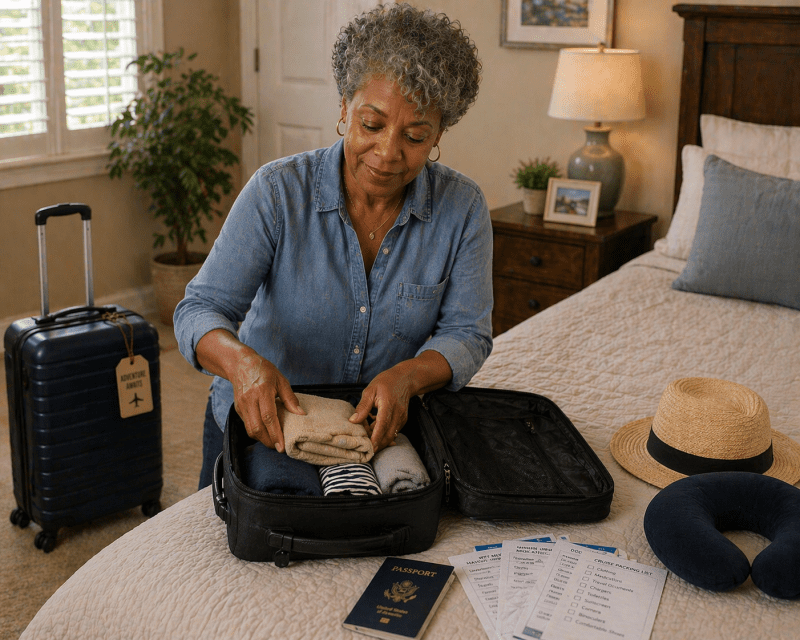
| EXPERT TIP – THE GOLDEN RULE OF CRUISE PACKING |
| Pack a separate carry-on bag with everything you need for Day 1 — your swimsuit, a change of clothes, medications, valuables, chargers, and your passport. Your checked luggage may not arrive at your stateroom until late afternoon on embarkation day. With a well-packed carry-on, you can head straight to the pool, enjoy lunch, and settle in without waiting on your bags. |
Documents & Travel Essentials
Before you even think about swimsuits and sandals, make sure your paperwork is in order. A missing document can derail your entire trip before it begins, and no amount of perfect packing will compensate for a forgotten passport at the departure terminal.
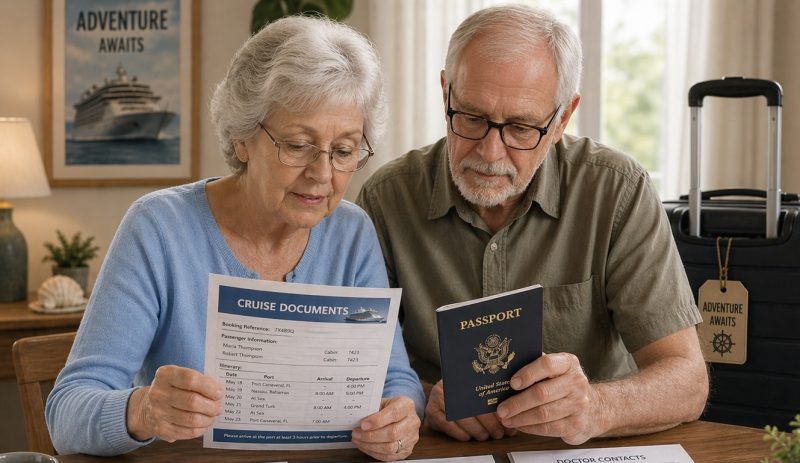
Critical Documents
- Passport: Ensure your passport is valid for at least six months beyond your sailing date — many countries require this as a condition of entry. Triple-check that it is packed the morning you leave home.
- Boarding pass: Most cruise lines now handle this digitally through their app. Download the app and complete your check-in process well before embarkation day so everything is ready on your phone.
- Medical cards: Bring your health insurance card and any medical documentation relevant to conditions you manage. If you are traveling internationally, carry cards in both English and the local language if possible.
- Credit cards and local currency: Most cruise ships operate on a cashless system where everything is charged to your stateroom account. However, you will want cash, in small bills, for tipping guides and servers in port, for local markets that do not accept cards, and for small purchases. When sailing internationally, carry a small amount of each destination’s local currency.
- RFID wallet: Protect your travel documents and credit cards from digital theft with an RFID-blocking wallet. This is particularly important when moving through busy ports and markets.
- Cruise insurance: Travel insurance for a cruise is highly recommended. Policies can cover trip interruptions, medical emergencies at sea, missed port departures, and other unpredictable events. Review the terms carefully before purchasing.
Luggage Strategy — What to Bring and How to Pack It
Your choice of luggage matters on a cruise in ways it does not on a land-based trip. Stateroom storage is limited, and bulky or oversized bags can make an already compact space feel impossibly tight. Think carefully about what you bring and how you bring it.

The Right Bags for the Job
What’s the right bag for you? Soft side or hard side. There are advantages and disadvantages to both. It is truly a personal choice. If you’re still deciding, check out both and take into consideration how you pack – are you organized, do you stuff last minute things, are you an over-packer? All things to consider and help you make a decision.
- Checked bag: A mid-sized rolling suitcase is ideal for most cruises. If you are traveling as a couple or family, consider whether you can share a single large bag rather than bringing two, this will save significant stateroom floor space.
- Carry-on backpack or bag: This is your Day 1 lifeline and your ongoing shore excursion companion. Choose something that fits comfortably on your back, holds everything you need for a full day off the ship, and is durable enough for beach and port conditions.
- Beach or tote bag: A lightweight, preferably waterproof tote for port days and beach excursions. It should fold flat in your luggage and be large enough to hold towels, water bottles, sunscreen, and snacks.
- Evening bag: A small, neutral clutch or crossbody bag for dinner and evening events. Choose a color – black, champagne, or a versatile neutral – that works with multiple outfits so you do not need to bring more than one.
- Garment bag: If you are bringing formal or semi-formal attire, a garment bag keeps those pieces wrinkle-free, especially important since irons and steamers are prohibited on cruise ships.
- Dry bag: Essential if you plan water-based excursions like snorkeling, kayaking, Zodiac cruises, or any activity where your belongings might get wet. A dry bag protects your phone, camera, and other valuables.
Packing Organization
- Packing cubes: The single best investment for cruise packing. Packing cubes compress your clothing, keep categories organized, and make it easy to find what you need in a compact drawer or closet without unpacking everything.
- Laundry bag: Keep dirty clothes separate from clean ones throughout the voyage. A lightweight drawstring bag or a simple plastic bag works perfectly.
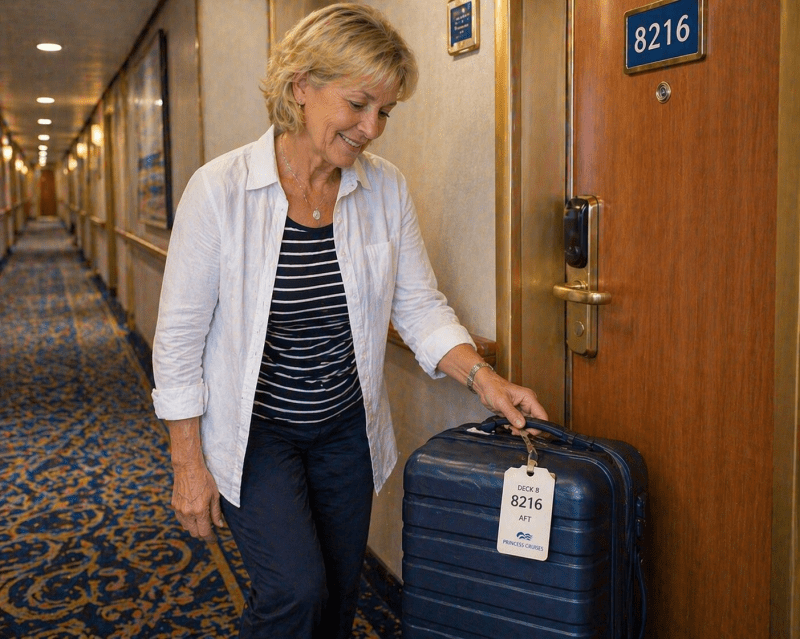
- Luggage tags: Print or attach your cruise line’s luggage tags before leaving home. Your bags will be separated from you at the terminal and delivered to your stateroom, proper tags ensure they find the right room.
- Luggage scale: A small digital scale lets you weigh your bags before you leave and before you head home, helping you avoid overweight baggage fees at the airport.
Clothing — Pack Smart, Not Heavy
Clothing is where most people overpack on a cruise, and it is the easiest category to get wrong. The key is to build a capsule wardrobe; a small, cohesive collection of pieces that work together in multiple combinations, rather than packing a complete separate outfit for every occasion.
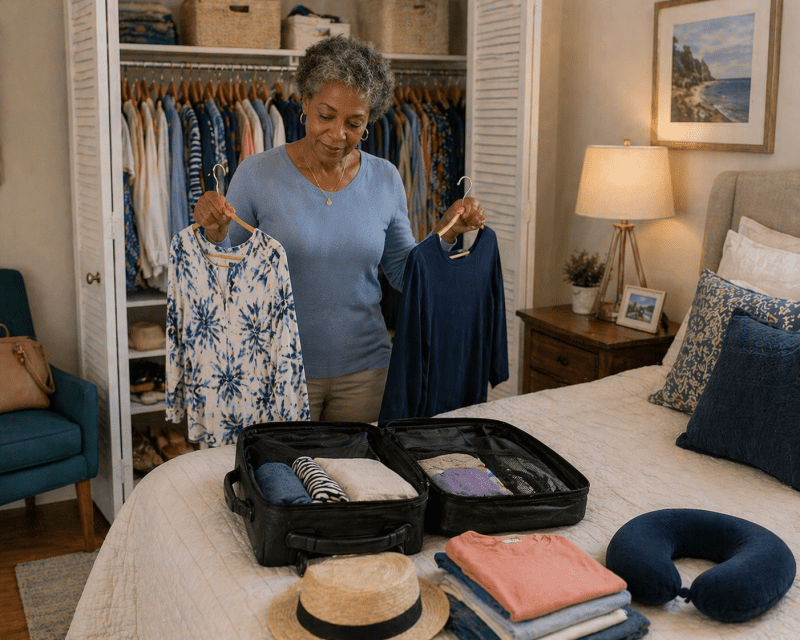
Begin by choosing a base color for your wardrobe. Black and navy blue are the most versatile. Build from there with neutral bottoms and tops that can be mixed freely, then add two or three patterned or colorful pieces for visual interest. Every item you pack should be wearable at least twice in different combinations.
Also check your cruise line’s dress code before you pack. Most contemporary cruise lines have relaxed their formal requirements significantly, many no longer mandate formalwear at all. A few still designate one or two “elegant” evenings where dressier attire is expected or appreciated. Know what your specific cruise requires so you pack accordingly.
Daytime Wear
- Swimsuits: Pack at least two swimsuits so you always have a dry one available. Consider a one-piece for active excursions like snorkeling or water sports, and a two-piece for pool and beach days.
- Swim cover-up: A cover-up that doubles as a casual dress or top is enormously practical — it takes you from the pool to an indoor restaurant or a port excursion without needing to change completely.
- Rompers and jumpsuits: One of the most cruise-friendly clothing items you can pack. They are a complete outfit in a single piece, pack flat, work for day and evening depending on the fabric, and can double as a cover-up.
- T-shirts and casual tops: Pack several that mix and match with your bottoms. Lightweight, wrinkle-resistant fabrics are ideal.
- Shorts and casual pants: Two or three pairs of shorts and one pair of casual pants cover most daytime scenarios. Choose neutral colors that work with multiple tops.
- Sun shirt: A lightweight long-sleeved sun shirt provides UV protection during long excursions without requiring constant reapplication of sunscreen.
- Lightweight sweater or jacket: Ship interiors, particularly dining rooms, theaters, and casino areas, are often aggressively air-conditioned. A light layer will make indoor time significantly more comfortable.
- Workout clothes: If you plan to use the ship’s gym or fitness facilities, pack one or two sets of workout clothes. Otherwise, skip them.
Evening Wear
- Dresses or dress pants and tops: Pack two to three evening outfits depending on the length of your cruise. Dresses that pack without wrinkling are ideal. For men, dark trousers with a collared shirt covers almost every onboard occasion.
- Blazer or sports jacket: A blazer instantly elevates any outfit, it works over a simple dress or with pants and a shirt, and takes up minimal luggage space. It is the single most versatile evening piece you can pack.
- Comfortable evening shoes: Choose shoes that are elegant enough for dinner but comfortable enough for an evening of walking between venues. Most ships involve more walking than guests expect.
- Pashmina or travel wrap: Versatile, lightweight, and indispensable. It works as a wrap for chilly evenings and air-conditioned spaces, as a beach sarong, and as an extra layer on deck.
- Themed or formal attire (if applicable): Some cruise lines host themed nights, formal evenings, white parties, or costume events. Check your itinerary before packing so you are prepared without over-packing.
Footwear
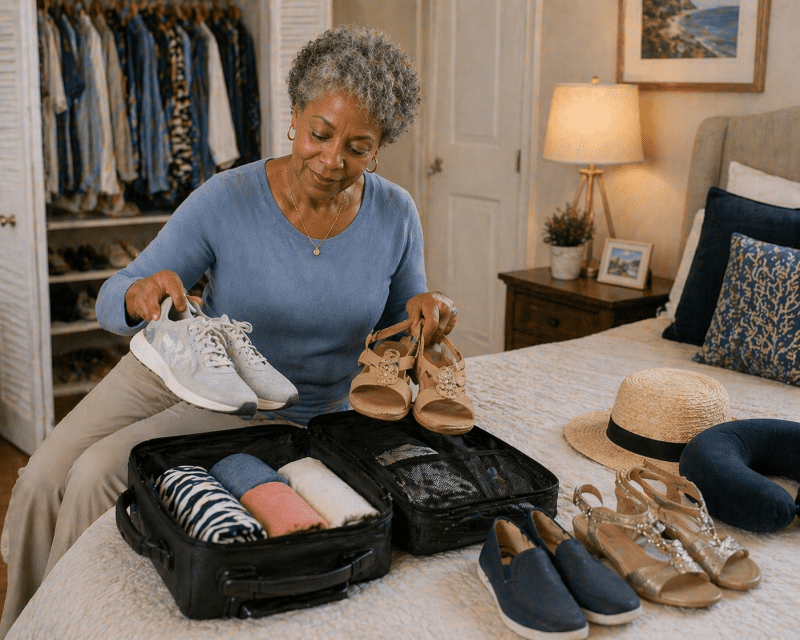
Shoes take up significant luggage space and are one of the easiest places to overpack. The goal is maximum versatility with minimum pairs.
- Sandals: One pair of comfortable, waterproof, neutral sandals that works for daytime excursions and can pass at dinner in a pinch is the ideal cruise sandal.
- Sneakers or walking shoes: Closed-toe walking shoes are essential for port excursions, gym visits, and navigating slippery decks when boarding tenders.
- Evening shoes: One pair of comfortable dressy shoes or heels for evening dining. If you can find a pair that works for both walking and dressing up, all the better.
- Flip-flops: Lightweight and essential for pool decks, showers, and casual beach days.
- Water shoes: Required for certain excursions — beach landings, reef walks, river hikes. Check your shore excursion descriptions to know whether these are needed.
Toiletries & Personal Care
Most cruise ships provide basic toiletries in the cabin bathroom, typically a combined shampoo and conditioner, body wash or soap, and lotion. If you are particular about your personal care products, bring your own in travel-sized containers. The ship’s gift shop sells toiletries, but the selection is limited and the prices are high.
Skin & Sun Care
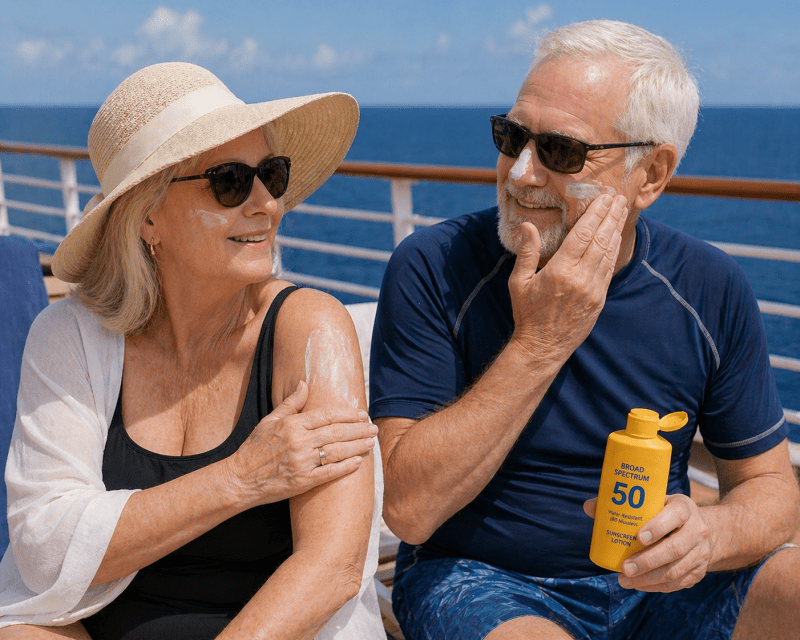
- Reef-safe sunscreen: This is non-negotiable on a cruise. Conventional sunscreens contain chemicals that are harmful to coral reefs and marine ecosystems. Choose a mineral sunscreen with zinc oxide or titanium dioxide as the active ingredient. Apply it generously and reapply often, tropical sun is more intense than it feels in the ocean breeze.
- Sun hat: A packable, wide-brimmed hat is essential for protecting your face and scalp during long days in port or on deck. Choose one that collapses flat in your luggage.
- Sunglasses: Polarized lenses are ideal for the bright glare that reflects off open ocean water. Consider bringing a less expensive pair than your best ones, as sunglasses are easily lost in wind, waves, and excursion activities.
- After-sun lotion: Even with diligent sunscreen application, sea days can leave your skin feeling dry and sun-stressed. An after-sun lotion or a good moisturizer soothes skin and keeps it hydrated throughout the cruise.
- Insect repellent: If your itinerary includes tropical or Caribbean ports, insect repellent is essential. Mosquitoes and sand flies can be relentless in certain destinations. Wipes or sprays both work choose whichever fits your luggage space better.
Hair & Body
- Shampoo and conditioner: Most ships now provide combined all-in-one dispensers rather than separate bottles. If you prefer your own products, bring them in travel-sized containers or decant your favorites into reusable travel bottles.
- Wrinkle release spray: Since irons and steamers are not permitted on cruise ships, a travel-sized wrinkle release spray is the next best thing. A few spritzes combined with the steam from your shower can smooth out most travel creases.
- Standard toiletries: Toothpaste, toothbrush, deodorant, razor, hair ties, and anything else you use in your daily routine. Bring enough for the full voyage plus a few extra days.
- Laundry detergent: A small amount of concentrated laundry detergent lets you wash swimsuits, underwear, and quick-dry items in the sink, extending your wardrobe significantly without extra packing.
Health & Wellness

. Photo credit: Mark Adams
Cruise ships have medical facilities on board, but those facilities are not free and they are not a substitute for bringing the medications and health supplies you know you need. Pack your health kit carefully, it is one category where being over-prepared is far better than under-prepared.
Medications
- Prescription medications: Pack more than you think you need — enough for the full cruise plus several extra days in case of itinerary changes, travel delays, or unexpected extensions. Keep prescription medications in their original labeled bottles and carry them in your carry-on, never in checked luggage.
- Motion sickness medication: Even if you have never experienced seasickness before, pack it. Open ocean conditions can be unpredictable, and the sensation of being on a moving ship affects people differently depending on the weather, the vessel, and the route. Having medication on hand before symptoms develop is far better than trying to manage them after the fact.
- Sea-Bands or acupressure wristbands: A drug-free, reusable option for preventing and managing nausea. Many cruisers wear them preemptively on rough sea days.
- Pain relievers: Standard over-the-counter pain relief for headaches, muscle aches, and general discomfort.
- Antacids and digestive aids: Cruise ships are famous for their exceptional food — and for encouraging passengers to eat a great deal of it. Digestive support is a practical addition to any cruise health kit.
- Antihistamines: For allergic reactions to new foods, plants, or insect bites encountered in port.
- Hand sanitizer and disinfecting wipes: Norovirus is a well-known concern on cruise ships. Frequent hand-washing is the most effective prevention, but travel-sized hand sanitizer and surface wipes provide an extra layer of protection, particularly on high-touch surfaces in public areas.
First Aid
- Band-Aids and adhesive bandages: Blisters from walking in port are one of the most common cruise complaints. Pack a variety of sizes.
- Antiseptic wipes or cream: For cleaning minor cuts and scrapes encountered during active excursions.
- Aquaphor or healing ointment: Versatile and useful for everything from dry skin and chapped lips to minor irritations.
Electronics & Power
Cruise ship cabins have notably limited outlet availability — typically one or two standard outlets and sometimes a USB port. With phones, cameras, tablets, watches, earbuds, and laptops all needing power, a little planning goes a long way.
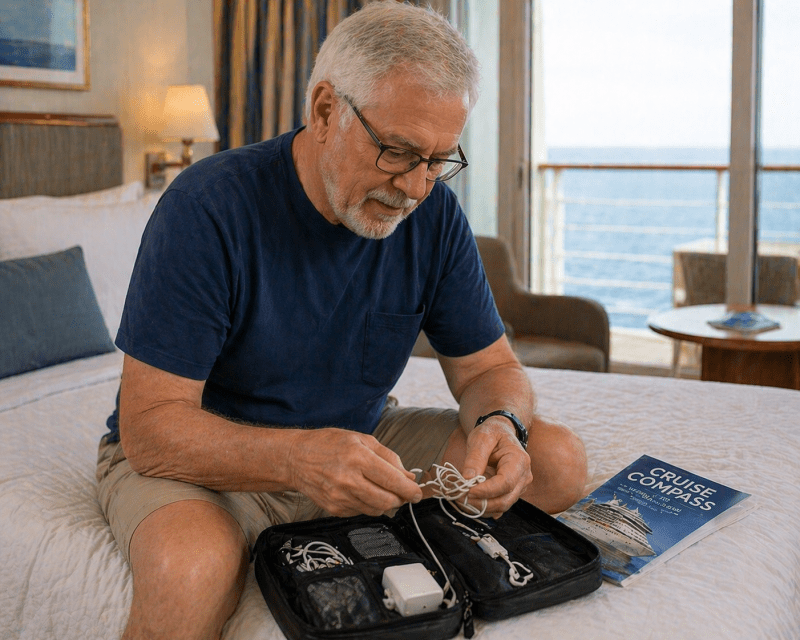
- Non-surge-protected outlet extender: This is one of the most important items on this entire list. An outlet extender that is NOT a surge protector — surge protectors are prohibited on most cruise lines due to fire risk — gives you the multiple outlets you need to charge multiple devices simultaneously. Verify your cruise line’s electrical policies before purchasing.
- Portable power bank: For long days on shore excursions where you will not have access to an outlet, a fully charged power bank keeps your phone alive throughout the day.
- International travel adapter: If your cruise visits international ports, or if your ship is home-ported abroad, you may encounter different outlet types and voltage standards. A universal adapter handles most situations.
- Phone charger: Pack your regular phone charger as well as a backup cable.
- Waterproof phone case: Essential for beach days, water excursions, and any port activity where your phone might be exposed to water. Choose one with a lanyard so it hangs around your neck hands-free.
- Small USB fan: Cabin air circulation can be limited, particularly in inside staterooms. A small USB-powered fan provides both airflow and white noise — helpful for light sleepers who find the ship’s ambient sounds disruptive.
- Headphones or earbuds: For long sea days, flights, and personal entertainment in your stateroom.
Cabin Organization — Making a Small Space Work
A cruise ship cabin is a masterclass in compact living. Everything has to have a place, and the more organizational tools you bring, the more comfortable and functional your stateroom will feel throughout the voyage.
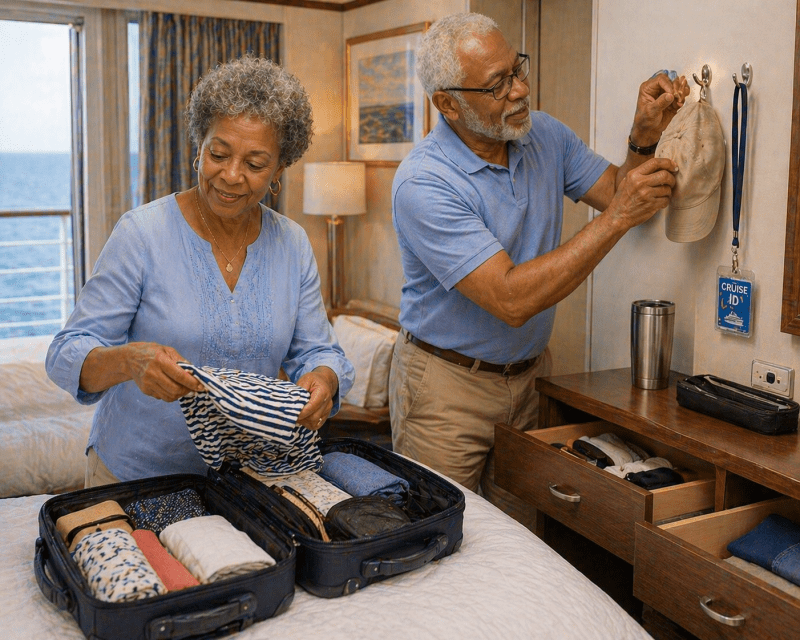
- Magnetic hooks: The walls and many surfaces on a cruise ship cabin are made of metal. Magnetic hooks are one of the most versatile organizational tools you can bring — use them to hang hats, bags, wet swimsuits, lanyards, and daily shore excursion materials. Pack four to six for maximum flexibility.
- Over-the-door organizer: A fabric organizer with multiple pockets hangs over the bathroom door and provides storage for toiletries, makeup, jewelry, feminine hygiene products, and small accessories that would otherwise clutter the limited counter space.
- Packing cubes: In the cabin, packing cubes allow you to stack clothing neatly in compact drawers without creating a chaotic pile every time you need to find something.
- Night-light: Inside cabins — those without windows or balconies — are completely dark when the lights go off. A small motion-sensor night-light makes bathroom trips in the dark significantly less hazardous.
- Lanyard: Your shipboard card is your cabin key, your ID to get on and off the ship, and your method of payment on board. A lanyard keeps it accessible at all times and prevents the common experience of losing it in the depths of a bag.
- Stateroom door décor: Optional but genuinely useful — magnetic décor on your cabin door makes it easy to identify your room in a long corridor of identical doors. It is also a fun cruise tradition that many passengers participate in.
- Sound machine or white noise app: If you are a light sleeper, a small sound machine or even a white noise app on your phone can block out corridor noise, neighboring cabin sounds, and the general ambient hum of ship life.
What to Carry — Your Day Bags
On a cruise, you will carry a bag almost every day — either as a shore excursion pack, an evening bag, or a pool tote. Getting this right makes the whole experience smoother.
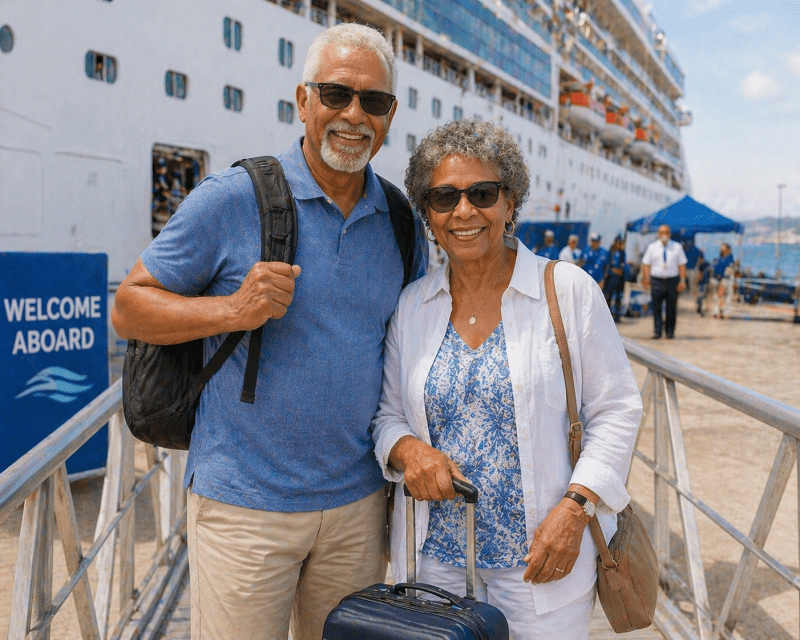
- The carry-on backpack: Your most important bag. Pack it with Day 1 essentials: passport and documents, medications, phone charger, swimsuit, change of clothes, sunscreen, sunglasses, and any valuables that should go straight into your stateroom safe. This bag also becomes your primary shore excursion pack throughout the cruise.
- The beach bag: A lightweight, waterproof tote that holds towels, water bottles, snacks, sunscreen, and anything else needed for a day off the ship. It should fold flat in your luggage when not in use and can double as a laundry bag for port days.
- The evening bag: One small, neutral crossbody or clutch that coordinates with all your evening outfits. It needs to hold your shipboard card, phone, and a pair of sunglasses — nothing more.
- The ID holder: A small crossbody pouch is ideal for keeping your shipboard card, phone, and cash accessible while moving around the ship or in port, particularly for outfits without pockets.
What NOT to Pack — The Prohibited List
Every cruise line maintains a list of prohibited items, and attempting to bring them will result in confiscation at embarkation and delays in your luggage reaching your stateroom. The following items are not allowed on most cruise ships:
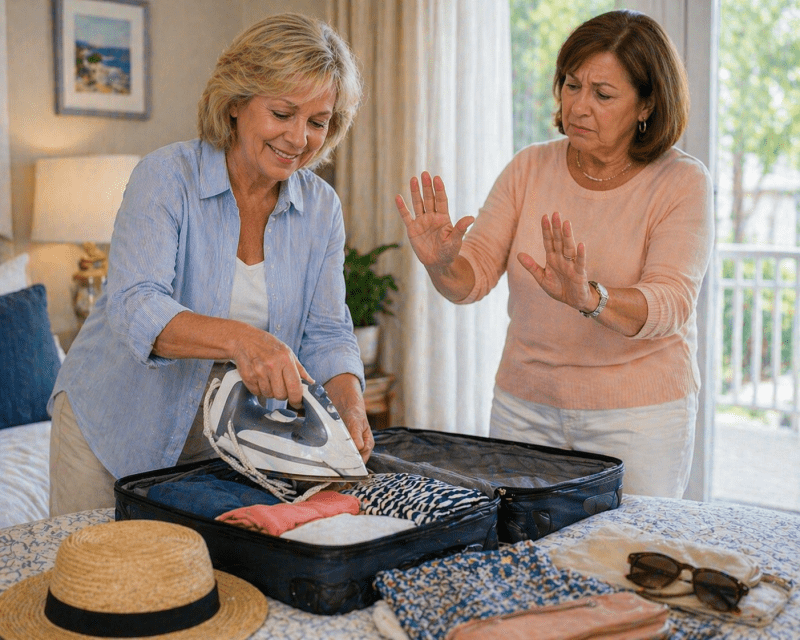
- Clothing irons and steamers: Prohibited due to fire risk. Use wrinkle release spray and the steam from your shower instead. A garment bag minimizes wrinkling for items that need to arrive pressed.
- Hot plates and coffee makers: Also prohibited. Ship cabins have electric kettles available on request on some lines, and coffee is always available in ship restaurants and cafes.
- Surge protectors: This distinction matters: a regular outlet extender is generally permitted, but a surge protector is not. Check your cruise line’s policy.
- Candles and incense: Fire hazards in a compact metal cabin. Prohibited on all major cruise lines.
- Weapons and ammunition: Not permitted under any circumstances.
- Drones: Rules vary by cruise line — some prohibit them entirely, others allow them only for use in port. Check your specific line’s policy before packing one.
- Excessive alcohol: Most cruise lines allow one to two bottles of wine or champagne per guest at embarkation. Beyond that, alcohol brought on board may be confiscated. Check your line’s specific policy.
| ONE FINAL TIP |
| At disembarkation, you will set your checked luggage outside your stateroom the night before. Keep a complete outfit, your toiletries, and anything you need for the morning in your carry-on so you are not stranded in a robe waiting for your bags to be returned. And do not forget your passport — it needs to stay with you for departure. |
QUICK REFERENCE CHECKLIST
| DOCUMENTS & ESSENTIALS |
| ☐ Passport (valid 6+ months) | ☐ Local currency (small bills) |
| ☐ Digital boarding pass | ☐ RFID wallet |
| ☐ Health/medical cards | ☐ Travel insurance documents |
| ☐ Credit cards | ☐ Cruise line app downloaded |
| CLOTHING — DAYTIME |
| ☐ Swimsuit x2 | ☐ Shorts x2 |
| ☐ Swim cover-up | ☐ Sun shirt |
| ☐ Romper or jumpsuit | ☐ Lightweight jacket/sweater |
| ☐ T-shirts / casual tops | ☐ Workout clothes (if needed) |
| CLOTHING — EVENING |
| ☐ Dresses or dress pants + tops | ☐ Themed or formal attire (if applicable) |
| ☐ Blazer or sports jacket | ☐ Neutral evening bag |
| ☐ Evening shoes | ☐ Inexpensive jewelry |
| ☐ Pashmina or travel wrap | ☐ Pajamas |
| FOOTWEAR |
| ☐ Sandals (neutral, waterproof) | ☐ Flip-flops |
| ☐ Sneakers / walking shoes | ☐ Water shoes (if excursions require) |
| ☐ Evening shoes |
| TOILETRIES |
| ☐ Reef-safe sunscreen | ☐ Toothpaste & toothbrush |
| ☐ After-sun lotion | ☐ Razor |
| ☐ Insect repellent | ☐ Hair ties & styling products |
| ☐ Shampoo & conditioner | ☐ Wrinkle release spray |
| ☐ Deodorant | ☐ Laundry detergent (small) |
| HEALTH & MEDICATIONS |
| ☐ Prescription medications (+ extra) | ☐ Antihistamines |
| ☐ Motion sickness medication | ☐ Hand sanitizer x2 |
| ☐ Sea-Bands | ☐ Disinfecting wipes |
| ☐ Pain relievers | ☐ Band-Aids (variety) |
| ☐ Antacids | ☐ Antiseptic cream |
| ELECTRONICS & POWER |
| ☐ Non-surge outlet extender | ☐ Waterproof phone case |
| ☐ Portable power bank (charged) | ☐ Small USB fan |
| ☐ International adapter (if needed) | ☐ Headphones / earbuds |
| ☐ Phone charger + backup cable | ☐ Camera (if desired) |
| CABIN ORGANIZATION |
| ☐ Magnetic hooks (4–6) | ☐ Night-light |
| ☐ Over-the-door organizer | ☐ Lanyard |
| ☐ Packing cubes | ☐ Door décor (optional) |
| ☐ Laundry bag | ☐ Sound machine (optional) |
| BAGS |
| ☐ Carry-on backpack | ☐ Dry bag (for water excursions) |
| ☐ Checked luggage (mid-sized) | ☐ Garment bag (if needed) |
| ☐ Beach / tote bag | ☐ ID holder / crossbody |
| ☐ Evening bag / clutch | ☐ Luggage tags attached |
| DO NOT PACK |
| ☐ ✗ Clothing iron | ☐ ✗ Candles or incense |
| ☐ ✗ Clothes steamer | ☐ ✗ Weapons or ammunition |
| ☐ ✗ Hot plate or coffee maker | ☐ ✗ Drone (check line policy) |
| ☐ ✗ Surge protector | ☐ ✗ Excess alcohol (check policy) |
Quarter Miles Travel with Annita • Every mile has a story. Go find it.
 Annita Thomas, author, is the on-air personality of Travel With Annita and the podcast Quarter Miles Travel. She has traveled to 135 countries and all 50 states. Follow her on IG – AnnitaAndFriends and FB – Annita Stokes Thomas


0 Comments