American Revolution Patriots
In The Shadows
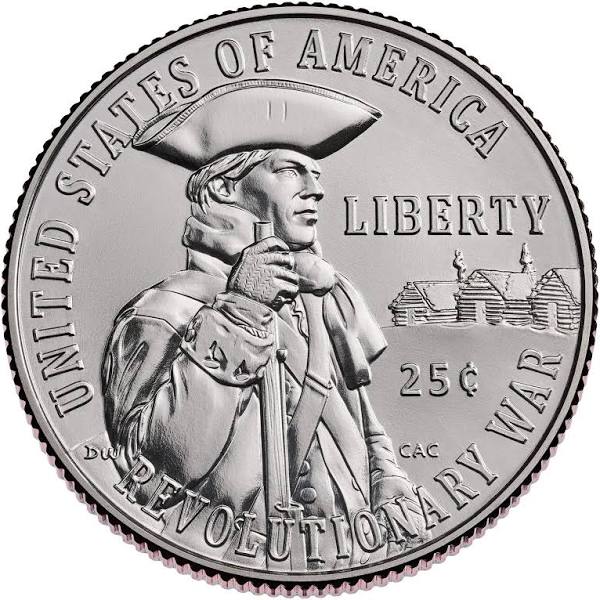
Photo courtesy of U.S. Mint
July 10th, 1777. Middle of the night. A small rowboat slips through British-controlled waters off the coast of Rhode Island. Forty men are packed into a handful of boats, oars wrapped in cloth to muffle the sound. Their target: a British general, asleep in a farmhouse a mile inland from his own troops.
They land. They creep to the door. And when it doesn’t open fast enough, a man named Jack Sisson puts his own head down and rams it through. No shots fired. No alarm raised. British General Richard Prescott is dragged out of bed in his nightshirt and rowed back across enemy lines as a prisoner of war.
Jack Sisson was an enslaved man from Rhode Island. And if you’ve never heard his name before; you’re not alone. Because for two hundred and fifty years, stories like his have been sitting in pension files and church records and old muster rolls, waiting for someone to go looking.
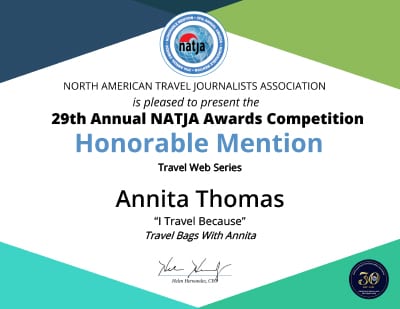
I’m Annita Thomas, and this is Patriots in the Shadows, the story of the thousands of Black soldiers, sailors, spies, and guerrilla fighters who fought in the American Revolution. On both sides. In every colony. And in almost every major battle you learned about in school, even if nobody mentioned they were there.
Let’s get into it.
Before we even get to the war itself, we have to go back five years earlier to March 5th, 1770. Boston.
A crowd is gathered outside the Custom House, taunting a group of British soldiers. Tensions have been simmering for months. And then, someone gives the order or maybe no one does, historians still argue about it, and the soldiers open fire into the crowd.
The first man to die is Crispus Attucks. A dockworker, part African, part Native American, and by most accounts, right at the front of that crowd. He becomes the first casualty of what history will call the Boston Massacre, five years before a single shot of the actual war is fired.
Fast forward to April 19th, 1775. Lexington Green. The war has officially begun. Among the colonial militia standing on that field is a man named Prince Estabrook, enslaved but permitted to serve. When the British volley hits the line, Estabrook goes down wounded. One of the very first men, of any race, hurt in the Revolutionary War.
There were other Black militiamen at Concord that same day. We don’t have most of their names. That’s going to be a theme in this episode, and it’s worth sitting with for a second. The men who are remembered are often remembered by accident: a wound, a pension claim, an officer who happened to write something down. For every Crispus Attucks, there were probably a dozen men whose entire service is just… gone.
Two months after Lexington, you get Bunker Hill, one of the bloodiest battles of the entire war. And this is where the historical record actually gets a little better, because so many officers on both sides wrote detailed accounts afterward.
At least three dozen Black soldiers fought at Bunker Hill. Three dozen. Let that sink in for a second, next time someone shows you a painting of that battle with an all-white cast.
Peter Salem, a man who’d been freed by his enslaver specifically so he could enlist, is credited with firing the shot that killed British Major John Pitcairn. This is the same officer who, weeks earlier at Lexington, had given the order to fire on the militia. Salem didn’t stop there either. he went on to fight at Saratoga and Monmouth.
Then there’s Salem Poor. Also formerly enslaved. Poor fought so effectively at Bunker Hill, he’s credited with killing a British lieutenant colonel. that fourteen American officers, after the battle, signed a joint petition to the Massachusetts legislature. Fourteen officers, vouching for one soldier. They called him, and I’m going to read this because it’s worth hearing exactly as written: “a brave and gallant soldier” who “behaved like an experienced officer.” That document still exists. It’s one of the only formal, individual battlefield commendations we have for a Black soldier in the entire war.
And there’s Barzillai Lew, six-foot-tall free Black cooper from Massachusetts, who served as a fifer and drummer. Story goes, during the actual fighting, Lew kept morale up by playing “Yankee Doodle” on his fife while the battle raged around him. He’d go on to serve at Fort Ticonderoga and was present at Saratoga when British General Burgoyne surrendered. His powder horn is still sitting in a museum in Chicago today. And here’s a fun fact, in 1943, Duke Ellington wrote a piece of music in his honor, after learning his story from his own high school teacher.
Cuff Whittemore fought so bravely that day, he was allowed to keep a sword he’d captured off a British officer. Titus Coburn, Alexander Ames, Blaney Grusha, Cato Howe, Seymour Burr, all there too. All in the fight. Most of them known to us today only because somebody, somewhere, wrote their name down on a piece of paper that survived two hundred and fifty years.
Now let’s go back to Jack Sisson – the guy who broke down a door with his own skull. Sisson served in what became known as the First Rhode Island Regiment, nicknamed, at the time, the “Black Regiment.” It was formed in 1778, when Rhode Island, desperate for troops, started allowing enslaved men to enlist in exchange for their freedom.
This regiment fought at the Battle of Rhode Island later that year, and, this is the part that gets me every time, they were part of the actual assault that took British redoubts nine and ten at Yorktown in 1781. That’s the battle that ended the war.
There’s an account from a French officer who observed them and said they were some of the most sharply dressed, precisely drilled troops he’d ever seen. And there’s a moment, May 1781, when their commander, Colonel Christopher Greene, is caught in a surprise attack. And according to one early historian, the British swords only reached him after cutting through the bodies of the Black soldiers who had surrounded him to protect him. Every single one of them died defending their commander.
That’s the unit Jack Sisson came out of. And his own operation — the Prescott capture — happened a full year before the regiment was even officially formed. He was already doing the work.
Let’s talk about espionage for a second, because this is where some of the highest-stakes stories in the whole war come from.
James Armistead, later known as James Armistead Lafayette, was enslaved in Virginia. With his enslaver’s permission, he volunteered to go behind British lines, posing as a runaway. He gained the trust of British officers, including, briefly, Benedict Arnold himself, and started feeding them false information, while secretly reporting real troop movements back to the Marquis de Lafayette.
His intelligence was critical in trapping Cornwallis at Yorktown. Lafayette personally wrote testimony afterward praising Armistead’s service, and Armistead used that document decades later to petition for his own freedom. Which tells you something pretty stark about what “freedom” actually meant after the war. Even the men who helped win it had to go argue their case with paperwork.
Saul Matthews, another enslaved Virginian, also served as a spy for the Continental Army, and he’s one of the rare cases where freedom came fast and direct. The Virginia legislature freed him by formal legislative act, specifically citing his wartime service.
Okay. Here’s where the story gets more complicated. Because not every Black soldier fought for American independence. And honestly? A lot of them had a pretty compelling reason not to.
In November 1775, Lord Dunmore, the British royal governor of Virginia, made an offer: any enslaved man owned by a Patriot who was willing to fight for the Crown would be freed. Later, in 1779, the British expanded that offer even further. And tens of thousands of enslaved people took them up on it. Historians estimate around 20,000 African Americans sided with the British over the course of the war roughly double the number who fought for the Patriots.
The most famous of them might be Colonel Tye. Born Titus Cornelius, enslaved in New Jersey, he escaped to British lines after Dunmore’s proclamation and became – by pretty much every account – the most feared Black military commander of the entire war, on either side. He led a mixed-race guerrilla unit called the Black Brigade, raiding Patriot militias across New Jersey and New York, and at his peak, he commanded around 800 men. He died in 1780 from an infected wound. But for a few years there, Colonel Tye was one of the most effective military leaders in the entire conflict, and almost nobody talks about him.
Harry Washington, and yes, that’s the same last name for a reason, was enslaved by George Washington himself, at Mount Vernon. He escaped in 1776, joined Dunmore’s forces, and served as a Black Loyalist for the rest of the war, including at the siege of Yorktown. Which means Harry Washington was standing on a battlefield, fighting against the army led by the man who used to own him.
Boston King, another Black Loyalist, actually left us something rare: a written first-hand account of his own experience. After the war, along with thousands of other Black Loyalists, he was evacuated to Nova Scotia, and later resettled in the new British colony of Sierra Leone.
The Southern colonies tell their own version of this story — and it’s shaped heavily by the fact that states like Georgia initially banned enslaved men from militia service completely.
Austin Dabney became Georgia’s most celebrated Black Patriot soldier almost by accident. He was sent to fight as a substitute for his enslaver, which, ironically, was the only legal way for an enslaved man to serve in Georgia at the time. He fought as an artilleryman and was badly wounded at the Battle of Kettle Creek in 1779. His service was so distinguished that afterward, he was formally freed, given a federal pension, and became the only Black Patriot in Georgia known to receive a state land grant.
But here’s the darker footnote: because Georgia pushed the burden of service onto enslaved substitutes, we know there were more men like Dabney, sent to fight in place of their enslavers whose names were simply never recorded. We’ll never fully know how many.
Virginia’s records are a little richer, thanks to surviving pension files. Reuben Bird enlisted at sixteen years old in the Virginia Regiment of Dragoons, but because he was free and Black, his own regiment wouldn’t let him fight directly, so he served in support roles instead. James Carter enlisted twice, once as a garrison guard, and then again as an artillery private, fighting at the Battle of Camden and the siege of Yorktown. And one Virginia brigade, under General Peter Muhlenberg, ended up nearly 8 percent Black, one of the most racially integrated units in the entire Continental Army.
William Flora was hailed as a hero at the Battle of Great Bridge in December 1775, one of the first major Patriot victories of the whole war. Fifteen documented Black Patriots fought at the Battle of Cowpens in 1781. And Spencer Bolton fought under Francis Marion, the “Swamp Fox” in the South Carolina swamps.
I want to close out the individual stories with one that always gets me: James Forten.
Forten was just fourteen years old when he joined the crew of a Philadelphia privateer. He was captured by the British and spent months as a prisoner aboard the HMS Jersey, a notorious prison ship where thousands of American captives died from disease and starvation. Fourteen years old. On a death ship.
He survived. He came home to Philadelphia. And he went on to build one of the city’s most successful sailmaking businesses, becoming a major abolitionist and philanthropist for the rest of his life. Of everyone we’ve talked about today, Forten might be the closest thing we have to a story where the postwar chapter actually matches the promise of the war itself.
Most veterans didn’t get that chapter. And, yes, these soldiers are veterans.
So here’s the hard part. Here’s the part where the story doesn’t wrap up neatly.
For all of this: Bunker Hill, Yorktown, Saratoga, the spies, the raids, the prison ships, most of these men did not get what they were promised.
Loyalist veterans, like Harry Washington and Boston King, did get their freedom. But it came with exile – Nova Scotia, and for a lot of them, eventually Sierra Leone. Patriot veterans had it worse in some ways. A few, like Austin Dabney, got land and pensions. Most came home to find their promised freedom delayed, denied, or tangled up in decades of legal petitioning.
And then in 1792, just nine years after the war ended, Congress passed a law formally banning African Americans from military service. A policy that stuck around for generations.
When pension programs finally opened up in 1818, and again in 1832, a lot of these men were already dead. Their widows spent years fighting to prove their husbands’ service even happened.
Here’s a number that I think says it all. Black soldiers made up roughly 4 percent of Patriot manpower. But on average, they served four and a half years each, that’s eight times longer than the average white soldier’s term. Which means, in terms of actual time spent fighting and supporting this war, their contribution was closer to a quarter of the entire Patriot war effort.
Four percent of the people. A quarter of the effort. And, for most of them, a fraction of the reward.
So…..Crispus Attucks, falling in a Boston street five years before the war even started. James Forten, surviving a prison ship as a teenager. Peter Salem, firing the shot that killed the officer from Lexington. Colonel Tye, leading raids against the very army Salem was fighting for. Jack Sisson, breaking down a general’s door with his own head.
Two sides. One war. And a version of American history that’s been sitting in the footnotes for two hundred and fifty years, waiting for someone to read it out loud.
That’s the story. Or….most of it, anyway. There are dozens more names in the show notes for this episode if you want to go deeper, soldiers we didn’t have time to get into today, but whose service is just as real, just as documented, and just as worth remembering.
Thanks for listening … until next time!
The story of Black soldiers in the American Revolution is not a single story at all. It is Crispus Attucks falling in a Boston street five years before the war began, and James Forten surviving a British prison ship as a teenager. It is Peter Salem firing the shot that killed a British officer at Bunker Hill, and Colonel Tye leading raids against the very army Salem fought for. It is Jack Sisson breaking down a general’s door with his own skull, and Reuben Bird, barred from combat because of his race, serving anyway. Their war was fought on both sides of a line that history has often flattened into a single narrative, and their reward, more often than not, was a freedom that arrived late, incomplete, or not at all.
What remains consistent across every name recovered from the margins of muster rolls and pension files is this: the American Revolution was never fought by white colonists alone, and its full history cannot be told without them.
Below in this appendix are names of many brave soldiers who stepped forward to fight for freedom. These veterans deserve recognition and honor for their service.
Appendix: Quick-Reference Summary
Listed alphabetically for easy reference.
Alexander Ames — Fought at the Battle of Bunker Hill in 1775, one of roughly three dozen Black soldiers present at the battle.
Austin Dabney — Enslaved artilleryman who fought as a substitute for his enslaver in the Georgia militia; severely wounded at the Battle of Kettle Creek (1779) and later emancipated, pensioned, and granted state land, the only Black Patriot in Georgia known to receive one.
Barzillai Lew — Free Black fifer and drummer who fought at Bunker Hill and later at Fort Ticonderoga and Saratoga; a French and Indian War veteran and skilled musician whose powder horn survives in a Chicago museum.
Bazabeel Norman — Documented Black Patriot soldier known primarily through Revolutionary War muster and pension records.
Blaney Grusha — Fought at the Battle of Bunker Hill in 1775 alongside fellow Black soldiers.
Boston King — Formerly enslaved Black Loyalist who escaped to British lines, later wrote a firsthand narrative of his wartime experience, and resettled in Nova Scotia and then Sierra Leone.
Caesar Robbins — Documented Black Patriot soldier known primarily through Revolutionary War muster and pension records.
Caesar Tarrant — Served as a naval pilot for the Virginia State Navy, guiding ships through dangerous coastal waters during the war.
Cato Howe — Fought at the Battle of Bunker Hill in 1775.
Cato Mead — Documented Black Patriot soldier known primarily through Revolutionary War muster and pension records.
Col. Louis Cook (Joseph Louis Cook) — Son of a Black father and Native American mother; served as a colonel in the Continental Army and fought at both Quebec and Saratoga, one of the highest-ranking Black or Indigenous officers of the war.
Colonel Tye (Titus Cornelius) — Formerly enslaved New Jerseyan who escaped to British lines and became the most feared Black guerrilla commander of the war, leading raids across New Jersey and New York with his mixed-race Black Brigade until his death in 1780.
Crispus Attucks — Killed during the 1770 Boston Massacre, five years before the war formally began; remembered as an early martyr and the conflict’s first casualty.
Cuff Whittemore — Cited for bravery at Bunker Hill and permitted to keep a sword he captured from a British officer.
Cyfax Brown — Enslaved man who fought in the Prince Edward County, Virginia militia alongside fellow Black soldiers Isaac Brown and George Kendall.
Dick Pointer — Helped defend Fort Donnally (in present-day West Virginia) against a Native American and Loyalist attack in 1778.
Edom London — 33-year-old enslaved Massachusetts man who fought under Col. Thomas Marshall’s Continental Regiment and was present at Saratoga.
Edward “Ned” Hector — Free Black teamster and bombardier in Proctor’s Third Pennsylvania Artillery, responsible for keeping Continental artillery supplied through key campaigns.
Fleet (Fleetus) Hull — Served in Colonel William Shepard’s 4th Massachusetts Regiment and is officially documented among the Black soldiers present at Saratoga.
Fortune Conant — Enlisted soldier who witnessed both the British surrender at Saratoga and the later surrender at Yorktown.
Fortune Freeman — Enlisted alongside Fortune Conant and witnessed both Saratoga and Yorktown.
George Kendall — Fought in the Prince Edward County, Virginia militia alongside Cyfax Brown and Isaac Brown.
George Middleton — Served in a Massachusetts regiment and became a prominent leader of Boston’s free Black community after the war.
Harry Washington — Enslaved by George Washington at Mount Vernon before escaping to join Lord Dunmore’s forces; served as a Black Loyalist through the siege of Yorktown.
Isaac Brown — Fought in the Prince Edward County, Virginia militia alongside Cyfax Brown and George Kendall.
Jack Sisson — Enslaved Rhode Islander who served as boat pilot for the 1777 raid that captured British General Richard Prescott, reportedly breaking down the general’s door himself; later served in the 1st Rhode Island Regiment.
James Armistead Lafayette — Enslaved Virginian who posed as a runaway to infiltrate British General Cornwallis’s camp as a double agent, feeding false information to the British while relaying critical intelligence that helped trap Cornwallis at Yorktown.
James Carter — Enlisted twice, serving as a garrison guard and later as an artillery private in the 2nd Virginia Regiment; fought at the Battle of Camden and the siege of Yorktown.
James Forten — Teenage privateer captured and held aboard the British prison ship HMS Jersey; survived to become a successful Philadelphia sailmaker and a leading postwar abolitionist and philanthropist.
James Robinson — Documented Black Patriot soldier known primarily through Revolutionary War muster and pension records.
Jehu Grant — Documented Black Patriot soldier known primarily through Revolutionary War pension records.
Jim Capers — Free Black South Carolinian who served as Drum Major in the 4th South Carolina Regiment.
Jude Hall — Formerly enslaved New Hampshire man who secured his freedom through service at Bunker Hill, Ticonderoga, and Saratoga.
Lambert Latham — Died a hero’s death defending Fort Griswold, Connecticut, in 1781.
Lemuel Haynes — Served briefly as a Massachusetts minuteman before becoming one of the first Black ministers ordained in the United States.
Nero Hawley — Documented Black Patriot soldier known primarily through Revolutionary War muster and pension records.
Oliver Cromwell — Free Black soldier in the 2nd New Jersey Regiment who took part in the crossing of the Delaware, several major campaigns, and the siege of Yorktown.
Peleg Nott — Documented Black Patriot soldier known primarily through Revolutionary War muster and pension records.
Peter Salem — Formerly enslaved militiaman credited with firing the shot that killed British Major John Pitcairn at Bunker Hill; also served at Saratoga and Monmouth.
Prince Estabrook — Enslaved militiaman wounded at the Battle of Lexington on April 19, 1775, among the first men of any race wounded in the Revolutionary War.
Prince Whipple — Enslaved man who crossed the Delaware alongside George Washington and was present at Yorktown, later advocating for his own freedom.
Primus Hall — Served in a Massachusetts regiment and became a prominent figure in Boston’s postwar free Black community.
Reuben Bird — Enlisted at sixteen in the Virginia Regiment of Dragoons; barred from direct combat due to his status as a free Black man, he served in support roles throughout the war.
Salem Poor — Formerly enslaved soldier whose heroism at Bunker Hill — including killing British Lieutenant Colonel James Abercrombie — earned a rare formal commendation signed by fourteen American officers; also fought at Saratoga.
Saul Matthews — Enslaved Virginian who served as a spy for the Continental Army and was freed by direct act of the Virginia legislature in recognition of his service.
Seymour Burr — Fought at the Battle of Bunker Hill in 1775.
Shadrach Battles — Fought under George Washington’s command, alongside his brother William Noel Battles; son of Thomas Cottrell.
Silas Royal — Documented Black Patriot soldier known primarily through Revolutionary War muster and pension records.
Spencer Bolton — Fought under Patriot guerrilla commander Francis Marion, the “Swamp Fox,” in South Carolina.
Thomas Cottrell — Father of soldiers William Noel Battles and Shadrach Battles, who both fought under Washington.
Titus Coburn — Fought at the Battle of Bunker Hill in 1775.
Toby Gilmore — One of the longest-serving Black veterans of the Revolutionary War period.
Wentworth Cheswell — New Hampshire schoolmaster who rode to warn colonial militias of British troop movements, in a ride historians have compared to Paul Revere’s; later became New Hampshire’s first archaeologist.
William Flora — Free Black soldier in the 2nd Virginia Regiment hailed as a hero of the Battle of Great Bridge in December 1775, one of the first major Patriot victories in Virginia.
William Noel Battles — Fought under George Washington’s command alongside his brother Shadrach Battles; son of Thomas Cottrell.
The 1st Rhode Island Regiment (“Black Regiment”) — A Continental Army regiment composed primarily of formerly enslaved and free Black soldiers; fought at the Battle of Rhode Island (1778) and in the decisive assault on British redoubts at Yorktown (1781).
The Black Pioneers — An organized British Loyalist unit of Black soldiers who served as scouts, laborers, and combat troops throughout the Southern colonies.
Virginia State Navy sailors — Up to 150 Black men served as sailors aboard Virginia state naval vessels and privateer ships during the war.
0 Comments