
African American Culture-
The Story of Watermelons
AI generated image
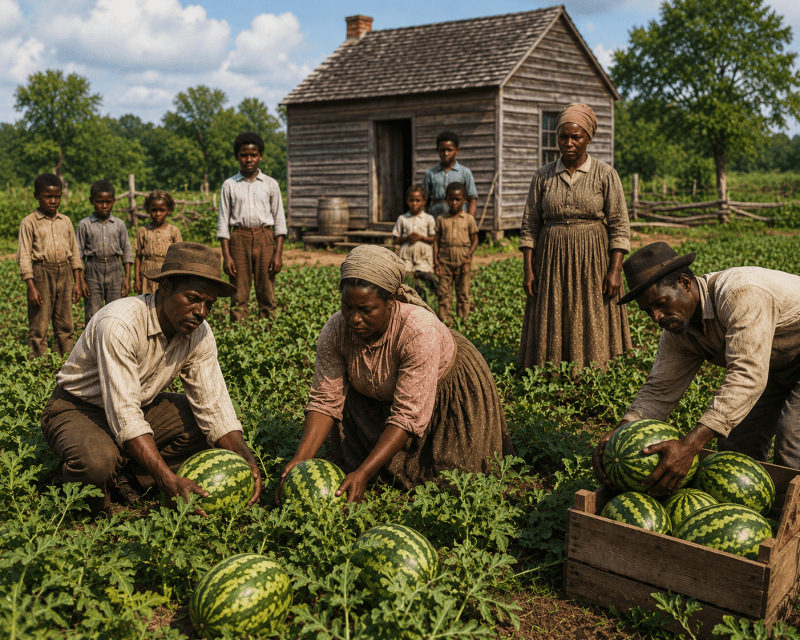
Watermelon became closely associated with African American people through a mix of history and racist propaganda. After emancipation, many Black farmers and vendors grew and sold watermelons as a way to earn money and show self-sufficiency, and white Americans then turned that visible success into a stereotype meant to mock and diminish Black people.
How it started
Watermelon was linked to freedom and independence for many freed Black Americans in the Reconstruction era because it was a crop they could grow and sell relatively easily. That made it economically useful, but also symbolically important, because it represented control over one’s own labor and income.
How it became racist
As Black people’s independence became more visible, white cartoonists, newspapers, advertisers, and entertainers began using watermelon in demeaning images and jokes to suggest Black people were lazy, childish, messy, or unfit for citizenship. Those repeated images spread the stereotype far beyond the South and made it seem “natural,” even though it was deliberately constructed.
The bigger picture
So the association is not because watermelon is inherently connected to Black people; it grew out of a period when Black economic progress was mocked and weaponized into a racist trope. In other words, the fruit first had positive meaning for many Black Americans, and then that meaning was twisted by racist culture.
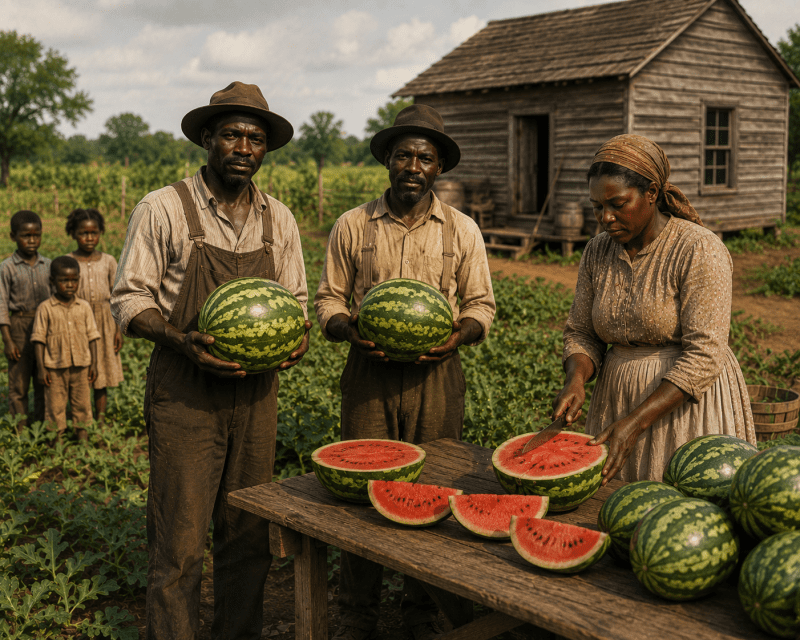
Minstrel shows helped spread anti-Black stereotypes by turning racist caricatures into popular entertainment. White performers in blackface portrayed African Americans as lazy, foolish, childlike, overly musical, and obsessed with cheap pleasures; those images were repeated so often that they started to feel normal to White audiences. Watermelon was folded into that same script, with shows and later ads using it to suggest Black people were carefree, unserious, or inferior.
AI generated image
How the stereotype spread
Minstrel shows were one of the main mass-media systems of the 1800s, so they had a huge reach. They didn’t just mock Black speech and behavior; they made those distortions part of mainstream popular culture, which helped connect Black identity with demeaning images like watermelon, chicken, and exaggerated smiling. That’s why the association lasted long after minstrel shows faded.
Other foods in the stereotype
The two foods most often tied to racist minstrel imagery were watermelon and chicken. Over time, other foods became associated with Black culture in a different, non-stereotyped way through history and cuisine, including collard greens, turnip greens, okra, black-eyed peas, grits, chitlins, rice, sweet potatoes, corn bread, mac and cheese, and sweet potato pie. Those foods are better understood as part of African American culinary tradition and regional soul food, not as stereotypes.
It helps to separate racist caricatures from real food traditions. Some foods were weaponized in racist imagery, while others reflect heritage, adaptation, and creativity in Black cooking. The harmful association came from racist media, not from the foods themselves.
Jim Crow laws shaped how Black foodways were seen by linking Black people, Black labor, and Black cooking to ideas of inferiority in White public culture. They also turned dining into a racial boundary: Black people were often forced into segregated spaces, denied equal service, or made to eat in kitchens, back areas, sidewalks, or other places meant to signal subordination.
Under Jim Crow bias media and restaurant culture often framed Black cooking as “unclean,” “primitive,” or less refined, while treating white food practices as cleaner and more scientific. That helped make Black foodways look backward or low-status in public imagination, even though they were rich, adaptive, and central to Southern food culture.
Food as control
Segregation also made food a tool of social control. If Black people could not freely eat in restaurants, travel comfortably, or occupy dining spaces as equals, then food became one more way to enforce racial hierarchy. At the same time, Black-owned cafés and home cooking became sites of community, dignity, and economic independence.
Lasting effects
The legacy of Jim Crow still affects how some people stereotype Black food as “soul food” in a narrow or dismissive way, rather than recognizing the variety of African American regional and class-based food traditions. In practice, Black foodways include both survival foods shaped by oppression and celebrated culinary traditions shaped by creativity, migration, and family knowledge.
Today everyone enjoys watermelon and the love for it should always be about the health and enjoyment of it – far more important than assigning negativity to the delicious fruit.
0 Comments