
10 Must-Visit Places in Georgia
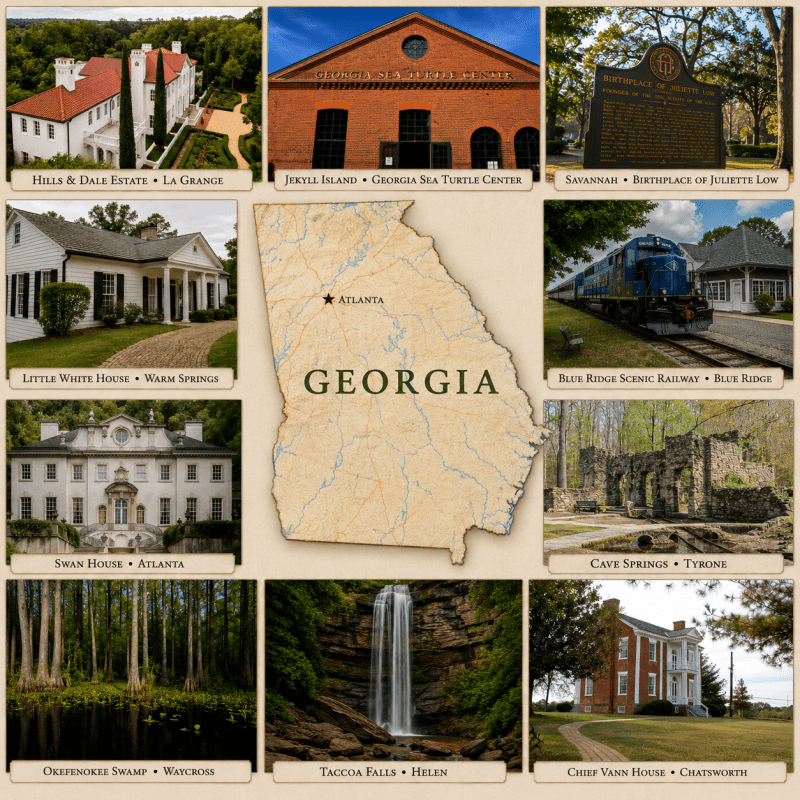
From the Mountains to the Golden Isles
A Traveler’s Guide to the Peach State’s Best-Kept and Best-Loved Destinations
Georgia is one of those states that quietly surprises you. It has mountain railroads and blackwater swamps, Cherokee mansions and presidential retreats, a waterfall on a college campus and sea turtles recovering in a seaside hospital. Whether you are drawn to history, nature, architecture, or just a good adventure, Georgia delivers. Here are ten destinations that deserve a place on your Georgia itinerary.
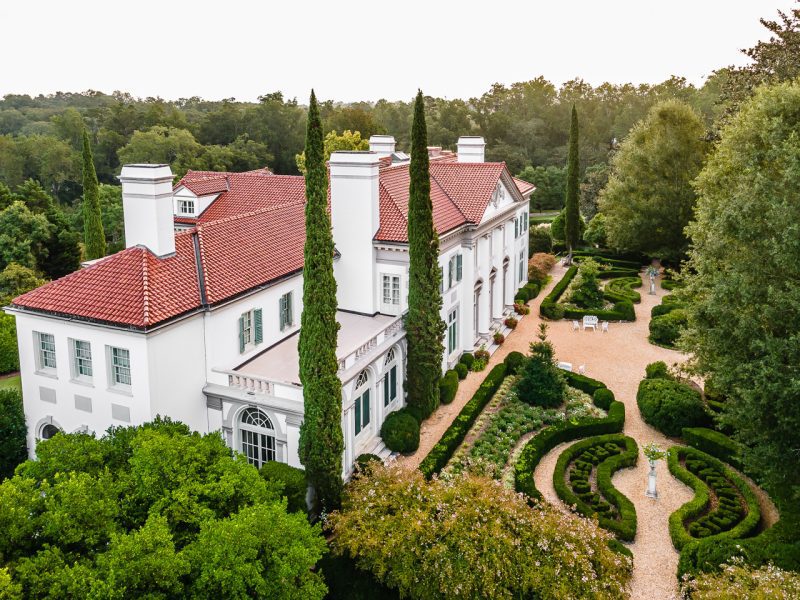
1. Hills & Dales Estate — LaGrange
Address: 1916 Hills and Dales Drive, LaGrange, GA 30240 Phone: 706-882-3242
Tucked into the rolling hills of west Georgia, Hills & Dales Estate is one of the most beautifully preserved historic properties in the entire South. The Italianate villa was home to three generations of the Callaway family, and what makes it extraordinary is that it has survived almost entirely intact — original furnishings, original art, original details, right down to the tinsel on the Christmas tree, which is placed and removed one piece at a time to preserve it.
The grounds are just as remarkable as the house. The terraced gardens, originally designed in the early 1900s, are considered among the finest surviving examples of formal Italianate garden design in America. There is something quietly breathtaking about walking through them regardless of the season.
Best time to visit: Spring for the gardens in full bloom, or December when the estate is decorated for Christmas exactly as the Callaway family did it. Any time of year rewards a visit.
Hours: Tuesday–Saturday, 10 AM–5 PM. Closed Sunday and Monday.
Fees: Admission charged for house tours; check the website at hillsanddales.org for current pricing. Membership available for repeat visitors.
Insider tip: Allow at least two hours. The guided house tour covers the entire home, not just a few select rooms — a rarity among historic properties.
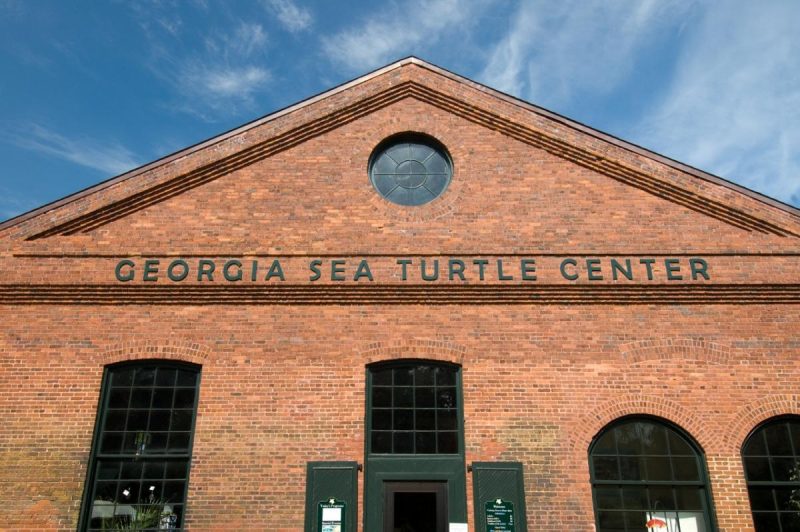
2. Georgia Sea Turtle Center — Jekyll Island
Address: 214 Stable Road, Jekyll Island, GA 31527 Phone: 912-635-4444
Jekyll Island is one of Georgia’s beloved barrier islands, and the Georgia Sea Turtle Center is one of its greatest treasures. This working sea turtle rehabilitation hospital treats injured and ill sea turtles from along the Georgia coast — loggerheads, Kemp’s ridleys, green turtles — nursing them back to health before releasing them back to the ocean.
Visitors can watch the rehabilitation work in progress, learn about each turtle’s story, and get an education in sea turtle conservation that is genuinely moving. If you can book the behind-the-scenes tour, do it — visitors have been known to watch surgeries in progress, and the staff and volunteers are passionate, knowledgeable, and delightful to talk to.
Best time to visit: Sea turtle nesting season runs May through October, making summer the most exciting time. The center is open year-round, however, and quieter winter visits have their own appeal.
Hours: Daily, 9 AM–5 PM.
Fees: General admission charged; behind-the-scenes tours available at an additional cost. Check gstc.jekyllisland.com for current prices. Note that Jekyll Island also charges a parking/entrance fee at the island causeway.
Insider tip: Combine with a walk or bike ride along Jekyll Island’s extensive trail system — the island is remarkably beautiful and largely undeveloped.
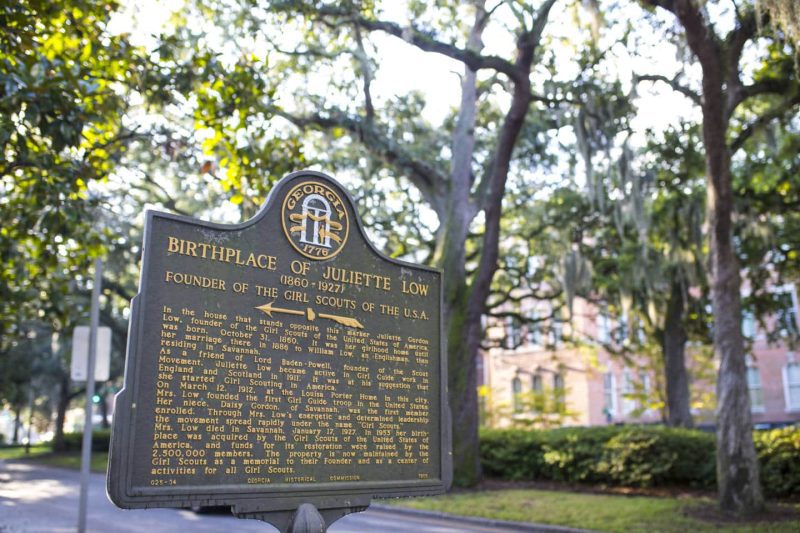
3. Juliette Gordon Low Birthplace — Savannah
Address: 10 East Oglethorpe Avenue, Savannah, GA 31401 Phone: 912-233-4501
In the heart of historic Savannah, on a gracious corner just steps from some of the city’s famous squares, stands the birthplace of one of America’s most beloved women. Juliette Gordon Low was born in this elegant Regency townhouse in 1860, and in 1912 she founded the Girl Scouts of the USA — an organization that has shaped the lives of more than 50 million American women and girls.
The house has been carefully preserved and interpreted, and the guided tours bring both the Gordon family history and Juliette’s remarkable life vividly to life. For Girl Scouts past and present, it is a genuine pilgrimage. For everyone else, it is simply a wonderful piece of Savannah history in a spectacular setting.
Best time to visit: Year-round — Savannah is glorious in every season, though spring and fall are particularly lovely for walking the historic district before and after your visit.
Hours: Monday–Saturday, 10 AM–5 PM; Sunday, 11 AM–4 PM.
Fees: Admission charged; Girl Scout members receive a discount. Check juliettegordonlowbirthplace.org for current pricing.
Insider tip: Book your tour in advance, especially in spring and summer. The house fills up, and walk-in availability can be limited. While in the neighborhood, stroll to Chippewa Square — it’s one of Savannah’s most beautiful and historically significant public spaces.
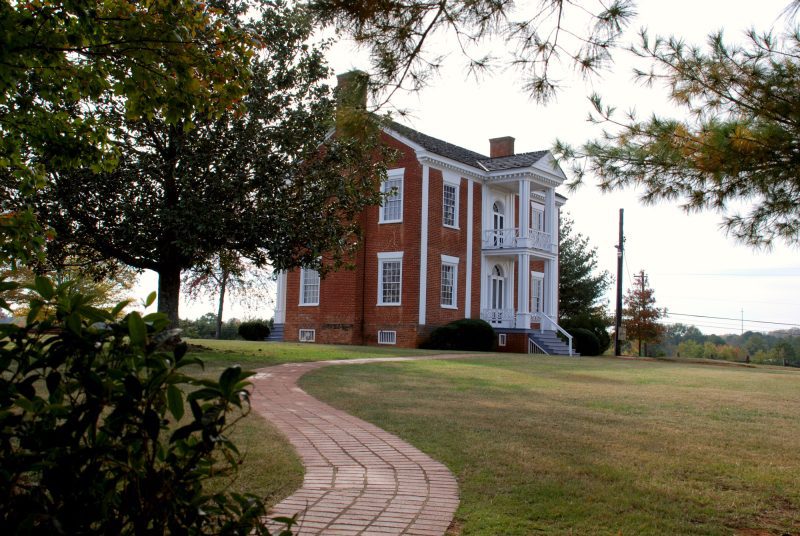
4. Chief Vann House Historic Site — Chatsworth
Address: 82 GA-225, Chatsworth, GA 30705 Phone: 706-695-2598
Known as the “Showplace of the Cherokee Nation,” the Chief Vann House is Georgia’s best-preserved Cherokee home and one of the most fascinating historic sites in the entire state. Built in 1804 by Chief James Vann — a powerful, feared, and complicated man who was shot and killed at a local tavern in 1809 — the two-story brick mansion is an architectural marvel featuring a famous cantilevered “floating” staircase that supports itself without visible bracing.
The house tells a rich and nuanced story of the Cherokee Nation in early nineteenth-century Georgia — their sophistication, their prosperity, the complexity of their relationship with European-American culture, and ultimately the tragedy of their forced removal on the Trail of Tears in 1838. The grounds include reconstructed Cherokee outbuildings and self-guided exhibits that add important context.
Best time to visit: Spring or fall for comfortable walking of the grounds. Avoid Monday–Wednesday when the site is closed.
Hours: Thursday–Friday 9 AM–5 PM; Saturday 9 AM–5 PM; Sunday 1–5 PM. Closed Monday–Wednesday.
Fees: Admission charged; guided house tours included with admission. Check gastateparks.org for current pricing.
Insider tip: Arrive with a full hour to spare before closing to allow time for both the house tour and the self-guided grounds. The tour guides here receive consistently outstanding reviews — ask questions and let them tell the full story.
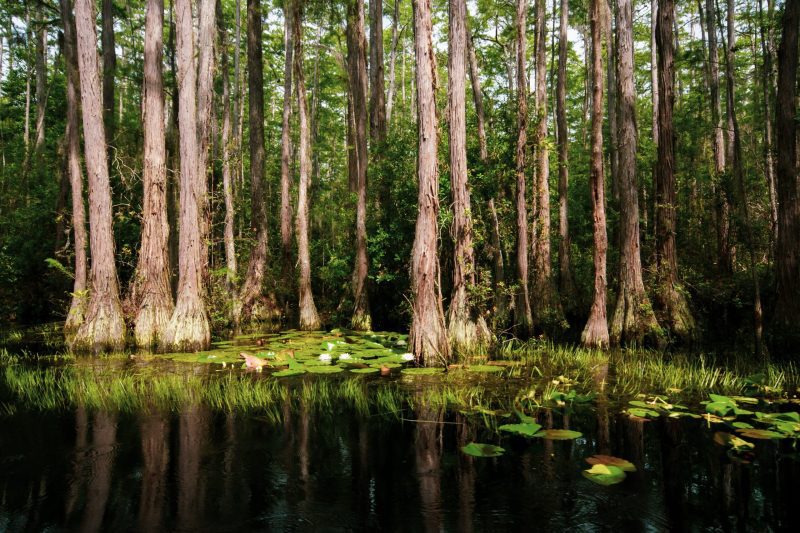
5. Okefenokee National Wildlife Refuge — Folkston
Address: 4155 Suwannee Canal Road, Folkston, GA 31537 Phone: 912-496-7836
There is nowhere else in the world quite like the Okefenokee. The largest blackwater swamp in North America — more than 400,000 acres of ancient, tangled, impossibly alive wilderness — the Okefenokee is home to some 600 species of plants and animals, including alligators in numbers that will make even the most jaded nature lover sit up straight.
The Suwannee Canal entrance near Folkston offers boat tours, kayak and canoe rentals, a boardwalk with an observation tower, and ranger-led programs. Visitors consistently report seeing 15–20 alligators on a single boat tour, along with herons, egrets, sandhill cranes, otters, and in lucky moments, the endangered red-cockaded woodpecker. The water is that extraordinary dark amber color — stained by tannins from cypress trees — that makes the swamp look like a landscape from another world.
Best time to visit: Spring (March–May) for wildlife activity and mild temperatures. Summer brings heat and insects; fall is lovely and quieter; winter offers excellent birdwatching. Avoid summer if you are sensitive to humidity and mosquitoes.
Hours: Daily, 7 AM–7:30 PM.
Fees: Vehicle entrance fee applies; additional fees for boat tours and equipment rentals. Check fws.gov/refuge/okefenokee for current pricing and tour availability.
Insider tip: Book the guided boat tour — it is worth every penny. The guides are exceptional naturalists who know every alligator by name and bring the swamp’s ecology to life in ways a self-guided paddle simply cannot match.
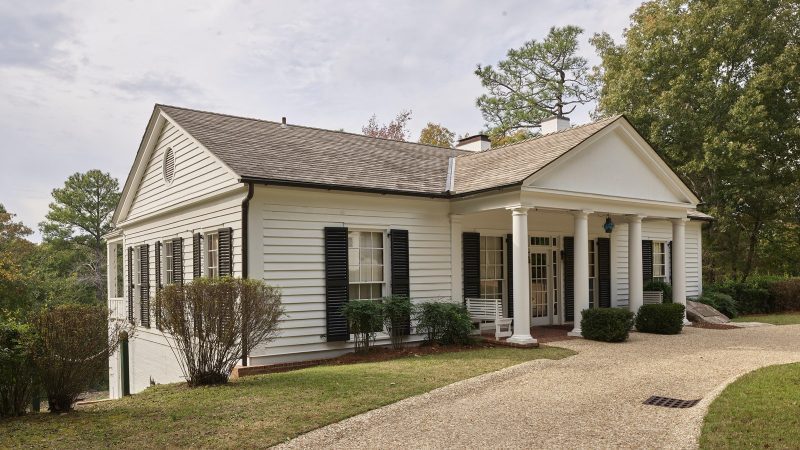
6. Little White House Historic Site — Warm Springs
Address: 401 Little White House Road, Warm Springs, GA 31830 Phone: 706-655-5870
Franklin Delano Roosevelt first came to Warm Springs in 1924 seeking relief for his polio-weakened legs in the town’s warm mineral springs. He fell in love with the place, built a modest white cottage on a pine-covered hillside, and returned again and again throughout his presidency — finding respite from the weight of the Depression and the Second World War in the quiet Georgia hills.
On April 12, 1945, while sitting for a portrait in this cottage, FDR died. The house has been preserved exactly as it was that day — the unfinished portrait still on the easel, the furniture in its original arrangement, the president’s personal belongings exactly where he left them. It is one of the most poignant historic sites in America, and the museum surrounding it tells the full story of Roosevelt’s presidency, his relationship with Warm Springs, and his remarkable personal courage in living with disability.
Best time to visit: Year-round. Spring and fall are particularly pleasant for exploring the grounds and the charming historic downtown of Warm Springs nearby.
Hours: Daily, 9 AM–4:45 PM.
Fees: Admission charged. Check gastateparks.org for current pricing. The adjacent historic downtown is free to explore, and the Bulloch House restaurant is a local institution worth stopping for lunch.
Insider tip: Allow at least two hours — visitors consistently report losing track of time here. The staff are extraordinarily passionate and knowledgeable about FDR’s life and legacy.
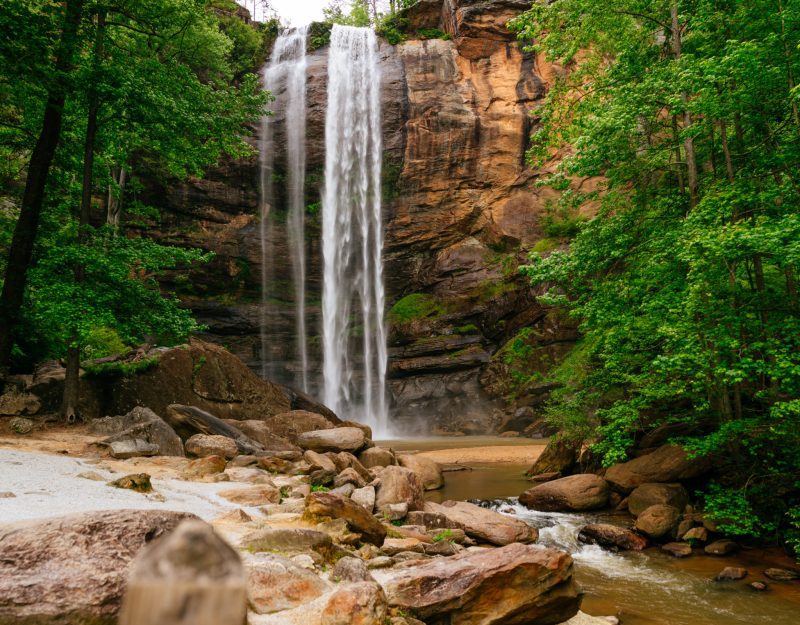
7. Toccoa Falls — Toccoa
Address: Toccoa Falls College Campus, Toccoa, GA 30577
Hidden on the campus of Toccoa Falls College in the foothills of the Blue Ridge Mountains, Toccoa Falls drops 186 feet, taller than Niagara Falls, in a single magnificent plunge into a rocky pool below. It is one of the highest free-falling waterfalls east of the Mississippi, and the fact that you can stand at its base and look straight up is the kind of experience that stays with you.
The walk from the parking area is short, flat, and accessible to almost everyone, making this one of the most rewarding waterfall visits in the state for the minimal effort required. The college campus setting adds a quiet, peaceful quality to the visit.
Best time to visit: Spring for maximum water flow, fall for the surrounding foliage, or any time after a good rain when the falls are running full. Weekdays tend to be quieter.
Hours: Monday–Friday, 10 AM–4 PM; Saturday–Sunday, 12 PM–4 PM. Hours are subject to change, call ahead.
Fees: $2 per adult; discounts for seniors and military. Pay in the campus gift shop, which is the entry point for the trail.
Insider tip: Don’t follow GPS directly to the falls, follow the campus signs once you arrive. Bring your own water bottle; the short trail and the setting make it a lovely spot to linger.
8. Blue Ridge Scenic Railway — Blue Ridge
Address: 241 Depot Street, Blue Ridge, GA 30513 Phone: 877-413-8724
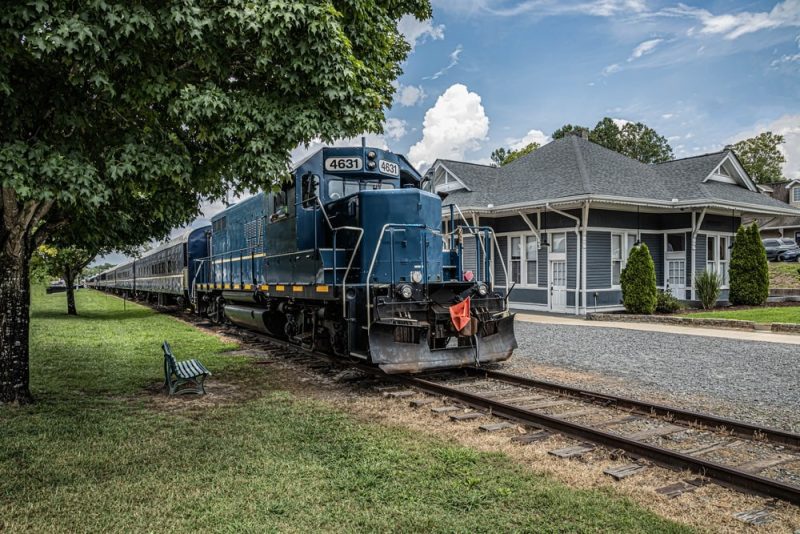
Blue Ridge is one of the most charming small towns in North Georgia, and the scenic railway that departs from its historic depot is one of the most beloved day-trip experiences in the state. The vintage train winds through the Chattahoochee National Forest along the Toccoa River, offering spectacular mountain and river views before crossing the state line into McCaysville, Georgia and Copperhill, Tennessee — two small towns that sit astride the state line and offer shops and restaurants for a leisurely layover.
Ride options range from a 2-hour round trip to a 4-hour extended excursion. Open or closed coaches are available; the closed coach is recommended in cooler weather or for families with young children, while the open cars offer the full mountain air experience in warmer months. The fall foliage trip, offered in October, is justifiably legendary.
Best time to visit: October for fall foliage, book well in advance, as these trips sell out. Spring and summer are beautiful; Christmas-themed rides are also popular. The surrounding Blue Ridge downtown, with its galleries, restaurants, and shops, makes any visit a full day.
Hours: Depot open daily, 9 AM–4 PM. Train departures vary by season — check brscenic.com for current schedules and to purchase tickets in advance.
Fees: Ticket prices vary by trip length and car type. Check the website for current pricing; advance purchase strongly recommended especially on weekends and during fall.
Insider tip: Sit on the river side of the train on the way out for the best water views; switch to the mountain side on the return. The on-board guides will tell you when to make the switch.
9. Atlanta History Center — Atlanta
Address: 130 West Paces Ferry Road NW, Atlanta, GA 30305 Phone: 404-814-4000
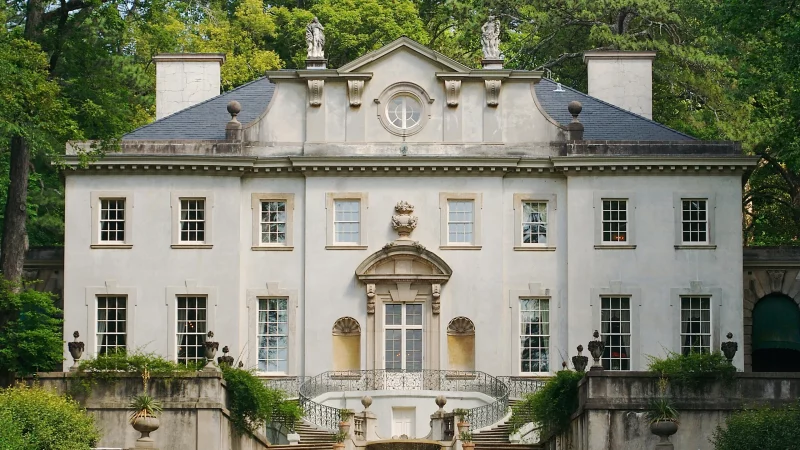
In the heart of Atlanta’s Buckhead neighborhood, the Atlanta History Center is one of the finest regional history museums in the American South, and far more expansive than most visitors expect. The 33-acre campus includes sweeping exhibition galleries covering Atlanta’s founding, the Civil War, the Civil Rights Movement, and Southern folklife, as well as two magnificent historic houses: the 1928 Swan House, an elegant Italianate mansion with original furnishings and formal gardens, and the Tullie Smith Farm, a restored 1840s plantation farmhouse.
The Civil War collection is particularly exceptional, one of the largest in the country, and recent special exhibitions have brought nationally significant artifacts and documents to Atlanta. The museum also hosts concerts, lectures, and community events throughout the year.
Best time to visit: Year-round. The gardens are beautiful in spring; the museum itself is entirely engaging in any weather. Check the website for special exhibitions and events before you visit.
Hours: Tuesday–Saturday, 9 AM–4 PM; Sunday, 12 PM–4 PM. Closed Monday.
Fees: Admission charged; includes access to all exhibitions and both historic houses. Check atlantahistorycenter.com for current pricing. Parking is available on campus.
Insider tip: Allow a full half-day minimum — most visitors spend 3–4 hours and wish they had more time. The Swan House alone is worth the admission price.
10. Cave Spring — Cave Spring
Address: Cave Spring, GA 30124 (Floyd County)
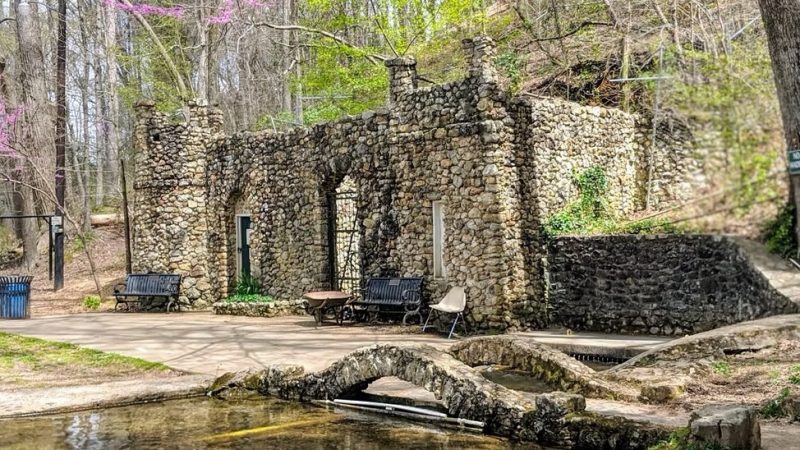
Cave Spring is one of Georgia’s most enchanting small towns — a place that feels genuinely, beautifully unchanged, built around a natural limestone cave and the crystal-clear spring that flows from it at a constant 56 degrees year-round. The town itself is listed on the National Register of Historic Places, and its quiet streets lined with antebellum homes and century-old storefronts make it one of the loveliest walking towns in the state.
The cave is open for self-guided exploration — visitors describe the experience as wonderfully informal and genuinely magical, particularly for children. The spring feeds a public swimming pool that has been a local gathering place for generations. Many residents and visitors fill jugs with the natural spring water, which flows freely from multiple points in the park and is beloved for its pure, clean taste.
Best time to visit: Spring and fall for the most comfortable weather and the prettiest scenery. Summer brings locals to the swimming pool; the cave is cooler than outside in hot weather. Cave access is primarily on weekends — call ahead to confirm hours before visiting.
Hours: The park grounds are open daily; cave access is most reliable on weekends. Hours are approximately 11 AM–5 PM, but confirm before visiting as hours can vary seasonally.
Fees: Approximately $2 per person for cave entry; the spring water and park grounds are free. Swimming pool fees apply in season.
Insider tip: Pair a Cave Spring visit with a drive through the surrounding Floyd County countryside and a stop in nearby Rome, Georgia, one of the state’s most underrated small cities, for a full and rewarding day trip from Atlanta (about 1.5 hours northwest).
From the Cherokee history of the North Georgia mountains to the sea turtle hospitals of the Golden Isles coast, Georgia’s diversity of places and stories is remarkable. These ten destinations are just the beginning — the Peach State rewards every mile of exploration.


0 Comments