
A Travel Guide to the Alamo and the Journey of Joe
WALKING JOE’S ROAD
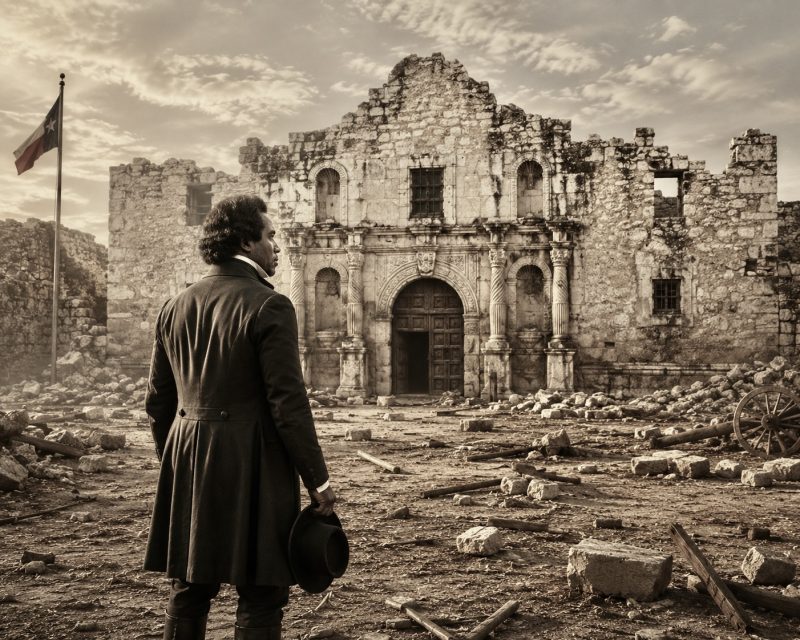
Imagine Joe, looking over the ruins of the Alamo knowing he can share the story of what happened.
Retracing the Battle, the Testimony, and the Road That Carried the Truth of the Alamo Across Texas
A Quarter Miles Travel Companion Guide
Compiled July 2026, as always, verify hours, admission, and tour details before you go, as these can change.
Why This Road Matters
Almost everyone who visits the Alamo hears about Travis, Bowie, and Crockett. Very few visitors are told that the version of events they’re hearing exists largely because of one young enslaved man named Joe, William Barret Travis’s body servant, and the only adult male defender to survive the battle. Joe fought at the wall beside Travis, was interrogated by Santa Anna himself, and then rode and walked across Texas to deliver the first full account of the Alamo’s fall to Sam Houston and the founders of the Republic of Texas.
This guide traces that same route, from the Alamo itself, to Gonzales, to Washington-on-the-Brazos, so you can stand in the places where Joe’s testimony became history, even though the story rarely mentions his name. A short final section adds sites connected to the wider arc of Joe’s life, including his brother William Wells Brown.
“He is the only male, of all who were in the fort, who escaped death… I heard him interrogated in the presence of the cabinet and others. He related the affair with much modesty, apparent candor.” — William Fairfax Gray, Texas official, describing Joe’s testimony at Washington-on-the-Brazos, March 1836
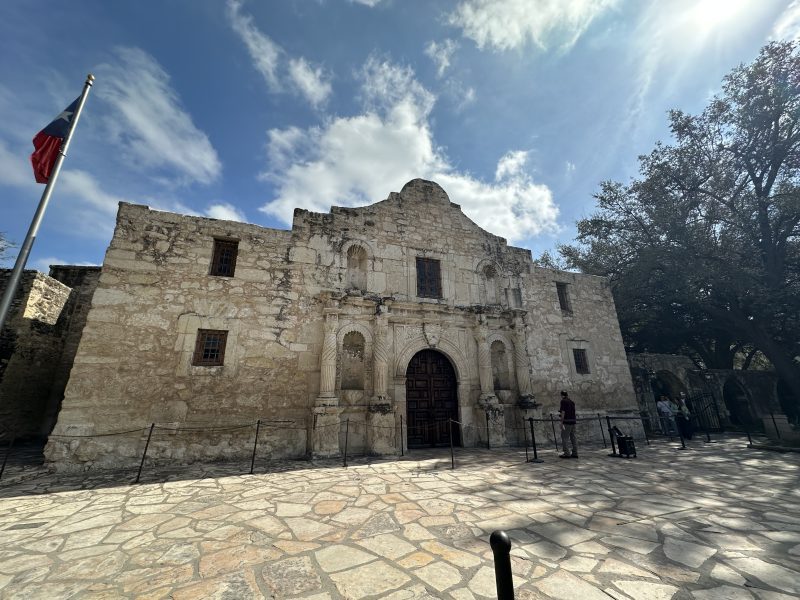
Stop 1: The Alamo — San Antonio, Texas
This is where the story begins and where Joe’s ordeal took place, the thirteen-day siege, the final assault on the morning of March 6, 1836, and the moment he stepped forward when Mexican soldiers called for any Black men inside to reveal themselves.
The Alamo (Mission San Antonio de Valero)
Address: 300 Alamo Plaza, San Antonio, TX 78205
Hours: Grounds open daily, 9:00 a.m.–5:30 p.m. (Church, Long Barrack & grounds are free; a free timed ticket is required to enter the Church — reserve ahead online)
What to see: The Alamo Church and Long Barrack, the Ralston Family Collections Center (which now houses the Phil Collins Collection of Alamo artifacts), the Living History Encampment, and the Alamo Gardens. Ask about — or look for — the online resource “Joe’s Account of the Battle of the Alamo,” the Alamo’s own published history page drawing on Joe’s testimony and William Fairfax Gray’s diary.
The Alamo — official site — https://www.thealamo.org/
Joe’s Account (official Alamo history page) — https://www.thealamo.org/remember/battle-and-revolution/joes-account
A UNESCO World Heritage Site and a working shrine — dress respectfully, remove hats inside the Church, and no photography is allowed inside the Church or Long Barrack.
San Antonio Missions National Historical Park
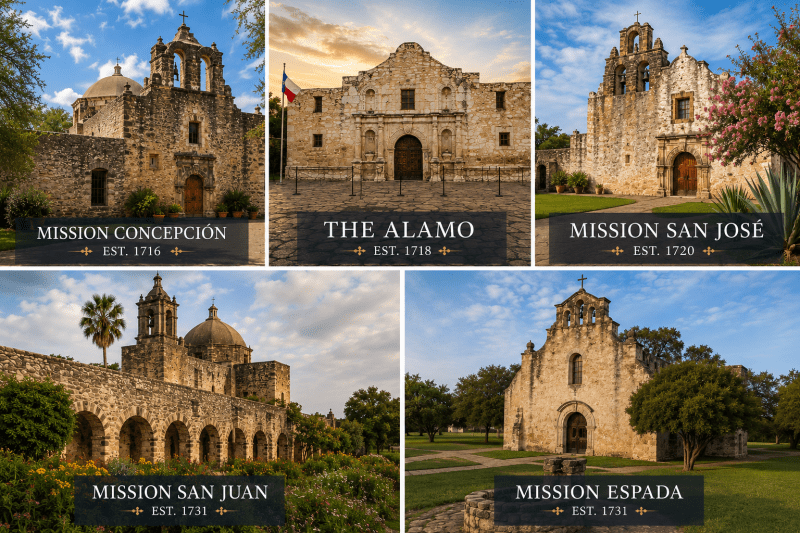
What to see: The four other Spanish colonial missions along the San Antonio River (Concepción, San José, San Juan, and Espada) that, together with the Alamo, formed the most populous Spanish colonial settlement in Texas — useful context for understanding what kind of place the Alamo was before 1836.
National Park Service — https://www.nps.gov/saan/
Stop 2: Gonzales, Texas
After his release by Santa Anna, Joe made his way here alongside Susanna Dickinson to deliver the first word of the Alamo’s fall to Sam Houston and the assembling Texan forces. Gonzales is also where the Texas Revolution itself began five months earlier, and the town from which the “Immortal 32” rode out to try to reinforce the Alamo garrison.
Gonzales Memorial Museum
What to see: The original “Come and Take It” cannon, exhibits on the Battle of Gonzales and the Immortal 32 — the only reinforcements to answer Travis’s call for help — plus period weapons, uniforms, and photographs. This is the closest public history stop to where Joe and Susanna Dickinson first delivered the news of the Alamo’s fall to Sam Houston’s gathering army.
Address: 414 Smith St, Gonzales, TX 78629
Texas Historical Commission listing — https://texastimetravel.com/directory/gonzales-memorial-museum-tour/
Gonzales also hosts “Texas Legacy in Lights,” a free nightly outdoor projection show telling the town’s Revolution-era story on the museum’s exterior walls — check current showtimes if visiting in the evening.
Gonzales Pioneer Village Living History Center
What to see: A recreated 19th-century Texas town of relocated historic structures — homes, a blacksmith shop, a schoolhouse — offering a feel for the frontier world Joe and the other Alamo survivors emerged into in March 1836.
Gonzales County Jail Museum & Historic Downtown
What to see: An 1885 jail-turned-museum, plus a walkable historic downtown and the Texas History Museum District — Texas’s first state-designated district of its kind.
Gonzales sits roughly 70 miles east of San Antonio — about an hour and fifteen minutes by car, making it a natural next stop after the Alamo itself.
Stop 3: Washington-on-the-Brazos State Historic Site
This is arguably the single most important stop for understanding Joe’s historical significance. It was here, around March 20, 1836 — just days after Texas delegates had signed their declaration of independence in this very town — that Joe was brought before Texas officials and gave the detailed, first-person account that became the foundation of the traditional Alamo narrative. William Fairfax Gray’s diary entry describing that interrogation, quoted at the top of this guide, was written here.
Washington-on-the-Brazos State Historic Site
Address: 23400 Park Road 12, Washington, TX 77880 (roughly halfway between Brenham and Navasota, off Highway 105)
Hours: Grounds: daily 9:30 a.m.–5:00 p.m. Star of the Republic Museum, Independence Hall, and Barrington Living History Farm: Wednesday–Sunday, 10:00 a.m.–4:30 p.m.
Admission: Adult $10 / Senior, Veteran, Teacher, First Responder $8 / Children 6–17 $6 / Children 5 and under free
What to see: Independence Hall (a reconstruction of the building where the Texas Declaration of Independence was signed), the Star of the Republic Museum (covering the full Republic of Texas period, 1836–1846), and Barrington Living History Farm. This is the ground where Texas leaders first heard, from Joe himself, how Travis died and how the Alamo fell.
Official site — https://wheretexasbecametexas.org/
Texas Historical Commission — https://thc.texas.gov/historic-sites/washington-brazos
Allow at least an hour, ideally two, to see the full complex. Free handheld audio tours are available.
Stop 4: San Jacinto Battleground — La Porte, Texas
The Alamo’s fall — and the fury Joe’s account helped stir in the men who heard it — fed directly into the battle cry that carried Sam Houston’s army to victory seven weeks later. Standing here connects Joe’s testimony to the moment Texas actually won its independence.
San Jacinto Battleground State Historic Site & Monument
Hours: Monument and Museum open Wednesday–Sunday, 9:00 a.m.–6:00 p.m.
What to see: The San Jacinto Monument (taller than the Washington Monument), the San Jacinto Museum of History, and the battlefield itself, where Houston’s forces defeated Santa Anna on April 21, 1836 — the same date, one year later, that Joe would choose for his own escape from slavery.
Texas Historical Commission — https://thc.texas.gov/historic-sites/san-jacinto-battleground
Stop 5: Following Joe’s Life Beyond the Battlefield
Joe’s story didn’t end at San Jacinto, and neither does this guide. These stops trace the harder, less-visited parts of his story: his return to bondage, his escape, and his family’s wider history.
Travis County & the Travis Estate Sites (Texas)
Context: After his testimony, Joe was returned to the Travis estate, then located near present-day Columbia, Texas (West Columbia), where he remained enslaved under executor John Rice Jones until his escape on April 21, 1837.
No formal public marker exists for this specific location at this time; researchers interested in this chapter should consult the Brazoria County Historical Museum in Angleton, Texas, for regional context and archives.
Brazoria County Historical Museum — Angleton, Texas
Why visit: Covers the plantation economy and enslaved population of the region where Joe was held after the battle, offering broader context for what his life looked like in the year between the Alamo and his escape.
Sparta / Brewton, Alabama
Context: Historical tradition holds that Joe made his way to Alabama after his escape, to the Travis family’s home near Sparta, to tell them how William Barret Travis had died. He is said by local legend to be buried in an unmarked grave near Brewton, Alabama, though this has never been definitively confirmed.
These are not currently developed public historic sites, but the region is documented in the 2015 biography referenced below, and is a meaningful stop for travelers tracing Joe’s full journey.
For the Deepest Dive: The Book
Recommended reading: Ron J. Jackson Jr. and Lee Spencer White, Joe, the Slave Who Became an Alamo Legend (University of Oklahoma Press, 2015), the definitive modern biography, built from plantation ledgers, court records, and archival research, including the discovery connecting Joe to his brother, abolitionist author William Wells Brown.
Stop 6 (Optional Extension): Sites Connected to Joe’s Brother, William Wells Brown
For travelers building a fuller picture of Joe’s family, a small set of sites honor his brother, first published African American novelist and formerly enslaved abolitionist — and help complete the story of a family scattered by the domestic slave trade in St. Louis around 1832.
- An elementary school in Lexington, Kentucky is named in William Wells Brown’s honor, near where the family was originally enslaved.
- A historic marker in Buffalo, New York marks the approximate location of William Wells Brown’s home during his Underground Railroad years.
- William Wells Brown’s portrait is part of the Freedom Wall in Buffalo, New York — a public mural honoring 28 civil rights icons — and is also held by the Schomburg Center for Research in Black Culture in New York City, alongside some of his original writings.
See our companion episode and deep-dive on William Wells Brown for the full story of this connection.
Suggested Itinerary
- Day 1: San Antonio — the Alamo (allow 2+ hours), plus the San Antonio Missions if time allows.
- Day 2: Drive to Gonzales (about 1.25 hours) — Gonzales Memorial Museum, Pioneer Village, and downtown historic district.
- Day 2–3: Continue to Washington-on-the-Brazos (about 2.5 hours from Gonzales) — allow at least half a day for the full complex.
- Day 3: San Jacinto Battleground, near Houston (about 1.5 hours from Washington-on-the-Brazos) — closes the loop on the Revolution’s timeline.
- Optional: Extend to Angleton, Texas for Brazoria County context, or plan a separate trip tracing the Alabama chapter of Joe’s life.
Planning Tips
- Reserve your free Alamo Church ticket online in advance — same-day tickets are available but can run out during busy seasons.
- Washington-on-the-Brazos’s Star of the Republic Museum, Independence Hall, and Barrington Farm are closed Monday and Tuesday — plan around a Wednesday–Sunday visit if you want the full experience.
- Consider timing a trip around Gonzales’s annual Come and Take It Celebration (first weekend in October), which includes a battle reenactment.
- Always verify current hours, admission fees, and ticket requirements directly on each site’s website before finalizing travel plans.
For more information listen to the podcast – Joe and The Alamo
Also, there is the details show of the Alamo – Little Known Stories of the Alamo


0 Comments