
Destination:
History of Augusta National Golf Club

The History of Augusta National Golf Club
From Indigo Fields to Magnolia Lane and
the Untold Story of the Men Who Knew Every Blade of Grass
“I shall never forget my first visit to the property which is now Augusta National. It seemed that this land had been lying here for years just waiting for someone to lay a golf course upon it.” — Bobby Jones
Before the Green Jackets – The Land’s First Stories
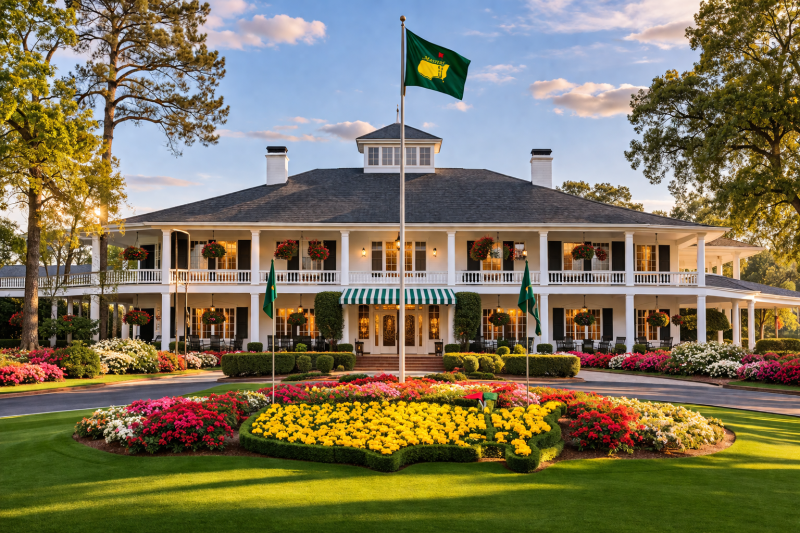
The history of Augusta National Golf Club has many twists and turns. Every April, the eyes of the golf world turn to a gentle, flower-draped stretch of Augusta, Georgia, where azaleas bloom in shades of pink and coral and the world’s best golfers walk beneath ancient oaks toward a destination that has become the most famous address in the sport. Augusta National Golf Club. Amen Corner. The Masters. Green jackets and birdie roars and Magnolia Lane. But the 365 acres that hold these legends carry stories far older and far more layered than the game of golf — stories of indigo, of peaches, of a Belgian family’s botanical ambitions, and of the Black men who, before anyone chased a trophy here, helped transform this land into what it became.
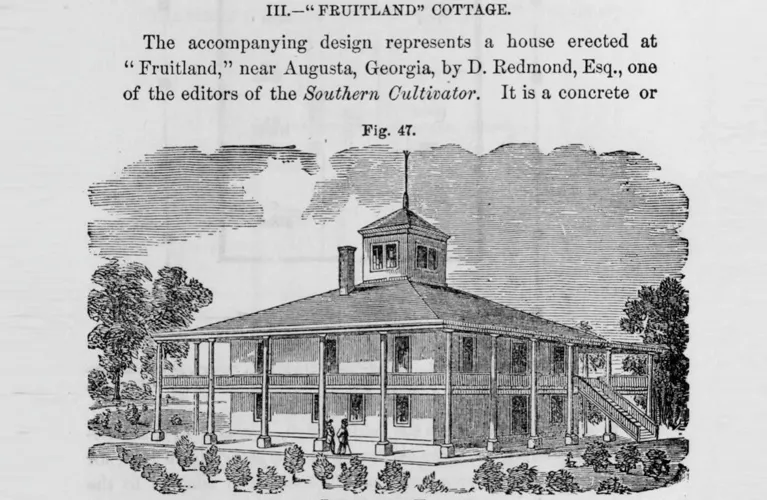
To understand Augusta National fully, you have to begin not in 1934 with the first Masters Tournament, and not even in 1932 when Bobby Jones first walked the property. You have to begin in 1854, when an Irish-born indigo farmer named Dennis Redmond purchased the land and gave it a name that would echo through American horticultural history.
Dennis Redmond and the Birth of Fruitland
Dennis Redmond was not, by most accounts, a man of great historical fame. He was a practical farmer with an eye for what land could produce, and the 365-acre parcel he purchased from Augusta Judge Benjamin Warren was, in his vision, an opportunity. Redmond grew indigo on the land — the deep blue dye crop that had been essential to the colonial economy of the South for a century before the Civil War made its economic foundations untenable — but he also had grander ambitions.
He named the property “Fruitland” and began filling it with life. Peaches, apples, grapes, strawberries, fruit trees of every variety he could obtain. He began construction of a large manor house on the property he called Fruitland Manor — a structure that would eventually become one of the most recognizable buildings in American sports. Believed to be the first concrete house built in the American South, its walls were 18 inches thick, its construction of lime, gravel, and sand. The house had seven rooms downstairs and seven up, and from its grounds one looked out over what Redmond had planted with such care.
The property under Redmond was already beginning its transformation from plantation to nursery, from commodity agriculture toward something that would prove far more lasting — a legacy of botanical cultivation that would shape the appearance of an entire region and, eventually, one of the world’s most beautiful golf courses.
The Berckmans: Horticulturists, Visionaries, and the Georgia Peach
In 1857, a father and son arrived in Augusta from Belgium with dreams of building a world-class nursery. Louis Mathieu Eduard Berckmans and his son Prosper Julius Alphonse had traveled through Europe and America in search of the ideal climate and location for their botanical ambitions. Augusta, with its rich soil, mild winters, strong rail and water transportation links, and proximity to the markets of the Atlantic seaboard, was exactly what they were looking for.
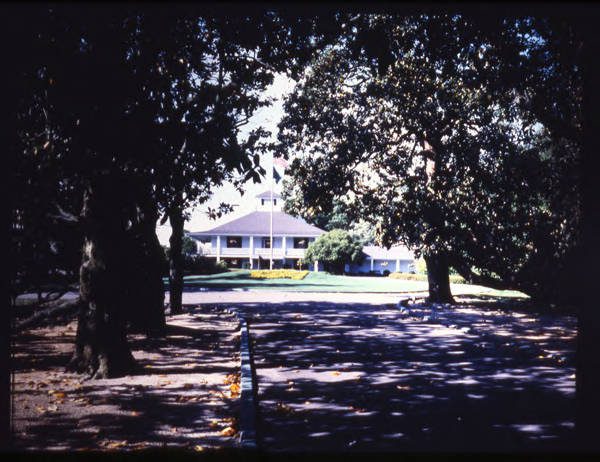
The Berckmans initially acquired a fifty percent ownership stake in Redmond’s Fruitland, and within a year, Prosper had assumed full ownership. He completed the construction of the manor house that Redmond had begun, transforming it into the Berckmans family mansion, and he planted along the long approach from Washington Road a double avenue of magnolia trees grown from seed — sixty-one trees that would one day become Magnolia Lane, the most famous driveway in golf. Those magnolia trees, planted in the 1850s, still stand today.
Under Prosper Berckmans, Fruitland Nurseries became the most significant horticultural enterprise in the American South. The nursery imported plants from around the world — more than forty varieties of azalea were brought in, popularizing their use throughout the South and creating the flowering landscape that would one day become Augusta’s visual signature. Prosper also developed and improved hundreds of varieties of trees, shrubs, and fruits, and in 1858 he shipped the first commercial consignment of Georgia peaches to the New York market, an act that would launch one of the most important agricultural industries in the state’s history.
Prosper Berckmans became known throughout the South as the “Father of Peach Culture.” Under his guidance, Fruitland developed and improved the Chinese Cling variety of peach, which eventually produced the primary commercial varieties that would make Georgia synonymous with the fruit — the Elberta, the Belle, and the Thurber. By 1861, Fruitland was producing over 300 kinds of peaches and countless other fruits and trees. When the first commercial Georgia peaches made their way north to New York City, they were being sold by a man whose family name would one day grace a hole at Augusta National: the fourth hole, named Flowering Peach.
| HORTICULTURAL LEGACY: The hole names at Augusta National are a direct homage to the Berckmans’ nursery. Each of the 18 holes is named after the flowering plant or shrub associated with it — Tea Olive, Pink Dogwood, Flowering Peach, Magnolia, Azalea, and more. Hole 13, Azalea, is home to over 1,600 azaleas of more than 30 different varieties. The plants that make Augusta National bloom every April in such extraordinary beauty are the living descendants of Prosper Berckmans’ botanical vision. |
Prosper Berckmans died in 1910, and the family business that bore his vision began to unravel. His will, which divided interests among his children from multiple marriages, created complications that the business could not survive. By 1918, less than a decade after his death, the Fruitland trade name was sold and the nursery formally closed. The land, with its magnolias and azaleas and flowering peaches, fell idle — a beautiful ruin waiting for its next chapter.
In 1925, a Miami hotel developer named J. Perry Commodore Stoltz arrived with visions of a fifteen-story winter resort hotel. He poured some concrete foundations and then the Florida hurricane of that autumn swept away both his finances and his ambitions. The property sat idle again through the rest of the 1920s, its magnolias growing taller, its azaleas spreading wild, its manor house standing empty and magnificent — until a retired golfer came looking for a dream.
Bobby Jones and the Creation of Augusta National
Robert Tyre Jones Jr. was, by any measure, the greatest amateur golfer who ever lived. By the time he retired from competitive golf in 1930 at the age of twenty-eight, he had won thirteen major championships in just eight years, including in 1930 the Grand Slam — the British Amateur, the British Open, the U.S. Amateur, and the U.S. Open in a single calendar year — a feat that had never been accomplished before and has never been equaled since. He had nothing left to prove on the golf course. What he wanted, now, was to build one.
Jones had always dreamed of a golf course of his own — a winter club in his native Georgia where friends and fellow golfers could gather in the mild months and play on a course of genuine championship quality. His vision was specific: rolling natural terrain that would challenge the best players in the world while remaining pleasurable for the average golfer. No excessive artificial hazards. Beauty and intelligence in every hole. A course that played the way great courses should — using the land rather than fighting it.
His friend Clifford Roberts, a New York investment banker who would become the club’s inaugural chairman and the most powerful figure in its history, suggested Augusta as the location. A mutual friend introduced Jones to the abandoned Fruitland property. When Jones first walked through the magnolia avenue and out onto the rolling grounds, his response was immediate and famous. “I shall never forget my first visit to the property,” he wrote years later in Golf Is My Game. “The long lane of magnolias through which we approached was beautiful. The old manor house with its cupola and walls of masonry two feet thick was charming. The rare trees and shrubs of the old nursery were enchanting. But when I walked out on the grass terrace under the big trees behind the house and looked down over the property, the experience was unforgettable. It seemed that this land had been lying here for years just waiting for someone to lay a golf course upon it.”
For $70,000, the property was his. The Fruitland Manor Corporation — whose officers were not initially identified — completed the purchase in June 1931. Weeks later, the Augusta Chronicle announced that Bobby Jones would build his ideal golf course on the Berckmans’ place.
Designing the Course — Jones and MacKenzie
Jones enlisted Dr. Alister MacKenzie, a Scottish-born golf course architect whose work at Cypress Point in California had already demonstrated a genius for creating courses of extraordinary natural beauty. The two men shared a philosophy: a great golf course should use the land as it finds it, enhancing rather than overriding the natural contours and vegetation. At Augusta, with its rolling hills, ancient trees, and botanical richness, they had the perfect canvas.
The course was designed with a particular vision of the ideal golf hole — wide fairways that encouraged aggressive play, undulating greens that rewarded precision and punished carelessness, and a routing that created a sequence of escalating drama culminating in what would become the most famous stretch of holes in golf: the 11th, 12th, and 13th, named White Dogwood, Golden Bell, and Azalea, and known collectively as Amen Corner.
Prosper Berckmans’ son Louis served as the new club’s horticultural advisor, working with Jones and Roberts to name each hole after its predominant flowering plant and ensuring that each hole would have its namesake plant growing along its length. It was a final act of continuity between the nursery that had been and the golf course that was becoming. Augusta National opened for play in January 1933 with eighty members, each contributing $100 toward the opening party.
The Masters Tournament — From Invitation to Institution
The inaugural Masters Tournament — then called the Augusta National Invitational — was held in March 1934. Horton Smith won that first tournament with a score of 284, defeating Craig Wood by one stroke. The gallery was small, the purse modest, the infrastructure rudimentary. But the tournament had something that no other golf event possessed: Bobby Jones was playing, and wherever Bobby Jones played, the world paid attention.
Jones himself had not planned to compete in his own tournament. It was his friend and golfing mentor O.B. Keeler who persuaded him that the gallery deserved to see him play. Jones finished thirteenth that first year. By the time he retired from competition entirely, the tournament he had founded had taken on a life of its own — developing in the years following into the most prestigious event in American golf, renamed the Masters in 1939.
Since 1934, the Masters has been held at Augusta National every April — the only major championship played at the same course every year. That consistency, combined with the course’s extraordinary beauty and dramatic scoring, has made it the most watched and most anticipated golf tournament in the world.
Men on the Bag — The Black Caddies of Augusta National
There is a story told at Augusta National that is every bit as important as the one about Bobby Jones and the magnolias. It is the story of the men who knew the course better than anyone — who read its greens by watching how rainwater flowed in the darkness, who could feel by the weight of a divot which way the grain was running, who guided the world’s greatest golfers to their most celebrated victories and then walked home to modest houses in nearby Sand Hills while the trophies and green jackets went to other men.
For the first forty-eight years of Masters history — from the inaugural tournament in 1934 through 1982 — every golfer competing in the tournament was required to use one of Augusta National’s club caddies. Every one of those caddies was a Black man. This was not an accident of circumstance. It was a policy — rooted in the racial hierarchy of Jim Crow Georgia — decreed by Augusta National co-founder Clifford Roberts, who reportedly stated that as long as he was alive, all the golfers would be white and all the caddies would be Black.
What those men made of that policy — the knowledge they built, the expertise they developed, the culture they created, and the victories they helped secure — is one of the most remarkable chapters in American sports history.
Sand Hills — Where It All Began
About ninety percent of Augusta National’s original caddie corps grew up in Sand Hills, a historically Black neighborhood located just three miles from the club, adjacent to Augusta Country Club. The majority of Sand Hills residents worked in the city’s cotton mills — steady but hard and poorly paid work. For the young men of Sand Hills, caddying offered a compelling alternative: outdoor work, fresh air, proximity to wealth and power, and wages that could dramatically outpace what the mills offered.
Boys as young as ten or eleven would begin their careers at Augusta Country Club, learning the craft of caddying before working their way to the more prestigious assignments at Augusta National and, ultimately, to the most coveted bag of all: a slot in the Masters Tournament. Many other caddies came from the Turpin Hill neighborhood and from Gwinnett Street — now Laney Walker Boulevard, named for the great educator whose museum today preserves their stories.
The path was not simply a matter of showing up and asking for work. There was a hierarchy, a culture of mentorship and learning, and above all the towering influence of one man who set the standard for what an Augusta caddie could and should be.
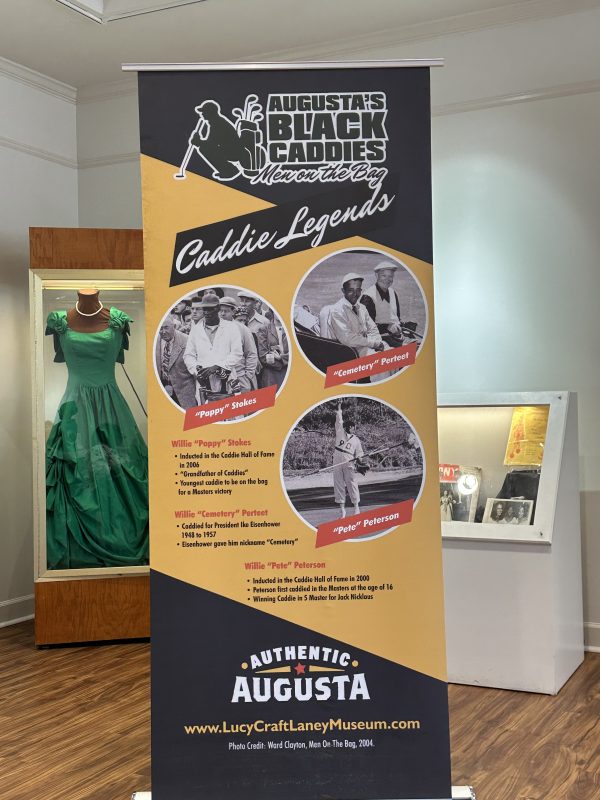
Willie “Pappy” Stokes — The Godfather
Willie Lee Stokes was born in 1920 on a parcel of the very land that would become Augusta National Golf Club. His family tended cotton and corn on the Fruitland property before Bobby Jones purchased it. As a child, Stokes watched the golf course being built around him, watched the trees being felled and the fairways being shaped and the greens being laid. He helped build Augusta National.
When the course opened in 1932, a twelve-year-old Stokes was hired to carry water to the construction workers. When the rains came — as they frequently did in Augusta — he had nowhere to go but the course itself, and so he sat on the fairways and watched. He watched how water moved. He watched where it pooled, where it streamed, which way it ran toward Rae’s Creek. He learned, in the most intimate way possible, how the land breathed and moved and thought.
That knowledge became his competitive advantage. Legend holds that Stokes could read any green on the Augusta National course with near-perfect accuracy, translating the flow of rainwater into predictions about how a putt would break. Clifford Roberts recognized his gift early and made Stokes his personal caddie. When the first Masters began in 1934, Roberts chose which player Stokes would work with each year.
Stokes went on to win five Masters as a caddie — with Henry Picard (1938), Claude Harmon (1948), Ben Hogan (1951 and 1953), and Jack Burke Jr. (1956). He tied a record that would only be matched by one other caddie. He also ran Saturday morning “caddie school” for the boys of Sand Hills, passing on his knowledge of the course and the craft to the next generation of Augusta caddies. He was their teacher, their standard, and their inspiration.
“I remember cutting down trees on No. 10 and No. 11,” Stokes once told the Augusta Chronicle. He watched those holes become two of the most famous in golf. He helped make them that way. Willie Lee “Pappy” Stokes died in 2006. His knowledge of Augusta National went with him — but his school had produced a generation of caddies who carried it forward.
| Willie “Pappy” Stokes | “The Godfather of Caddies” |
| Golfer(s) | Clifford Roberts (personal), Henry Picard, Claude Harmon, Ben Hogan, Jack Burke Jr. |
| Masters Wins | 5 Masters wins (tied record) — 1938, 1948, 1951, 1953, 1956 |
| Notable Story | Born on the Fruitland property itself. Helped build Augusta National. Read greens by watching rainwater flow. Ran Saturday caddie school for Sand Hills boys. Personal caddie to Clifford Roberts. |
Nathaniel “Iron Man” Avery — The Man Behind Arnie’s Army
Nathaniel Avery earned the nickname “Iron Man” from stories told about his extraordinary physical toughness — one version holding that he inadvertently severed a finger while playing golf with a hatchet, another that he injured a hand with powerful firecrackers. Whatever the origin, the name fit a man of legendary endurance and psychological fortitude.
Avery was Arnold Palmer’s caddie for all four of Palmer’s Masters victories — in 1958, 1960, 1962, and 1964. The relationship between Palmer and Avery was one of the great caddie-golfer partnerships in the sport’s history, defined by Avery’s combination of encyclopedic course knowledge and an extraordinary boldness that even the most celebrated golfers of the era had to respect.
The most famous moment of their partnership came during the final round of the 1960 Masters. Palmer, nursing a lead, hit a poor chip shot and, frustrated, threw his club in anger. Avery looked at his man with characteristic directness and said simply: “Are we chokin’, Mr. Palmer?” Palmer, who described the moment as feeling like his father scolding him, responded by birdieing the final two holes to secure the victory. That one sentence, delivered with perfect timing, may have been worth more than any club selection Avery ever made.
When Nathaniel Avery died in 1985, he was buried in Augusta’s Southview Cemetery in an unmarked grave. It took more than three decades — and the advocacy of author Ward Clayton, along with the involvement of Arnold Palmer himself — before a proper headstone was installed in 2017. That a man whose counsel helped produce four Masters victories lay in an unmarked grave for thirty-two years tells you everything you need to know about the recognition these men received in their time.
| Nathaniel “Iron Man” Avery | “Iron Man” |
| Golfer(s) | Arnold Palmer |
| Masters Wins | 4 Masters wins — 1958, 1960, 1962, 1964 |
| Notable Story | Famous for telling Palmer during the 1960 Masters “Are we chokin’, Mr. Palmer?” — sparking a birdie-birdie finish and a victory. Died in 1985 and was buried in an unmarked grave until 2017. |
Willie “Pete” Peterson — The Showman
Where Stokes was the scholar and Avery the straight-talker, Willie Peterson was the performer. Known as “Pete,” Peterson was the most flamboyant figure in the Augusta caddie corps — a showman who danced on the fairways, pumped his fist, and played the crowd as brilliantly as Jack Nicklaus played the course. The partnership between Peterson and Nicklaus became one of the defining images of Augusta National’s golden era.
Peterson caddied for Nicklaus in five Masters victories — 1963, 1965, 1966, 1972, and 1975 — tying Stokes’ record of five wins as a caddie. The 1972 Sports Illustrated cover told you everything about Peterson’s personality: he stood with his arm raised triumphantly, one foot kicked up behind him, a cigarette hanging from his lip, while Jack Nicklaus lurked in the background. The caddie was the star of that photograph.
Peterson’s relationship with Nicklaus was warm, enduring, and genuinely mutual. When Nicklaus decided to have his son Jackie Jr. carry his bag for his historic sixth Masters victory in 1986, Peterson’s absence was notable. For his final loop with Peterson, the 1983 Masters, Nicklaus withdrew with a bad back after insisting on using his longtime caddie one last time.
Like Avery, Peterson was buried in an unmarked grave. Through the advocacy of Ward Clayton and with the involvement of Jack Nicklaus, a proper headstone was eventually installed — another belated act of recognition for men whose contributions had been celebrated in victory and forgotten in death.
| Willie “Pete” Peterson | “The Showman” |
| Golfer(s) | Jack Nicklaus |
| Masters Wins | 5 Masters wins (tied record) — 1963, 1965, 1966, 1972, 1975 |
| Notable Story | Famously flamboyant — danced, pumped fists, played to the crowd. Featured on the 1972 Sports Illustrated cover. Buried in an unmarked grave; headstone later installed with Jack Nicklaus’s involvement. |
Carl Jackson — The Faithful Companion
If Stokes was the godfather and Peterson the showman, Carl Jackson was the most beloved. Quiet, meticulous, and deeply knowledgeable, Jackson began caddying at Augusta Country Club and graduated to Augusta National in 1958, where he learned his trade under Stokes. He arrived with a nickname — “Skillet” — because, as the story went, he supposedly couldn’t throw a baseball hard enough to break an egg. The nickname eventually faded. The reputation never did.
Jackson’s first pairing with Ben Crenshaw came in 1976. For the soft-spoken Texan golfer known as “Gentle Ben” — one of the great putters in golf history — and the meticulous, green-reading Jackson, the partnership was, as Crenshaw himself said, “a match made in heaven.” They finished runner-up on their first outing together. In 1984, Crenshaw clinched his first Masters victory by two shots over Tom Watson.
The 1995 Masters remains one of the most emotional moments in the tournament’s history. Harvey Penick, Crenshaw’s beloved mentor and coach, had died just days before the tournament began. Crenshaw arrived in Augusta, in his own words, “in shambles.” Jackson recognized the weight his man was carrying and made it his mission to carry some of it too. Crenshaw won that Masters. On the 18th green, he fell to his knees and wept. Jackson put his arm around him. The image of that moment — the golfer and his caddie, grief and joy inseparable — is one of the most enduring in Masters history.
“When I met Carl Jackson, I said, what a gift this is,” Crenshaw later recalled. “I can’t tell you how many times he helped me in so many instances. It was pretty simple for me. I had the best, and I never saw any reason to change whatsoever.” Jackson caddied at Augusta for fifty-four Masters Tournaments — a record. He remained Crenshaw’s caddie for thirty-nine years until the golfer retired.
| Carl Jackson | “Skillet” |
| Golfer(s) | Ben Crenshaw |
| Masters Wins | 2 Masters wins — 1984, 1995 |
| Notable Story | Caddied 54 Masters Tournaments — a record. Partnered with Crenshaw for 39 years. The iconic 1995 image of Jackson comforting a weeping Crenshaw on the 18th green is one of Augusta’s most enduring moments. |
Jariah “Bubba” Beard — The Oral Historian
Jariah Beard began caddying at age eleven in 1952, sneaking over to Augusta Country Club to earn a few dollars carrying bags while hiding the money in a Maxwell coffee can under his family’s house — his parents considered both caddying and gambling off-limits, and they weren’t entirely sure caddying wasn’t gambling. His first loop paid $3. That was, he recalled, more than his parents earned in a day at the John P. King cotton mill.
Beard caddied at the Masters from 1957 through 1982 — twenty-five years — and his greatest moment came in 1979 when he guided an unknown Fuzzy Zoeller to a Masters victory in Zoeller’s first appearance at the tournament. Zoeller later recalled the experience in the documentary Loopers: The Caddie’s Long Walk with characteristic candor. “As far as having a plan when I got to Augusta, I had no plan,” Zoeller said. “He told me where to hit it, where not to hit it. It was like a blind man with a Seeing Eye dog. He led me around that golf course.” Thanks in large part to Beard’s guidance, Zoeller became the last player to win the Masters on his first attempt — a feat no one has since repeated.
In his later years, Beard became the unofficial oral historian of the caddie corps, sharing his memories and those of his colleagues with anyone who would listen. “We were so proud to be part of it,” he said quietly in a 1993 Golf Digest interview. “We knew that golf course, and we loved what we were doing. I could call you every shot my man ever had in the Masters. Those were the best moments of our lives.” Jariah “Bubba” Beard died in March 2023 at the age of eighty-two.
| Jariah “Bubba” Beard | “Bubba” |
| Golfer(s) | Fuzzy Zoeller |
| Masters Wins | 1 Masters win — 1979 |
| Notable Story | Zoeller credited Beard entirely for navigating Augusta on his first visit: “like a blind man with a Seeing Eye dog.” Zoeller was the last Masters champion to win on his debut. Beard became the caddie corps’ oral historian in his later years. |
More Legends of the Bag
The caddie corps was rich with remarkable men, each with a name and a story that deserved to be remembered. Their nicknames alone told you something about the culture they had built — a culture of humor, brotherhood, and fierce professional pride.
- John Henry “Stovepipe” Gordon: Caddie for Gene Sarazen during the 1935 Masters — the year Sarazen holed a 4-wood second shot on the 15th hole for a double eagle, the “Shot Heard ‘Round the World.” Stovepipe is photographed in a famous image holding up the club that Sarazen used to make the most famous shot in Masters history.
- Willie Frank “Cemetery” Perteet: President Dwight D. Eisenhower’s personal caddie at Augusta National during the 1950s. Earned his nickname by surviving a knife attack one night after playing a jazz gig downtown — and waking up in the morgue. He caddied by day and played drums in downtown Augusta by night.
- Ernest “Snipes” Nipper: Caddied for Gary Player during Player’s first Masters victory in 1961. Helped the South African navigate a course he was still learning.
- Edwin “E.B.” McCoy: Gary Player’s caddie for two of his three Masters victories. One of the caddie corps’ most decorated members.
- Marion Herrington: On the bag for Seve Ballesteros during his 1980 Masters victory.
- Ben Bussey: Caddied for Craig Stadler in his 1982 Masters win — the last Masters victory for an Augusta National club caddie before the rules changed in 1983.
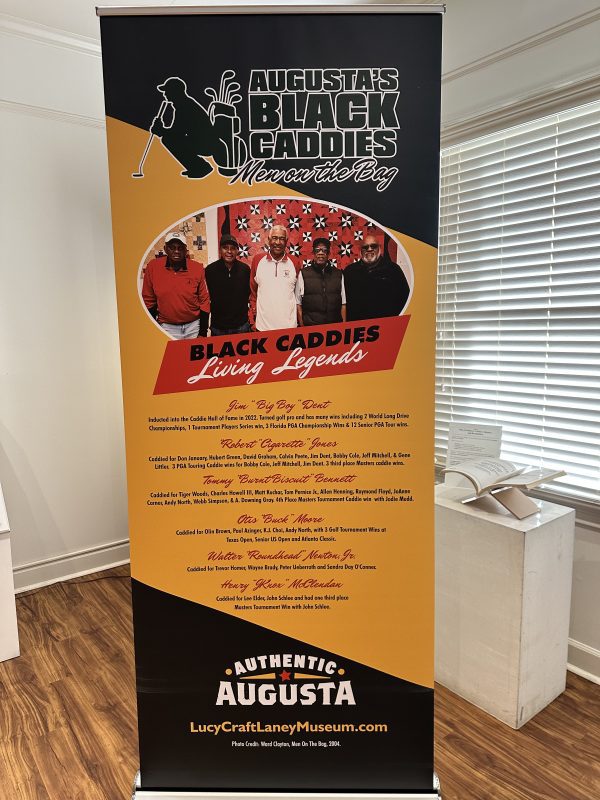
- Tommy “Burnt Biscuits” Bennett: Caddied for Tiger Woods during Woods’ first Masters appearance as an amateur in 1995. Continues to appear at Laney Museum events.
- Jim “Big Boy” Dent: Transitioned from caddying to professional golf, competing on the PGA Tour and the Senior Tour where he became known for his prodigious length off the tee.
- Matthew “Shorty Mac” Palmer: A respected longtime caddie whose knowledge of the Augusta National course made him a sought-after bag for the tournament’s final years of the all-Black corps.
- Walter “Cricket” Pritchett: Caddie for Charlie Coody in 1971. On Saturday of that Masters, with Coody leading Nicklaus and Johnny Miller, Pritchett reportedly asked what time television coverage began — causing Coody to lose his focus entirely. He told Coody he’d informed his bus-driving boss in Atlanta he was visiting a sick grandmother in Houston.
Life Behind the Bag — Money, Family, and Daily Reality
The economic reality of caddie life was one of remarkable potential in the context of segregated Augusta. A good bag at Augusta National paid around five dollars for a regular round, with twenty dollars or more on a particularly lucrative day — more than the caddies’ parents could earn in a week at the cotton mills. Masters Tournament week was the financial cornerstone of the year, with a winning caddie’s share potentially amounting to what a mill worker might earn in months.
“From talking with Jeriah Beard,” recalled Leon Maben, vice president of the board of the Lucy Craft Laney Museum, “he would make, on one day of caddying, more than what his parents brought home in a week.” The weekly wage during the regular season averaged around $25 — equivalent to more than $470 in today’s dollars — and the seasonal structure of the club (Augusta National closed every summer) meant the caddies had to plan their finances carefully, stretching Masters earnings through the summer months.
The caddies were the providers and pillars of their Sand Hills households. Their children remember fathers who were known and respected in the neighborhood, who carried themselves with the particular dignity of men who had walked with presidents and champions. Lawrence Bennett, who began working at Augusta National at age eleven and retired at sixty, remembers loading into his father’s station wagon as a child, driving to the corner to pick up the caddies and bring them to work. “Cemetery, Pappy, Peterson,” he recalled at a 2026 Laney Museum event. “I knew all of them. I was little, but I remember them. They were characters.”
The racial framework within which these men worked was unambiguous. They served at the pleasure of a club whose chairman had declared that as long as he lived, no Black man would play as a competitor in the Masters. They worked in an era when the Augusta National Golf Club’s grounds were one of the only places in Jim Crow Georgia where a Black man could stand beside a white one and be treated with something approaching equality — because on Augusta National’s fairways and greens, the caddies were indispensable. Not as symbols. As experts.
“These African-American caddies became experts at reading the greens,” said Corey Rogers, Executive Director of the Lucy Craft Laney Museum. “They became experts at knowing which club to use at Augusta National. The caddies did not let a lot of their surroundings define who they were or allow that to be a ceiling on what they wanted to accomplish.”
The End of an Era — 1983 and What Was Lost
The all-Black caddie corps ended, effectively, in 1983. A miscommunication during the 1982 Masters had caused some caddies to miss a morning tee time, and several golfers used the incident as leverage in a campaign they had been waging for years: the right to use the same caddies they employed on the PGA Tour throughout the season rather than being assigned unfamiliar local caddies for the most important week of the year.
Augusta National relented. Beginning with the 1983 Masters, golfers could bring their own Tour caddies. Of the 82 players in the field that year, only 18 chose to use Augusta National’s club caddies. Jack Nicklaus used Willie Peterson one final time before withdrawing with a bad back. Gary Player used E.B. McCoy. Craig Stadler, the defending champion, stayed with Ben Bussey. Then the numbers fell off sharply. By 1984, the era was effectively over. In 1996, Augusta handed all caddie operations to Caddiemaster Inc., and what had been a tight-knit, brotherly culture built over five decades became a corporate service operation.
The consequences for the caddies themselves were severe. Many had built their entire adult lives around the seasonal rhythm of the club. They had no formal retirement provisions, no benefits, no severance from the institution they had served for decades. Some found other caddying work. Some tried to adapt. Some, like Jim Dent, found new careers. Many simply aged out of the workforce without recognition, support, or the financial security that their decades of labor at one of the world’s most profitable golf clubs might reasonably have been expected to provide.
“A lot of guys want to get out of it, but they don’t know anything else,” Beard said in a 1993 interview. “It seems to make guys old fast. Ironman, he caddied for Palmer all those years. He died before he hit 50.” Nathaniel Avery, who had helped Arnold Palmer win four green jackets, died at an age younger than most of his players were when they won their first.
Men on the Bag — The Lucy Craft Laney Museum Tells Their Story
The story of Augusta’s Black caddies came perilously close to being lost entirely. For decades after 1983, the men who had helped build Masters legends were absent from the Augusta Museum of History, unmentioned in official golf literature, and all but invisible in the public record. Some lay in unmarked graves. Their families knew who they had been. The broader world did not.
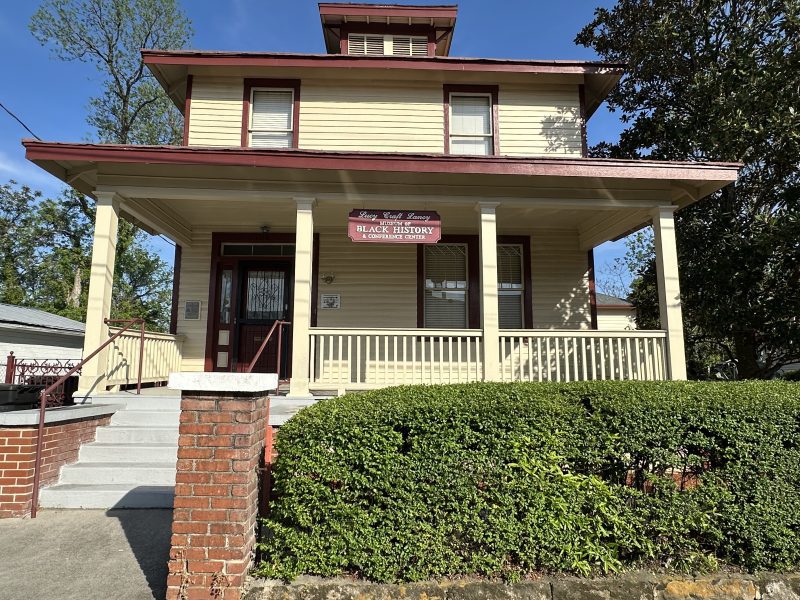
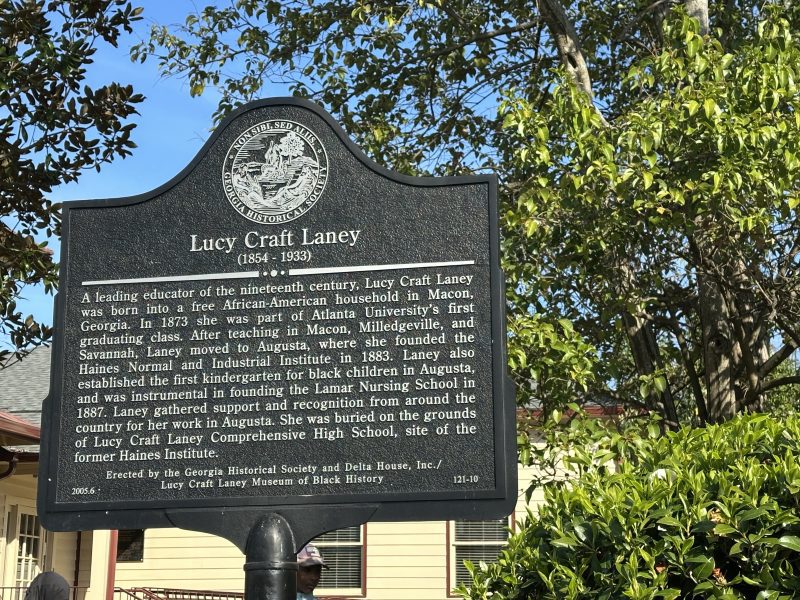
The institution that stepped up to change that was the Lucy Craft Laney Museum of Black History in Augusta — named for the great educator who had dedicated her life to ensuring that Black children in Augusta received the education the system denied them. It was a fitting home for a story about Black excellence being preserved against the indifference of the dominant culture.
“Men on the Bag” — The Experience
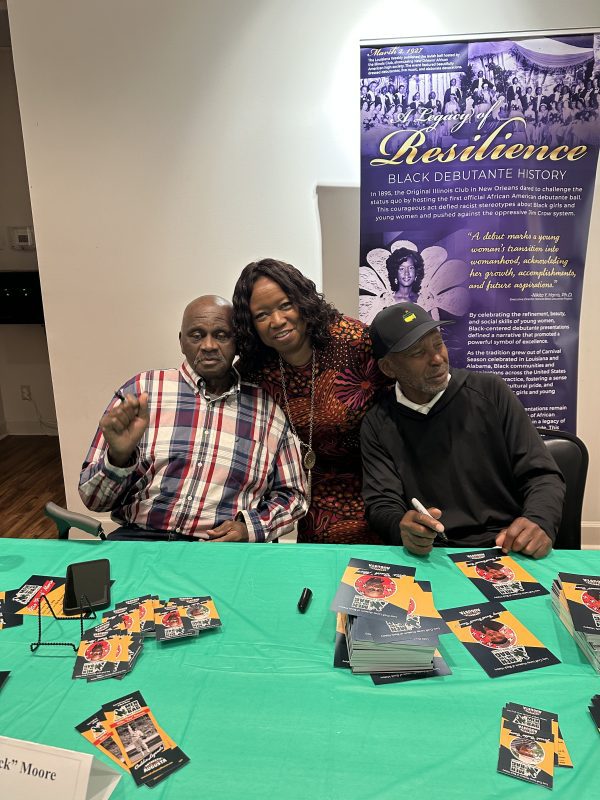
Under the leadership of Executive Director Corey Rogers and with the pivotal work of Leon Maben, who began collecting oral histories from surviving caddies in 2019, the Laney Museum developed one of the most compelling living history experiences in Augusta. “Augusta’s Black Caddies: The Men on the Bag” has been presented at the museum multiple times each year, produced in conjunction with the Augusta Mini Theatre.
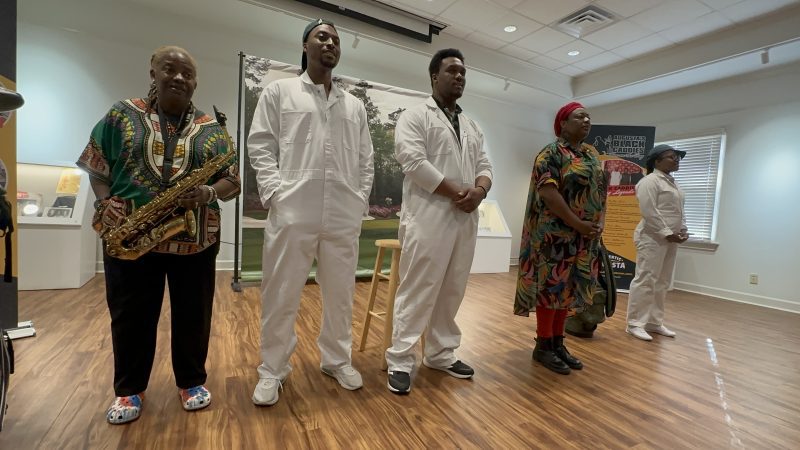
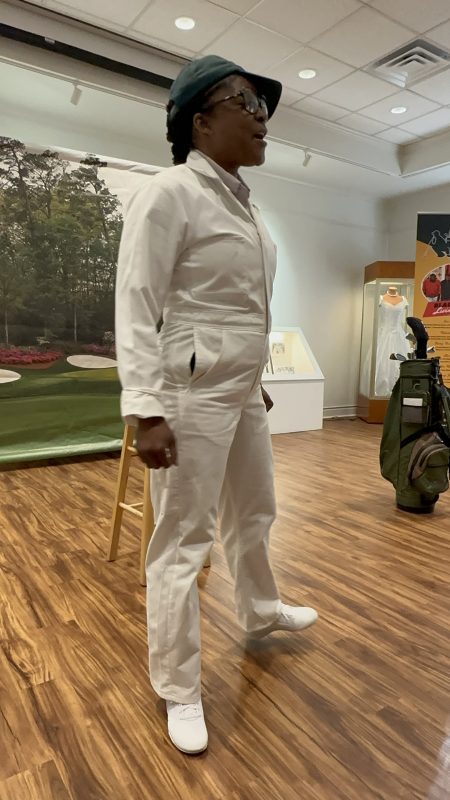
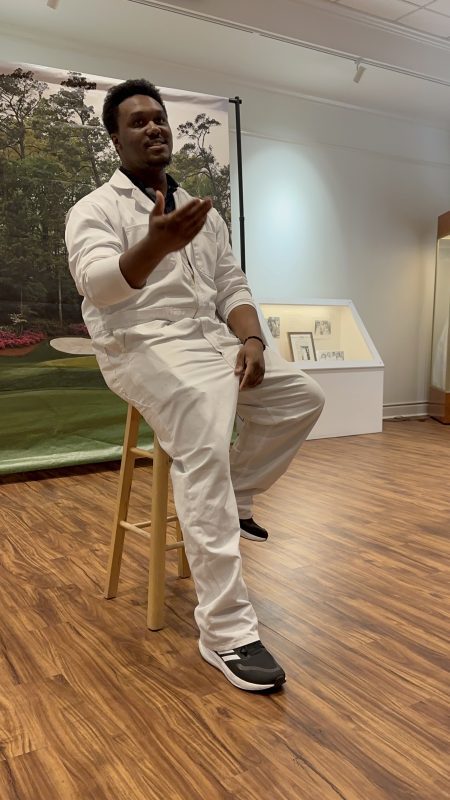
The format is theatrical, participatory, and deeply personal. Experienced actors from the Augusta Mini Theatre portray the most iconic caddies — Willie “Pappy” Stokes, Willie “Cemetery” Perteet, and Willie “Pete” Peterson among them — bringing their stories to life in dramatic scenes. An actress portraying Peterson describes his role as caddie for Jack Nicklaus, capturing his famous showmanship and the intimacy of their partnership. An actor playing Perteet recounts his extraordinary life — jazz musician, stabbing survivor, presidential caddie. The role of Stokes, the godfather himself, anchors every performance.
But the most powerful moments come when the curtain comes down on the theatrical portion and the living legends take the stage. Living caddies — those still well enough to attend — emerge from the audience to share their own stories in their own words. At the end of each performance, attendees can meet the caddies, hear their stories directly, and collect signed caddy trading cards — stylized with each caddie’s photograph, story, and career statistics — that serve as mementos of a history worth holding onto.
The famous Masters pimento cheese sandwich and drinks are served, grounding the experience in the specific sensory culture of Augusta National and the Masters Tournament. Even the food is part of the story.
The Exhibit and Its Mission
The “Men on the Bag” experience is housed within the museum’s broader Black history collections and runs alongside the museum’s other signature programs, including the Golden Blocks Tour — a walking tour of 33 historic sites in the Laney-Walker District, once Augusta’s thriving hub of Black-owned businesses during segregation — and the Augusta Wilson Series featuring theatrical performances by Broadway performers.
“This is Black history,” said Maben, who had grown up in downtown Augusta where golf was considered “for the guys up on the hill.” “Nowhere else could you say, ‘Black people dominated this facet of the sport for fifty years.’ That’s what makes the story so interesting.” His years of oral history collection have become the foundation of the museum’s caddie archive, preserving voices and memories that were in danger of being lost to time.
Rogers articulates the stakes of the work with characteristic precision: “We want to expand the discussion. We want to tell the individual story that has led to the collective. The collective story of the Masters in the collective story of golf writ large cannot be told without these individuals.”
In April 2025, a monument was unveiled in Sand Hills neighborhood — shaped like a golf tee, inscribed with the names of the caddie champions — as a permanent physical tribute to the men who had built their careers three miles from where they grew up. The Lucy Craft Laney Museum’s “Men on the Bag” experience complements the monument by doing what no stone marker can: it brings the men to life.
| TO VISIT: The Lucy Craft Laney Museum of Black History is located in Augusta, Georgia, in the former home of Miss Lucy Craft Laney. The “Men on the Bag: Augusta’s Black Caddies” experience is presented multiple times throughout the year, with special performances during Masters Week each April. The museum is open Monday through Saturday, 9 AM to 5 PM. Call 706-724-3576 to book. Website: lucycraftlaneymuseum.com |
The Ground Beneath the Green Jackets
When you walk Magnolia Lane — sixty-one trees grown from seeds planted in the 1850s by a Belgian horticulturist and his son — you are walking through a history that belongs to more people than the membership list of Augusta National has ever acknowledged. The indigo farmer who named this place Fruitland. The father and son from Lier, Belgium who planted those magnolias and shipped Georgia’s first commercial peaches to New York. The Irish-born farmer who built the house that became a clubhouse. The retired golfer from Atlanta who saw a dream in the rolling hills and the abandoned nursery. And the men from Sand Hills — from Turpin Hill, from Gwinnett Street — who knew this land better than anyone, whose hands and eyes and minds helped guide the world’s greatest golfers to their greatest victories, and who deserve to be spoken of in the same breath as every green jacket ever awarded.
The Augusta National Golf Club is one of the most beautiful and most storied places in American sport. Its history runs deeper than the Masters Trophy, deeper than the azaleas and the scoring records and the famous moments that live in golf’s collective memory. It runs through the families of Sand Hills. It runs through the roots of the magnolias Prosper Berckmans planted before the Civil War. It runs through the stories that Corey Rogers and Leon Maben and the actors of the Augusta Mini Theatre are working to keep alive at a museum named for a woman who believed, with everything she had, that every person’s story deserves to be told and preserved and honored.
The ground beneath the green jackets has a name for every story it holds. It is time to call them all.
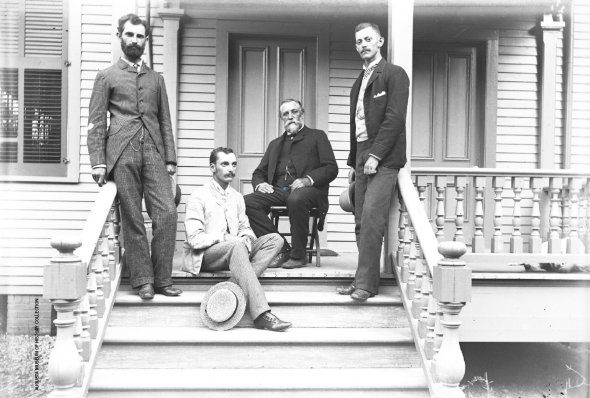
Berckman family – father and sons

Pimento Cheese and Chicken Salad Sandwiches. A Masters’ favorite.
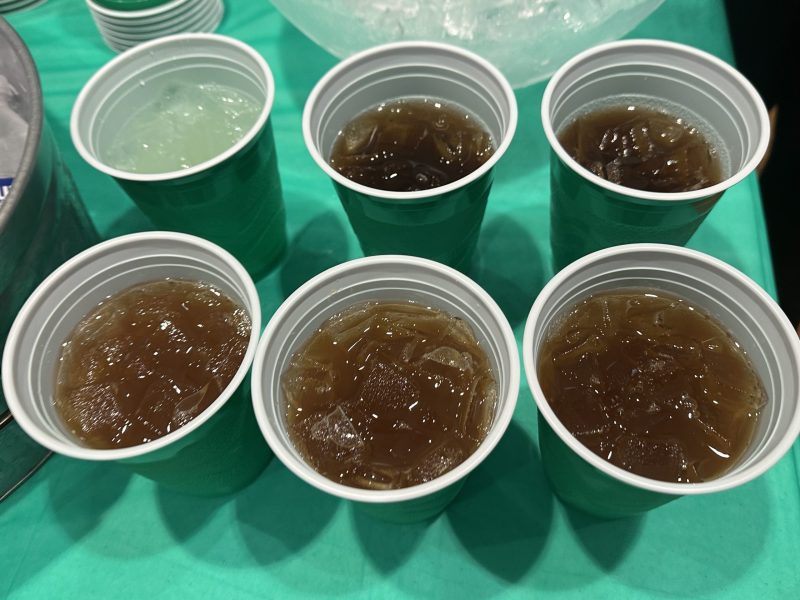
Ice tea and lemonade another Masters’ favorite
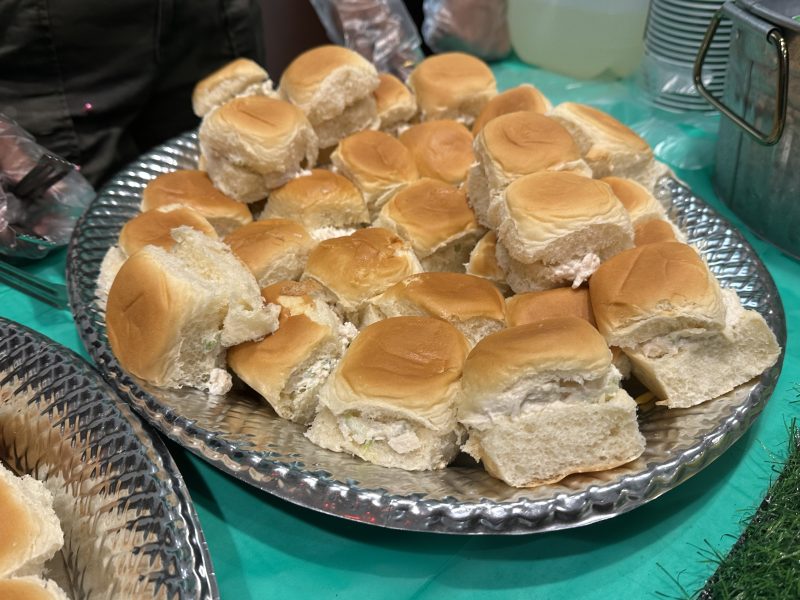
Tray of yummy sandwiches.
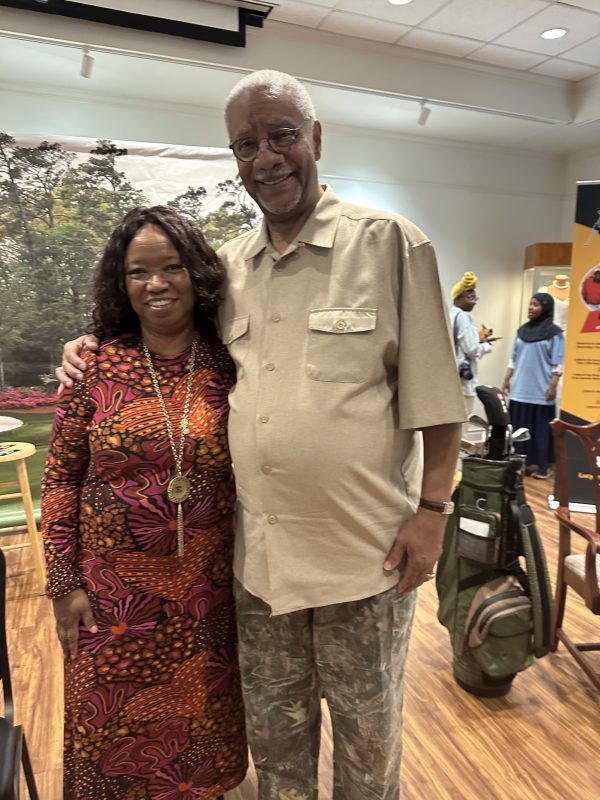
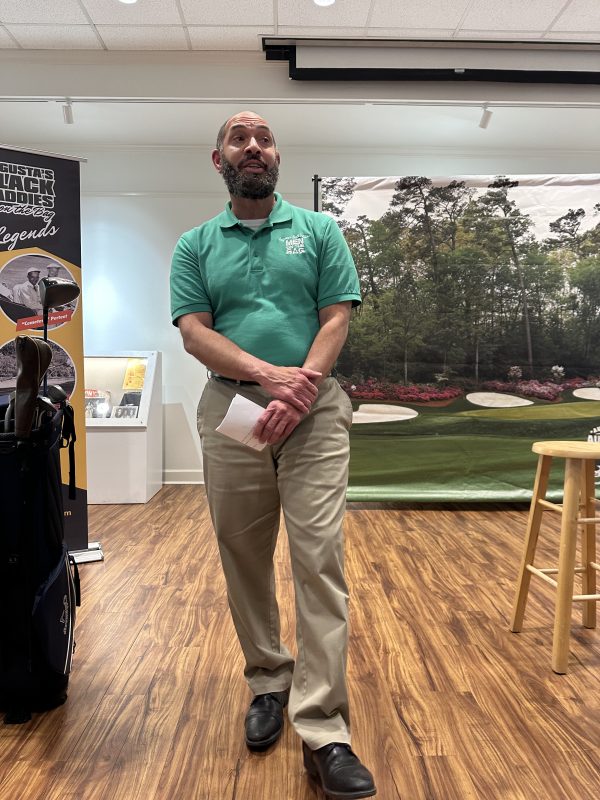
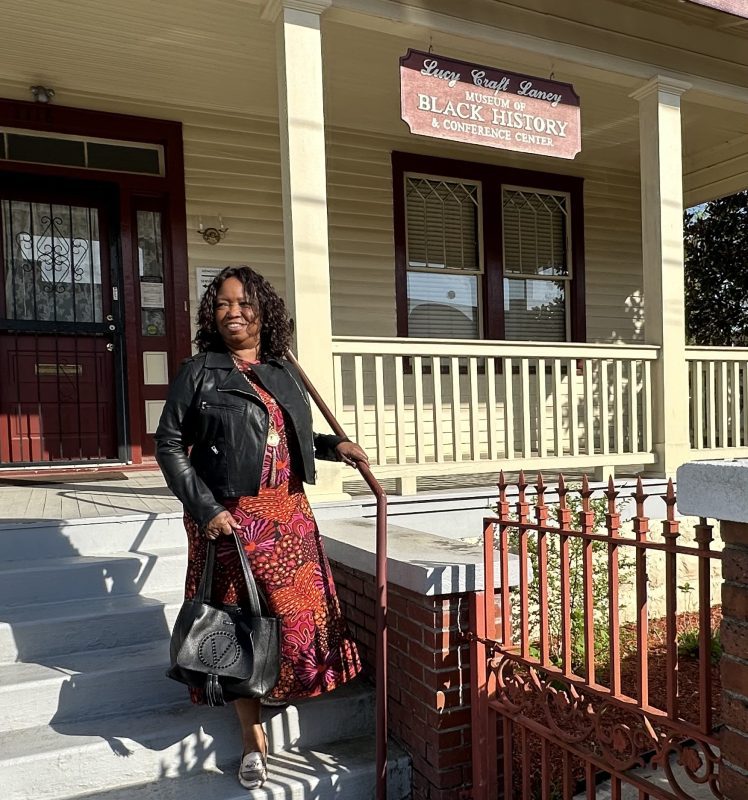
Corey Rogers, Director – Lucy Craft Laney Museum of Black History
0 Comments