
Ten Things You Should Know About
Pan American Airways
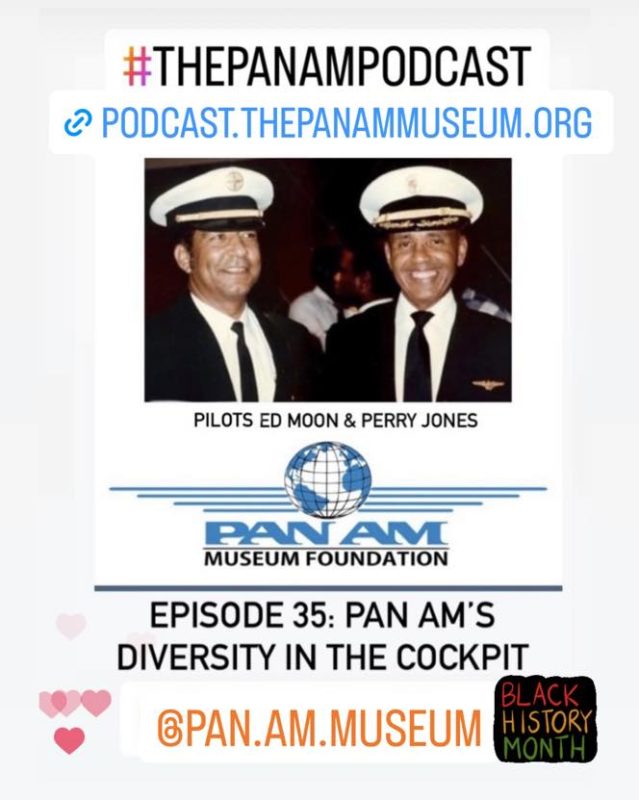
Black History Month is a great time to share ten things you should know about Pan American Airways. Black history lives in so many American stories and the aviation industry has plenty of stories to share.
Before 1969, Black women attended private stewardess training schools hoping to be hired. They watched white classmates receive airline offers while their own acceptance letters never came. Airlines openly feared white passengers wouldn’t accept Black stewardesses.
During the late 1960s at the height of the Civil Rights Movement, Pan Am began hiring African American crew members, helping reshape the airline industry and global image of American aviation. Some Black stewardesses were hired directly because the Civil Rights Act forced companies to change hiring practices. Black stewardesses quietly redefined what elegance and professionalism looked like worldwide.
Airlines once believed hiring Black women would hurt ticket sales or reduce the “glamour” image.
The “Pan Am Black Birds”: This was the informal name for the pioneering group of Black stewardesses who were hired in 1969 and proved skill, presence, and professionalism mattered more than race. They were expected to represent: Black excellence, American modernity, beauty and professionalism, all while working inside an industry that had only recently allowed them in.
Many later described they share deep bonds and understanding, that they were opening doors for women who would come after them.
Flying international routes, they often became unofficial ambassadors representing American diversity to passengers seeing integrated crews for the first time, changing mindset and the definition of equality.
On routes to parts of Africa and apartheid-era South Africa, Black crew members sometimes faced racial hostility even while wearing the uniform of America’s most global airline. Segregated social environments and public-space tension on layovers created a unique emotional duality: representing progress while witnessing global inequality firsthand.
Captain Perry Jones joined Pan Am in late 1965, becoming the airline’s first Black pilot a groundbreaking moment in commercial aviation history. In 1966 Otis Benjamin “O.B.” Young was the second African American pilot. He became one of the first African Americans to co-command a jumbo jet. Ed Moon became the third African American pilot hired in 1967 helping expand representation in airline cockpits during a time when aviation was overwhelmingly white.
As “The World’s Airline,” Pan Am’s Black crew members flew internationally while America was still fighting over basic civil rights, meaning they represented a version of America that was still becoming real at home.
For some Black crew members, flying to African and Caribbean destinations created emotional and cultural connections that white colleagues often didn’t experience the same way. These routes sometimes felt like: Cultural homecomings, identity affirmations, Moments of pride representing Black excellence globally
 Pan Am gave me a trip around the world with many return trips. I was a Pan Am Flight Attendant for 11 wonderfully, adventurous years. Pan Am – Gone, but not forgotten.
0 Comments