
Ten Things You Should Know About
Rebecca Lee Crumpler
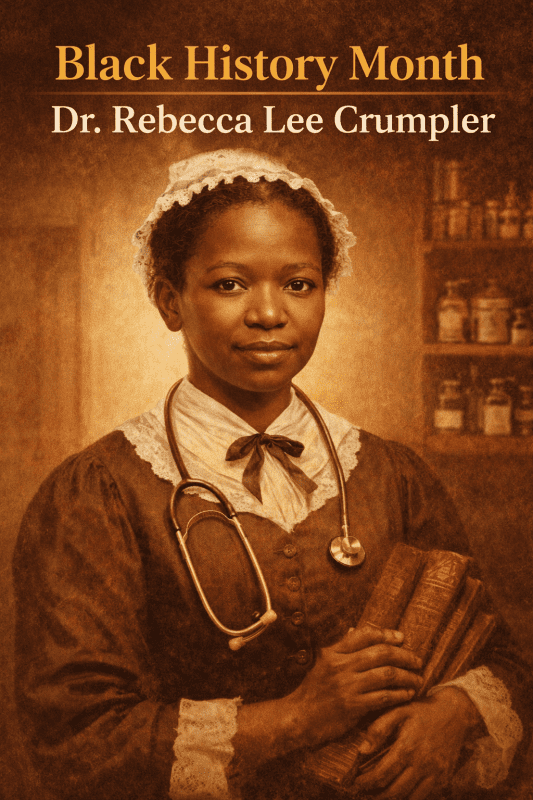
It’s Black History Month and time to highlight those we know well and others we may not know at all. Travel with Annita shares ten things you should Know about Rebecca Lee Crumpler’s story.
Rebecca Lee Crumpler broke barriers in a profession that insisted she didn’t belong. Quietly, persistently, and with purpose, she changed American medical history. She practiced medicine during slavery’s aftermath, Reconstruction, and an era when both women and African Americans were systematically barred from professional life.
She didn’t seek attention—she sought patients. She didn’t chase recognition—she chased relief from suffering. Her legacy isn’t just that she was first.
It’s that she opened the door, held it steady, and left a record behind.
Here are ten things you should know about Rebecca Lee Crumpler.
1. She Was the First Black American Woman to Earn an M.D.
In 1864, Rebecca Lee Crumpler became the first African American woman in the United States to earn a Doctor of Medicine degree.
2. She Was Born Into a World That Offered Her No Blueprint
Born February 8, 1831, in Delaware, Crumpler grew up in Pennsylvania, raised in part by an aunt who cared for sick neighbors. That early exposure planted the seed for a life devoted to healing.
3. She Entered Medicine Through Nursing—Before Nursing Schools Existed
Before formal nursing schools opened in the U.S., Crumpler worked as a nurse from 1852 to 1860 in Charlestown, Massachusetts, serving under physicians who later recommended her for medical school.
4. She Attended a Radical Medical School for Its Time
Crumpler was accepted into the New England Female Medical College, a Boston institution founded to train women physicians—an idea many male doctors openly ridiculed as dangerous and improper.
5. She Was the College’s Only Black Woman Graduate
When she earned her degree in 1864, Crumpler was the only African American woman ever to graduate from the New England Female Medical College, which later merged into Boston University School of Medicine.
6. Her Achievement Was Nearly Unthinkable in Context
In 1860, the U.S. had over 54,000 physicians—only 300 were women, and none were Black. The first historically Black medical school, Howard University College of Medicine, wouldn’t open until 1868.
7. She Took Her Skills Where They Were Needed Most
After the Civil War, Crumpler moved to Richmond, Virginia, working with the Freedmen’s Bureau to treat formerly enslaved people—often facing racism, sexism, and hostility from colleagues and pharmacists.
8. She Specialized in the Health of Women and Children
Crumpler described Richmond as “a proper field for real missionary work,” treating thousands of indigent patients and focusing on illnesses affecting women, children, and families newly freed from slavery.
9. She Wrote One of the First Medical Books by a Black American
In 1883, she published A Book of Medical Discourses in Two Parts, likely the first medical text written by an African American. It offered practical guidance on infant care, women’s health, and disease prevention.
10. Her Legacy Survives Despite Erasure
No known photographs of Dr. Crumpler survive. What we know comes largely from her own words—especially the book she dedicated to “mothers, nurses, and all who may desire to mitigate the afflictions of the human race.” She died on March 9, 1895, in Hyde Park, Massachusetts.


0 Comments