
The Complete Cruise Health & Safety Guide
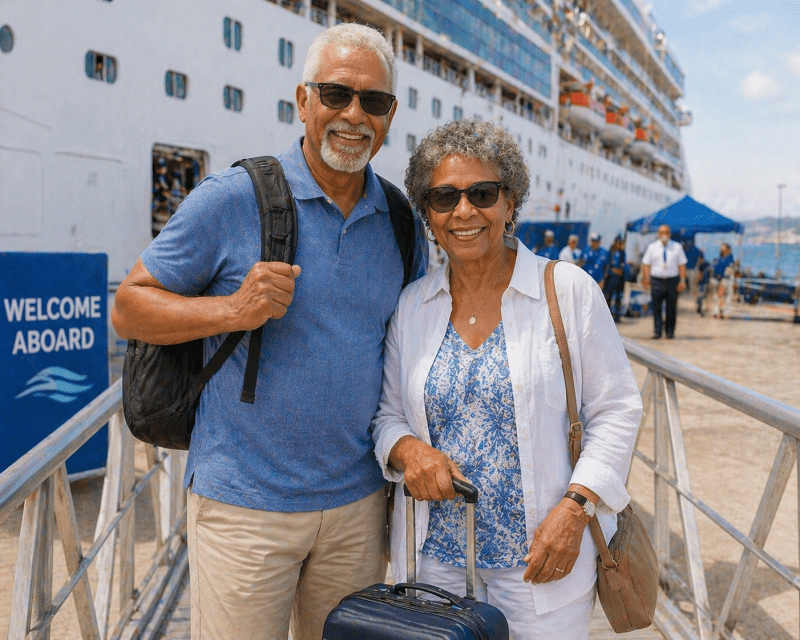
Sail Smart, Stay Well
The Essential Health & Safety Guide for Cruisers 50+
Onboard wellness • Shore excursion safety • CDC standards • Medications • Gear • 50+ specific guidance
Why Health Planning Matters More on a Cruise
Cruising is one of the most enjoyable and rewarding ways to travel the world — and for travelers over 50, it offers something invaluable: the ability to unpack once and wake up in a new destination every morning, with most of your meals, entertainment, and logistics handled. But a cruise ship is also a unique health environment that requires preparation most land-based trips do not. You are living in close proximity with thousands of other people in enclosed spaces, sharing dining rooms, elevators, and pool decks. You are crossing time zones, adapting to open-ocean motion, eating differently than you do at home, and often pushing your physical limits on shore excursions in unfamiliar terrain and climates.

A medical can help you conquer anxiety and fear, plus to prepare you for a healthy cruise. Photo credit: Mark Adams
For travelers over 50, the stakes are higher and the preparation needs to be more deliberate. Many people in this age group manage chronic conditions — high blood pressure, diabetes, arthritis, heart conditions, joint replacements — that require careful management in an environment where your usual doctor is not available and the ship’s medical center charges fees that can rival a private hospital. The good news is that with the right preparation, the right gear, and the right habits, a cruise can be one of the healthiest and most restorative trips you ever take. Here is how to make sure it is.
| CDC VESSEL SANITATION PROGRAM |
| The Centers for Disease Control and Prevention’s Vessel Sanitation Program (VSP) inspects cruise ships operating in U.S. waters and publishes sanitation scores and outbreak reports publicly at cdc.gov/nceh/vsp. Before booking any cruise, check your ship’s most recent VSP inspection score. Ships scoring 86 or above out of 100 are considered satisfactory. The VSP also tracks and publishes current disease outbreak data by ship and sailing date. This is free, public information — use it. |
PART 1 — BEFORE YOU BOARD: PREPARATION IS YOUR BEST MEDICINE
What to Do Before You Ever Step on the Ship – Talk to Your Doctor — Earlier Than You Think
The single most important thing any traveler over 50 can do before a cruise is schedule a pre-travel medical appointment at least four to six weeks before departure. This is not a formality — it is essential intelligence gathering. Your physician needs to know your itinerary, the climate you will encounter, how long you will be at sea, and what excursions you are planning. From that information, they can assess whether your current medications are properly calibrated for travel, update any vaccinations that may be required or recommended for your destination ports, and write documentation letters for any medical equipment or controlled substances you are carrying.

Medical specialist consulting elderly patient to ensure a healthy cruise.
For travelers with heart conditions, high blood pressure, or diabetes, discuss specifically what symptoms should prompt you to seek care on the ship versus waiting to reach a port, and what your limits are for physical exertion in heat and humidity. Know your numbers — blood pressure, resting heart rate, blood glucose targets — before you leave, so you have a baseline for comparison if you feel unwell during the voyage.
Vaccinations and the CDC’s Guidance
The CDC recommends that all cruise travelers be current on routine vaccinations — influenza, COVID-19, and pneumococcal vaccines are particularly important for travelers over 50, whose immune systems are more

Vaccines are essential to staying healthy.
vulnerable to severe respiratory illness in the enclosed environment of a cruise ship. Depending on your ports of call, additional vaccinations may be recommended or required: hepatitis A and B, typhoid, yellow fever, and others depending on whether your itinerary includes tropical ports in Central America, the Caribbean, South America, or the Pacific. Check the CDC’s destination-specific travel health notices at cdc.gov/travel and the State Department’s travel advisories at travel.state.gov before every international cruise.
Norovirus deserves special attention. The CDC’s Vessel Sanitation Program data from 2024 and 2025 documents multiple norovirus outbreaks on ships sailing from U.S. ports, with some voyages seeing more than ten percent of passengers reporting gastrointestinal symptoms. There is no vaccine for norovirus. The only effective prevention is rigorous hand hygiene — specifically, washing hands with soap and water for at least twenty seconds, because hand sanitizer alone does not kill norovirus.
Medications — Pack More Than You Think You Need
Pack all prescription medications in their original labeled pharmacy bottles and carry them in your carry-on bag — never in checked luggage, which may be delayed or lost. For travelers on blood thinners, insulin, cardiac medications, or other time-sensitive drugs, this is non-negotiable. Bring enough medication for the full voyage plus at least five to seven extra days, to account for itinerary changes, missed ports, or unexpected extensions.
Carry a typed medication list, drug name, dosage, prescribing doctor, and condition treated — in your wallet, your carry-on, and your cabin safe. If you need medical care on the ship or in a foreign port, this document can be the difference between effective treatment and dangerous medication errors. For travelers wearing medical device implants — pacemakers, joint replacements, cochlear implants — carry a letter from your physician on practice letterhead that identifies the device and its manufacturer.
- Motion sickness medication: Start taking it the day before departure, not after symptoms begin. Both over-the-counter and prescription options are available — ask your doctor which is appropriate for you given your other medications, as some interact with cardiac drugs and sedatives.
- Pain management: If you manage arthritis, back pain, or joint conditions, discuss with your doctor what is appropriate for the level of physical activity you are planning. Shore excursions often involve more walking on uneven terrain than anticipated.
- Compression socks: Particularly important for travelers with circulation issues, varicose veins, or a history of deep vein thrombosis. Wear them on long flight segments to embarkation and consider them for extended sea days.
PART 2 — ONBOARD: STAYING HEALTHY WHILE AT SEA
Life Onboard — Healthy Habits in an Enclosed Environment – Hand Hygiene — The Most Powerful Tool You Have
This point cannot be overstated: consistent, thorough hand hygiene is your single most effective defense against the most common health threats on a cruise ship. The enclosed environment of a cruise ship — with thousands of passengers sharing dining rooms, elevator buttons, pool railings, and buffet serving spoons — creates conditions that allow gastrointestinal and respiratory illnesses to spread rapidly. Wash your hands with soap and water for at least twenty seconds before every meal, after using the restroom, after excursions, after touching shared surfaces in public areas, and before taking any oral medications.
Carry travel-sized hand sanitizer for moments when a sink is not accessible — particularly useful during excursions and at buffet stations — but understand its limitations. Sanitizer is effective against many bacteria and some viruses, but the CDC confirms it does not eliminate norovirus. Soap and water is non-negotiable for genuine protection.
Navigating the Food Environment
Cruise ship dining is one of the great pleasures of the experience — and one of the greatest risks if you are not thoughtful about it. Buffet-style dining, in particular, creates exposure to foods that have been sitting at serving temperatures for extended periods and touched by hundreds of hands with shared serving utensils. For travelers over 50, whose immune systems may be less responsive to food-borne pathogens, a few consistent habits make a significant difference.
- Choose cooked over raw: Sushi, ceviche, raw oysters, and other uncooked seafood carry elevated risk of norovirus and bacterial contamination in a shipboard environment. This is not about being overly cautious — it is about recognizing that shipboard kitchens, however well-managed, operate at enormous scale and speed.
- Time your buffet visits: The freshest food is at the beginning of a service period. Visiting the buffet at peak times — when food is being replenished frequently — reduces exposure to food that has been sitting out.
- Hydration: Dehydration at sea is both more likely and more dangerous than on land. Ocean breezes mask perspiration, the salt air is drying, and alcohol consumption on vacation tends to be higher than usual. For travelers over 50, mild dehydration can exacerbate dizziness, blood pressure irregularities, and cognitive fatigue. Drink water consistently throughout the day — do not wait until you feel thirsty. Bring a reusable insulated water bottle and fill it at every opportunity.
- Alcohol moderation: Alcohol interacts with many medications common in the 50+ age group — blood thinners, blood pressure medications, diabetes medications, and others. It also accelerates dehydration and can impair balance and judgment in ways that become more consequential as we age. Enjoy it — but know your medication interactions and your limits.
Sleep, Rest, and Managing the Pace
One of the most common health mistakes cruisers make — particularly first-timers who have paid for an extraordinary experience and want to extract maximum value from every hour — is chronic under-sleeping. Fatigue accumulates at sea, particularly if you are crossing time zones, rising early for port excursions, and staying up late for evening entertainment. For travelers over 50, poor sleep degrades immune function, impairs balance and coordination, elevates blood pressure, and reduces the capacity to manage chronic conditions effectively.
Build rest into your itinerary intentionally. Allow yourself at least one sea day that involves genuine rest rather than activity. If you feel fatigued during a port day, it is not a failure to return to the ship and rest — it is excellent health management. The ship will be there tomorrow, and so will you.
Movement and the Ship’s Medical Center
Use the ship’s fitness facilities — even briefly. A 20-minute walk on the jogging track or 15 minutes on a stationary bicycle each morning maintains cardiovascular function, supports joint health, and moderates the blood glucose and blood pressure disruptions that can accompany vacation eating patterns. For travelers with arthritis, the ship’s pool is an excellent low-impact option: water walking and gentle aquatic movement maintain range of motion without joint stress.
Familiarize yourself with the ship’s medical center location on your first day — before you need it. Cruise ship medical centers are staffed 24 hours a day by licensed physicians and nurses and equipped to handle emergencies. They are not free: medical care on a cruise ship is billed at private rates, which makes comprehensive travel insurance with medical coverage essential. The average cost of a cardiac event requiring evacuation from a cruise ship can exceed $100,000. Travel insurance is not optional for travelers over 50 with any managed health conditions.
PART 3 — SHORE EXCURSIONS: STAYING SAFE AND WELL IN PORT – Going Ashore — Smart Choices in Every Port
Know Before You Go
Shore excursions are among the most physically demanding parts of any cruise — and the most likely moments for health incidents. Heat, uneven terrain, unfamiliar food and water, extended physical activity, and the time pressure of returning to the ship before it sails create a combination of stressors that requires deliberate preparation. For travelers over 50, assessing each excursion honestly against your current physical capacity is one of the most important skills in cruise travel.
Read excursion descriptions carefully, not just the headline. An excursion billed as “moderate” may involve two miles of cobblestone walking, or a steep climb to a ruin, or standing in direct sun for two hours. Look for specific detail: total walking distance, terrain type, whether there are places to sit and rest, and whether air conditioning is available at any point. If a description does not provide this detail, contact the excursion operator directly or ask at the shore excursions desk before booking.
Sun, Heat, and Hydration in Port
Hyperthermia — the medical spectrum that includes heat exhaustion and heat stroke — is a genuine risk for older travelers in tropical and subtropical ports. The mechanisms that regulate body temperature become less efficient with age, many common medications (diuretics, beta blockers, anticholinergics) impair heat tolerance, and the enthusiasm of being somewhere extraordinary tends to override the body’s early warning signals.
- Reef-safe mineral sunscreen: Apply SPF 30 or higher thirty minutes before exposure and reapply every ninety minutes, or immediately after swimming or heavy perspiration. Chemical sunscreens are damaging to coral reef ecosystems — mineral sunscreens with zinc oxide or titanium dioxide protect both you and the marine environment.
- A wide-brimmed hat: Non-negotiable in tropical ports. Direct sun on the head and neck is one of the fastest paths to heat illness, particularly for travelers on blood pressure medications or diuretics that increase heat sensitivity.
- Light, breathable clothing: Loose-fitting, light-colored, moisture-wicking fabrics maintain body temperature significantly more effectively than cotton in humid tropical heat.
- Water, water, water: Carry a minimum of 500ml of sealed bottled water per person for every hour of planned excursion time in a tropical climate. In many ports, tap water and unbottled beverages are not safe for travelers with sensitive immune systems. Drink only sealed bottled water, carbonated beverages from sealed cans or bottles, or hot beverages made with boiled water.
Food Safety in Port
Street food in many ports is delicious, culturally rich, and — with the right approach — safely enjoyed. The risks are real but manageable. For travelers over 50, whose immune systems may respond more severely to food-borne illness, a few consistent rules make a significant difference. Choose cooked foods served hot, from vendors with visible turnover and clean preparation areas. Avoid raw or undercooked seafood, salads washed in local water, fresh-squeezed juices made with unpasteurized fruit, and ice in beverages unless you can confirm it was made from purified water.
Know the symptoms of traveler’s diarrhea — the most common port illness — and carry an appropriate over-the-counter remedy. More importantly: if you develop significant gastrointestinal symptoms within 24 hours of returning from port, report to the ship’s medical center promptly. Dehydration from diarrhea and vomiting can become dangerous for older travelers very quickly.
Physical Safety and Fall Prevention
Falls are one of the leading causes of injury among travelers over 50, and a cruise environment presents multiple elevated fall risks: wet pool and deck surfaces, steep gangways boarding tenders, uneven cobblestone streets in historic ports, and the subtle but constant motion of the ship at sea. Wear closed-toe shoes with non-slip soles for any excursion involving walking on uneven terrain. Use the handrails on stairways — every time, on every staircase, on the ship and ashore. If you use a cane or walking aid at home, bring it.
When boarding tenders — the small boats used to ferry passengers ashore when the ship cannot dock directly — always accept assistance from crew. Wet, moving surfaces and the rocking motion of a small boat in chop are among the highest fall-risk moments in all of cruise travel. There is no dignity in refusing help and falling into the harbor. Accept the hand and step carefully.
| ESSENTIAL HEALTH & SAFETY GEAR FOR CRUISERS 50+ |
| WHY IT MATTERS FOR 50+ TRAVELERS | |
| Compression socks – Reduces risk of deep vein thrombosis on long flights and during extended sea days. Essential for travelers with circulation concerns or a history of DVT. | |
| Waterproof pill organizer – A weekly organizer with labeled AM/PM compartments prevents missed doses across time zones and eliminates the need to manage multiple original bottles daily. | |
| Personal blood pressure cuff – Compact digital cuffs allow monitoring of BP throughout the voyage — particularly important in heat, at altitude (some ports), or when sodium and alcohol intake increases on vacation. | |
| Portable blood glucose meter – For diabetic travelers: a compact meter with sufficient test strips and lancets for the full voyage plus extras. Keep in carry-on with a letter from your physician. | |
| RFID-blocking wallet – Protects credit card and passport data from digital skimming in busy port markets and tourist areas. | |
| Non-slip water shoes – For tender boarding, pool decks, beach excursions, and any wet surface. Closed toe with grip soles reduce fall risk significantly. | |
| Wide-brimmed packable hat – UPF 50+ protection for face, neck, and scalp during port excursions. Packs flat in a tote. | |
| Insulated reusable water bottle – Keeps water cold for 12+ hours. Critical for hydration discipline in tropical ports. | |
| Mineral reef-safe sunscreen SPF 50+ – Zinc oxide or titanium dioxide — protects skin without harming coral reef ecosystems required in many Caribbean and Hawaiian ports. | |
| Travel-size first aid kit – Band-Aids (assorted), antiseptic wipes, blister pads, antidiarrheal medication, electrolyte sachets, antihistamine. Compact and essential for shore excursions. | |
| Motion sickness wristbands – Acupressure bands worn on both wrists — drug-free and compatible with all medications. Useful as a first line of defense or in conjunction with medication. | |
| Portable door alarm – A small wedge alarm placed under a cabin door provides additional security overnight, particularly valuable for solo travelers. | |
| Luggage tracker (Bluetooth) – Attach to checked bags so you can monitor delivery to your stateroom and verify they did not get routed to the wrong cabin or held at security. | |
| Travel insurance with medical evacuation – Not gear — but the most important item on this list. Medical evacuation from a ship at sea or a foreign port can cost $50,000–$150,000. For travelers 50+ with any managed condition, comprehensive travel insurance is essential, not optional. Look for a policy that includes a pre-existing condition waiver. |
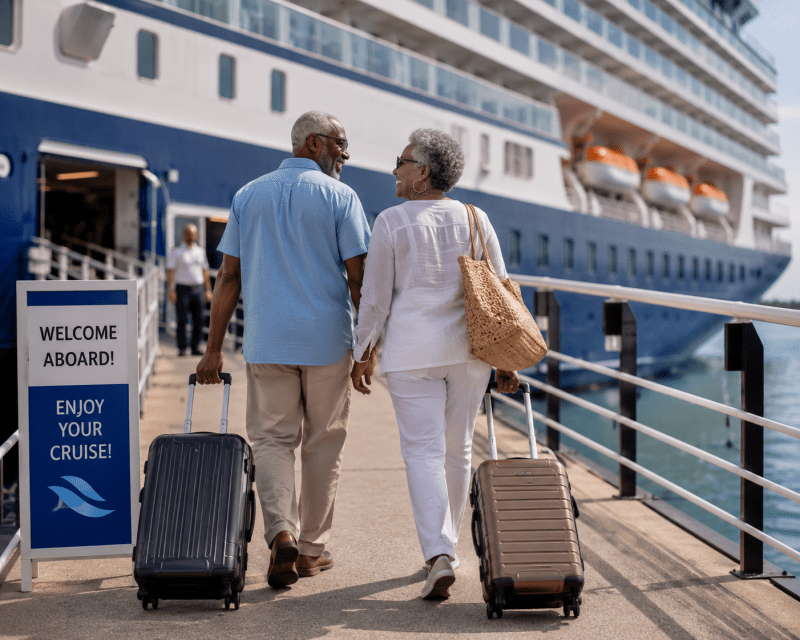
The Best Voyage Is a Safe One
The ocean does not know your age, your itinerary, or your travel budget. What it knows is wind and wave and time. The most prepared cruiser is the one who arrives informed, equipped, and honest with themselves about what they need — and what the environment they are entering demands. For travelers over 50, that preparation is simply part of the adventure. It is what allows you to show up fully — to stand on the deck of a ship moving through open water at sunrise, to walk the cobblestones of a Caribbean port town, to come home rested and well and already planning the next voyage.
Sail smart. Stay well. The sea is waiting.
| KEY RESOURCES |
| CDC Vessel Sanitation Program (ship inspection scores & outbreak data): cdc.gov/nceh/vsp • CDC Travel Health Notices & Destination Vaccine Info: cdc.gov/travel • U.S. State Department Travel Advisories: travel.state.gov • Cruise Lines International Association health standards: cruising.org • Emergency Assistance Plus (24/7 medical evacuation membership): emergencyassistanceplus.com |


0 Comments