
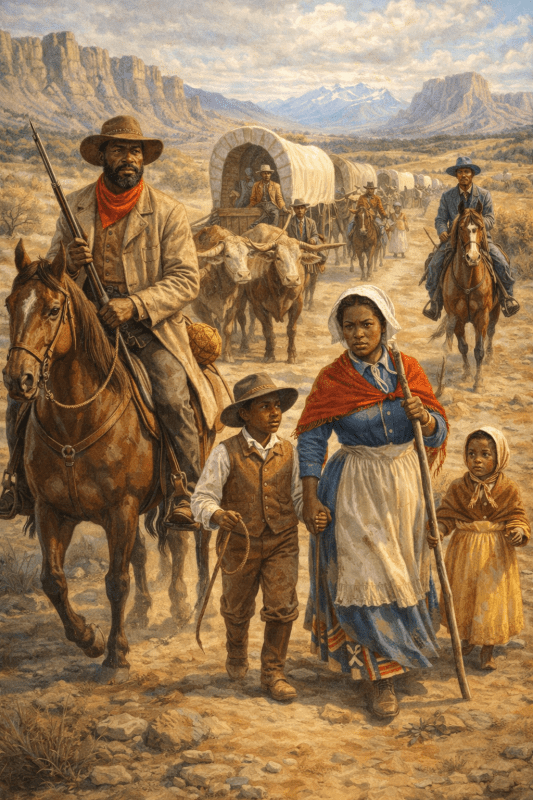
Ten Things You Should Know About Blacks On The Oregon Trail
These ten things you should know about Blacks on the Oregon Trail may surprise you, allowing you to see the impact Blacks had on the country’s Westward expansion. Their involvement was filled with all of the struggles, fears and dangers as White pioneers, but also filled with racial discrimination.
Here are the Ten Things You Should Know About Blacks On The Oregon Trail –
Black pioneers were not just present on the Oregon Trail
They helped build communities, farms, economies, and western settlement itself, often while fighting laws designed to exclude them.
1. Black Pioneers Traveled the Trail in the Hundreds
Between the 1840s and 1860s, hundreds of African Americans made the journey west — some as free settlers seeking opportunity, others forced to travel as enslaved people.
2. Oregon Actively Tried to Keep Black People Out
Even before Oregon became a U.S. territory, White settlers created Black exclusion laws banning both slavery and Black residency — free or enslaved. The laws established required enslavers to free enslaved people — but then banished those same newly freed people. Sometimes referred to as the Infamous “Lash Law” which targeted Black Settlers stated those who stayed could be punished with 39 lashes every six months (later replaced with forced labor).
Although the lash law was never formally carried out, it forced Black families to change routes, relocate, or leave areas entirely.
3. George Washington Bush Changed Western Settlement History
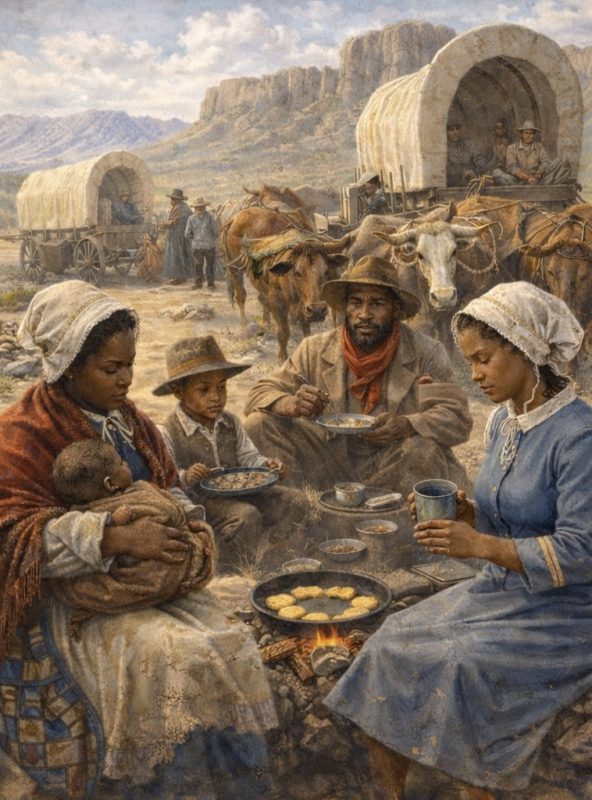
Free Black pioneer George Washington Bush helped struggling white families survive the trail by sharing food, supplies, and wagons.
When exclusion laws threatened him, his wagon party chose to settle north — helping shape early Washington State settlement.
4. Black Settlers Helped Build the Pacific Northwest
The Bush family built a successful 880-acre mechanized farm.
The area is still known today as Bush Prairie near Tumwater, Washington.
5. U.S. Law Still Blocked Black Land Ownership
The Donation Land Act of 1850 allowed land claims for white settlers and some Native Americans — but excluded Black settlers.
Congress had to pass a special law in 1855 so George Bush could legally keep his land.
6. Citizenship Barriers Limited Black Homesteading Until 1868
The Homestead Act opened land to citizens — but Black Americans weren’t recognized as citizens until the 14th Amendment.
Only after 1868 could Black homesteaders fully claim western land opportunities.
7. The Trail Was Dangerous for Everyone — Regardless of Race
Black emigrants faced the same daily survival threats as white pioneers: accidents, disease, exhaustion, and starvation. The trail itself did not discriminate — it tested everyone.
8. The Emotional Toll Was Shared — But Often Heavier
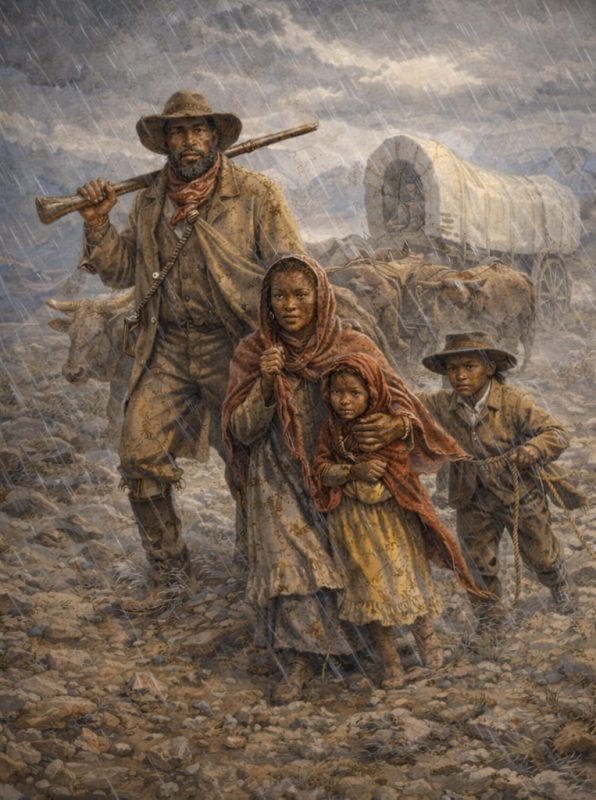
Pioneers faced heavy emotional stress and fear. For Black pioneers the burden was heavier and constant.
9. Black pioneers carried the same physical risks plus:
Uncertain legal status
Risk of being expelled from territories
Fear of being re-enslaved or denied land
They were surviving both the wilderness and systemic exclusion.
10. Personal Stories From the Trail
Matilda & Elizabeth Sager — Their childhood memories document the emotional and physical trauma of trail migration and frontier violence.
Amanda Gardener Johnson — Enslaved as a child and taken west, she later built a life in Oregon and maintained complex relationships across racial and social lines.
Robin and Polly Holmes – Brought west enslaved, they arrived in “free soil” that did not protect them — showing how laws and reality often clashed. Later Holmes went to court for protection and ownership of their children.
Five Additional Realities Black Pioneers Faced on the Oregon Trail
11. River Crossings Were the Most Dangerous Moments
Crossing swollen rivers could flip wagons, drown oxen, and sweep away supplies.
Black families — whether free or enslaved — risked losing everything in a single crossing, just like any other wagon party.
12. Wagon and Animal Accidents Were the #1 Physical Danger
According to historical research, being crushed or run over by wagon wheels was the most common cause of death or injury.
Children were especially vulnerable. Horses and oxen could panic, overturn wagons, or seriously injure handlers.
13. Firearms and Stampeding Livestock Were Major Hazards
Accidental gun discharges were common and many pioneers were injured or killed by their own or another traveler’s weapon. Stampeding animals could destroy wagons, trample people, and wipe out a family’s survival supplies overnight.
14. Disease Was the True Killer of the Trail
Nine out of ten pioneer deaths were caused by illness — not attacks or violence.
Cholera was the most feared. A healthy person could become fatally ill within hours.
Black wagon members lived, traveled, and suffered through the same outbreaks spreading through camps.
15. Death and Burial Were Harsh Realities
Burials often happened immediately beside or even in the trail. Wagons would pass over graves to hide scent from animals. Black pioneers mourned and buried loved ones under the same brutal conditions.
Black pioneers did not just face discrimination —
They faced rivers, disease, accidents, loss, and death alongside every other traveler pushing west.
I loved your story, having just covered much of the Oregon Trail in a massive Recreational Vwehicle with all the ‘creature comforts’! Thanks for sharing! We’re also doing a ’48 hours in…!” series. Just did Auckland NZ and headed south to Queenstown next! Ticked the boxes for Sydney, The Gold Coast & Brisbane recently too! Keep it up, we love the copy,
Mark Sheehan, smiling
Thanks for coming over to my website to read about Blacks on the Oregon Trail. It’s fascinating and little known history. I learned a lot researching the story. Safe travels in Australia.