
When Your Vacation Destination Breaks Out in War
A detailed traveler’s playbook for protests, terrorism, and sudden conflict

Nobody books a beach week expecting air-raid sirens. But emergencies don’t check your itinerary before showing up. When conflict erupts – war, widespread civil unrest, terrorist attacks, your job is simple: stay alive, stay informed, get out if you can safely do so, and don’t count on a government rescue.
Below is a practical, very detailed guide for what to do before you leave home and what to do on the ground if your destination suddenly becomes dangerous.

Planning for your trip should be exciting. Share your plans with family members. Consider any suggested changes or additions if they have concerns.
First: Understand the hard truth
about “evacuation”
Many travelers assume their government will swoop in like an action movie. In reality, governments may offer information and sometimes help coordinate departures. But you’re expected to leave using normal commercial options whenever possible, and you should not rely on an evacuation to save you.
Also: if a government-assisted departure happens, it may take you to a nearby safe location (not home), and you’ll be responsible for lodging and onward travel, and you may have to reimburse the government for transportation.
That’s not meant to scare you, it’s meant to keep you from freezing in place waiting for “official rescue” while the window to leave is still open.
What to do immediately when war/unrest breaks out (the first 60 minutes)
1) Get inside and get small
If you hear gunfire, explosions, or you see sudden mass movement (crowds running), don’t “go look.” Move indoorsimmediately if safe to do so. Put distance and barriers between you and the street. If you must shelter, stay away from windows and monitor local updates. (Your hotel is usually safer than roaming.)
2) Do a fast reality check: “What is happening, where, and how close?”
You need two kinds of info:
-
Local reality (what’s happening in your neighborhood right now)
-
Official guidance (what authorities/embassies are saying)
If you can, confirm via at least two sources: hotel management + reputable local news + official embassy channels.
3) Tell someone you’re okay—before networks get jammed
Text and data often work when voice calls fail. Send one short message to your emergency contact:
“I’m safe. I’m at [hotel/address]. I’m staying inside. Next update at [time].”
The U.S. State Department explicitly notes that messaging apps/text/data may work even when calls don’t.
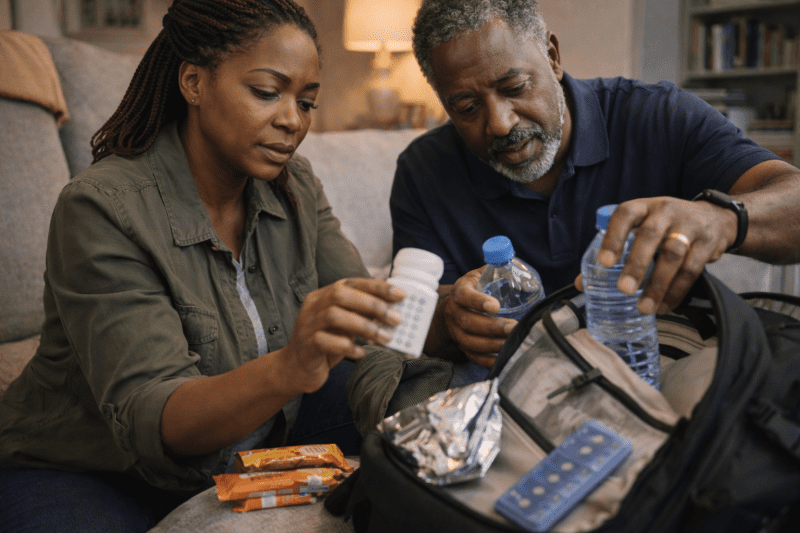 4) Gather “grab-and-go” essentials (do not start packing your entire life)
If you have to move quickly, you want one bag you can carry for hours.
Grab now:
-
Passport + ID + any visas
-
Phone + charger + power bank
-
Cash (local currency + USD/EUR if you have it)
-
Medications (minimum 5 days if possible)
-
Water + shelf-stable snacks
-
Lightweight layers, sturdy shoes
-
Copies of key documents (paper + digital)
The U.S. State Department recommends maintaining emergency supplies like food, water, medication, documents, and cash.
5) Stop broadcasting that you’re a tourist
In unstable situations, visibility can be risk. Dress down. Skip flashy jewelry. Avoid anything that screams “I’m foreign and lost.” You’re trying to move through the environment like you belong there.
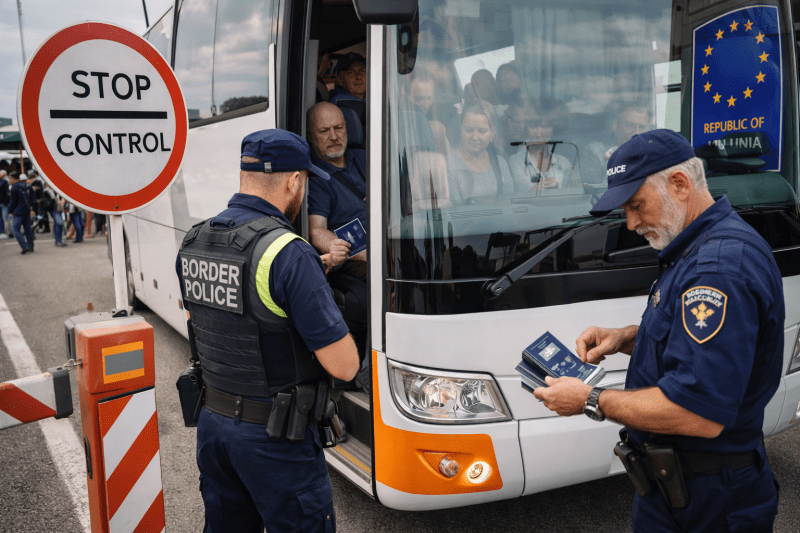
Your decision fork: Leave early vs. shelter in place
This is the central judgment call.
Leave early if:
-
Commercial transport is still running (even imperfectly)
-
Borders/roads are open and safe enough to reach
-
Your area is becoming more dangerous by the hour
-
Authorities/embassies advise departure
Official guidance repeatedly emphasizes: leave while commercial travel is still operational, and don’t wait for a rare evacuation scenario.
Shelter in place if:
-
Movement is actively unsafe (active fighting nearby, curfews, sudden checkpoints)
-
Roads are blocked or crowds are turning violent
-
You can’t move without exposing yourself to greater risk
-
Authorities instruct residents/visitors to shelter
Amed conflicts means following core options: keep yourself safe, stay updated, follow instructions, and shelter in place if you can’t leave.
Key principle: Don’t let panic choose for you – but don’t let denial trap you either.
If you decide to leave: how to do it smarter
1) Aim for “safe exit” not “perfect exit”
Your goal is to reach a safer area, not necessarily get home immediately. In some crises, the realistic sequence is:
Hotel → border/neighboring country → regroup → onward travel home
The U.S. State Department notes that government-coordinated departures (if any) typically go to a nearby safe location, and you handle the rest.
2) Choose routes like a grown-up: fewer surprises
-
Prefer major routes when they’re secure (more information, more services)
-
Avoid areas near government buildings, military sites, and big crowds
-
Keep a paper map or offline maps (don’t bet your life on a loading screen on your phone or tablet)
3) Transportation realities
-
Airports can close fast or become targets of disruption
-
Flights sell out and cancellations snowball
-
Land borders can suddenly shut or backlog for hours
If you can get out safely on commercial transport, take the earliest viable option.
4) Don’t freelance heroics
Don’t interfere with local security operations, relief efforts, or protests. You’re not there to solve the crisis—your job is to survive it.
Contacting your embassy/consulate:
what to expect (and what not to)
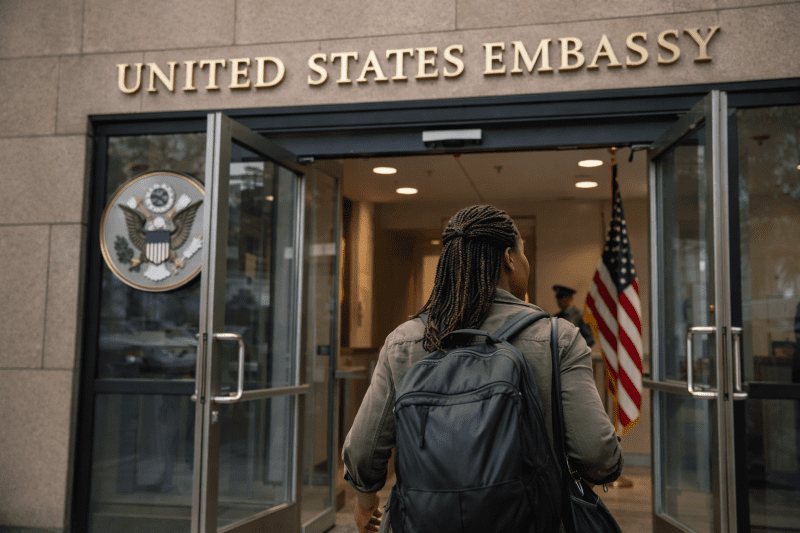
What they can do
-
Share official safety and departure information
-
Tell citizens to leave if it’s unsafe
-
In rare circumstances, coordinate departure assistance when commercial travel is unavailable and it’s safe
What they usually can’t do
-
Provide in-country transportation (security and resource limits)
-
Evacuate non-citizens as a rule
-
Transport pets
U.S. emergency contact numbers
If you can’t reach the local U.S. embassy/consulate, the State Department provides these emergency numbers:
-
1-888-407-4747 (U.S./Canada)
-
+1-202-501-4444 (outside the U.S.)
Sign up for alerts before you go (or immediately if you forgot)
For U.S. travelers: STEP (Smart Traveler Enrollment Program) helps the embassy contact you and send alerts.
Other countries have equivalents (UK FCDO alerts, Australia Smartraveller subscriptions).
Terrorism or active violence:
a plain-language approach
If you are near an attack:
-
Create distance (move away from the sound/sight)
-
Get behind barriers (concrete beats glass)
-
Follow local emergency instructions (curfews, shelter orders)
-
Avoid filming security forces or checkpoints (can escalate your risk)
In chaotic moments, the safest move is usually to get out of the immediate area and then reassess from cover.

Protests and civil unrest: what travelers get wrong
Many travelers underestimate how quickly a “peaceful march” can turn into:
-
street closures
-
stampedes
-
tear gas
-
opportunistic crime
-
mass detentions
Rules that keep you out of trouble:
-
Don’t attend protests as a spectator
-
Don’t take close-up photos of police/military
-
Don’t argue politics with strangers
-
Don’t wear symbols that mark you as aligned with a side
-
Avoid “main squares,” government districts, and known rally points
When in doubt: leave the area early. Crowds are magnets for unpredictability.
Preparing before you leave home: the “unexpected” checklist
This is where smart travelers separate themselves from hopeful ones.
1) Check travel advisories and the region—not just the city
Conflict often spills across borders or flares in nearby areas. Start monitoring a week or two before departure.
2) Register and set up alerts
-
U.S.: STEP enrollment/alerts
-
UK: sign up for FCDO travel advice alerts
-
Australia: subscribe to Smartraveller updates
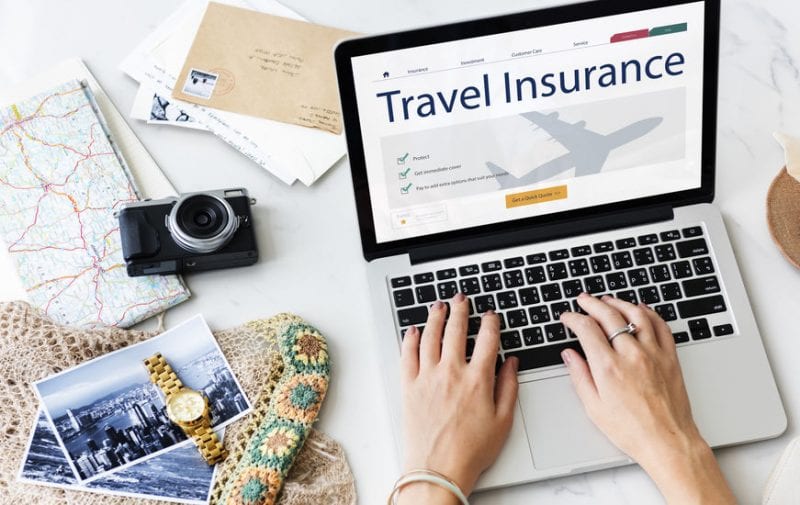
3) Insurance: read the boring parts
Look specifically for:
-
political evacuation coverage
-
coverage exclusions once a destination hits certain advisory levels
-
what triggers trip interruption/cancellation
-
whether you must use approved providers
Also: keep your insurer’s 24/7 emergency number saved offline.
4) Share your itinerary like an adult
Give a trusted person:
-
flight numbers and dates
-
lodging addresses + phone numbers
-
local tour/operator info
-
copies of passports (if traveling with family, copies for everyone)
If you disappear into a crisis, this is the breadcrumb trail that helps.
5) Document redundancy (because phones get stolen)
-
Physical photocopy of passport + visa
-
Photos of documents stored securely (encrypted storage if possible)
-
A second copy stored separately (daypack vs. suitcase)
6) Money: build a “get-out” cushion
In crises:
-
ATMs can run dry
-
cards can stop working
-
banks can close
Carry enough cash to pay for transport, one or two nights of lodging, food, and emergency fees.
7) Communications plan
Assume you may lose:
-
cell service
-
data
-
Wi-Fi
Do this before you go:
-
Download offline maps for your destination and neighboring countries
-
Save embassy info and emergency numbers offline
-
Establish one “home base” contact and one backup contact
-
Decide on a daily check-in time if conditions deteriorate
8) Choose lodgings with safety basics
Before booking, look for:
-
24/7 front desk
-
multiple exits
-
interior rooms available
-
backup power or generator (even partial)
-
clear emergency procedures
9) Pack with emergencies in mind (without turning into a doomsday prepper)
-
Mini first aid kit
-
Headlamp or small flashlight
-
Power bank
-
Water purification tablets (optional but useful)
-
Door wedge (simple safety tool in many hotel scenarios)
- Flashlight and extra batteries

Special situations travelers forget to plan for
Traveling with kids
-
Keep birth certificates/consent documents copies
-
Set a family “meet point”
-
Write key phone numbers on paper for older kids
-
Pack extra medication/formula/diapers (if applicable)
Traveling with a medical condition
-
Carry prescriptions and a short medical summary
-
Know the nearest hospital (and a backup)
-
Have extra device batteries/chargers if you rely on medical equipment
Traveling with pets
Be blunt with yourself: pets complicate evacuation. The U.S. State Department notes it generally does not transport pets in assisted departures, and you should plan accordingly.
Digital safety: the modern checkpoint reality
In some conflicts, authorities may scrutinize phones at checkpoints. Whether or not that happens in your destination, prepare like it could:
-
Remove sensitive political content from devices before travel
-
Turn on strong passcodes (not just face unlock)
-
Back up key documents, then limit what you store locally
-
Consider a “travel-only” device profile/account
You’re trying to avoid misunderstandings that can escalate at the worst possible time.
After you reach safety: what to do next

-
Check in with family and your embassy/consulate
-
Cancel cards if you were robbed or lost your wallet
-
Document expenses (insurance claims later)
-
Get medical care for injuries or severe stress reactions
-
Don’t rush back into the affected area to retrieve luggage
If your passport is lost/expired during the crisis, contact your embassy/consulate as soon as possible—emergency travel documents can be issued, but it takes time.
The calm conclusion
If war or serious unrest breaks out while you’re on vacation, the winning strategy is unglamorous:
-
Get safe
-
Get informed
-
Get connected
-
Get out early if you can—safely
-
Don’t rely on a rescue plan
And before you ever leave home, set yourself up so “the unexpected” is an inconvenience—not a catastrophe.
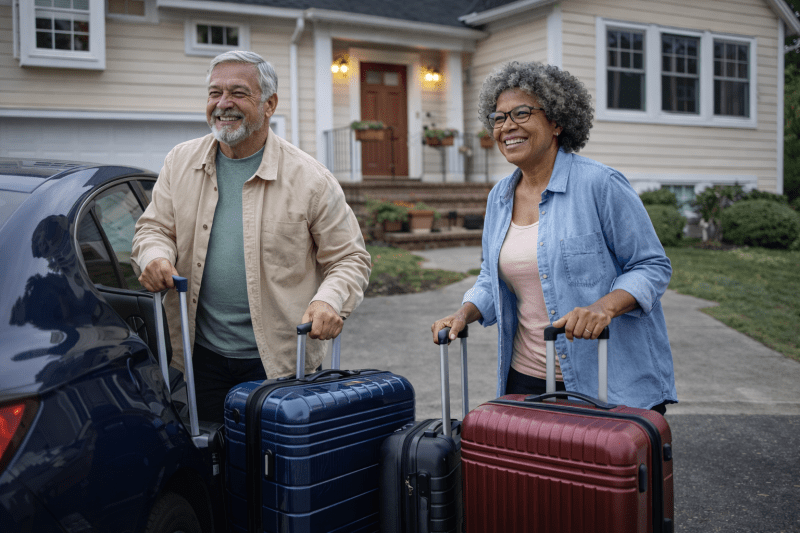
The wonderful feeling of arriving back home – safe and sound.


0 Comments